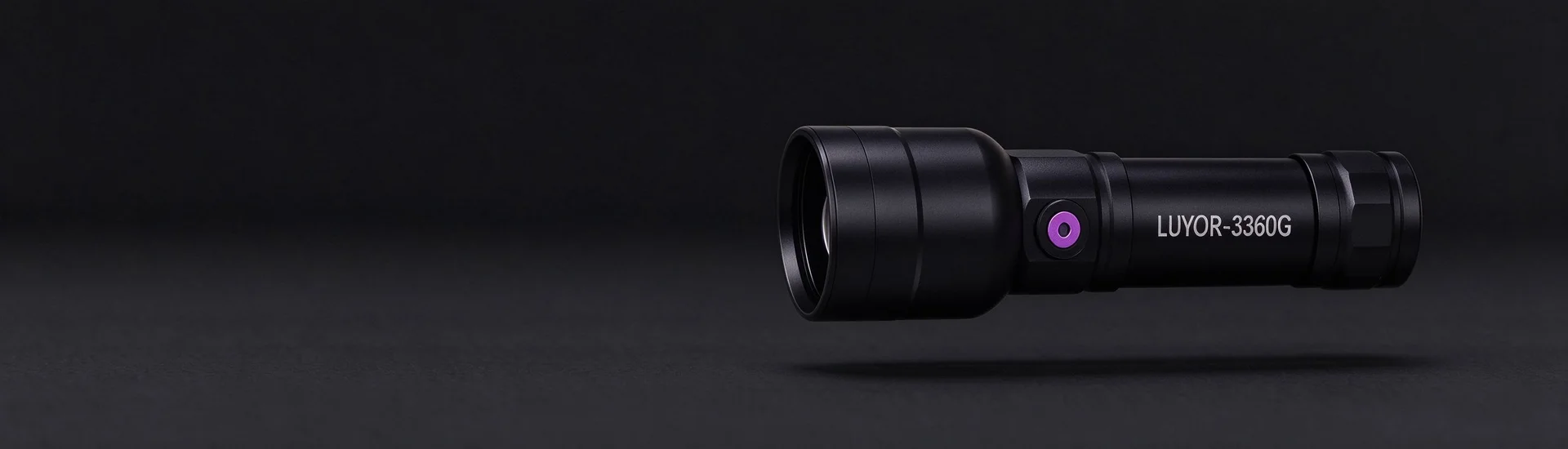
Solutions
 Breadcrumb: Home > Solutions > Biofilm Detection
 Updated:2026-11-16
 Views:
Bacteria in the wrong environment are a persistent threat to health and safety, and biofilm makes them much harder to remove. This article starts with the microbial challenge: how biofilm attaches, how the EPS matrix resists cleaning chemicals, and why sessile cells tolerate antimicrobials far better than free-floating ones. It then follows the UV fluorescence route - light of specific wavelengths excites residues so that contamination beneath the surface becomes visible - and discusses where through-surface detection applies, where it stops, and how to read what the lamp shows. The aim is a screening step that puts cleaning effort where the contamination actually is.
Bacteria are among the most abundant organisms on earth. Many are harmless, and some are useful, but in the wrong place they are a continuous threat to health and safety.
In the United States alone, more than 1.7 million healthcare-associated infections occur each year in clinical settings (CDC, 2023). In the food industry, bacterial pathogens cause 48 million cases of foodborne illness a year, at significant human and economic cost.
What makes bacterial detection particularly difficult is that bacteria exist in two very different states:
Planktonic (free-floating) cells, which are easier to detect and remove.
Sessile (biofilm-associated) cells, which organize themselves into highly resistant communities.
Biofilm consists of up to 90% extracellular polymeric substance (EPS). The matrix protects bacteria from cleaning and disinfection, and it lets them persist on a surface for weeks or even months. Studies show that biofilm bacteria can tolerate antimicrobial agents up to 1000 times better than planktonic bacteria.
Conventional detection methods - swab sampling, culture-based analysis and PCR - are reliable but slow and resource-intensive. Culture takes 24 to 72 hours, and PCR, although faster, still needs laboratory infrastructure and trained staff. UV fluorescence offers an immediate, on-site alternative.
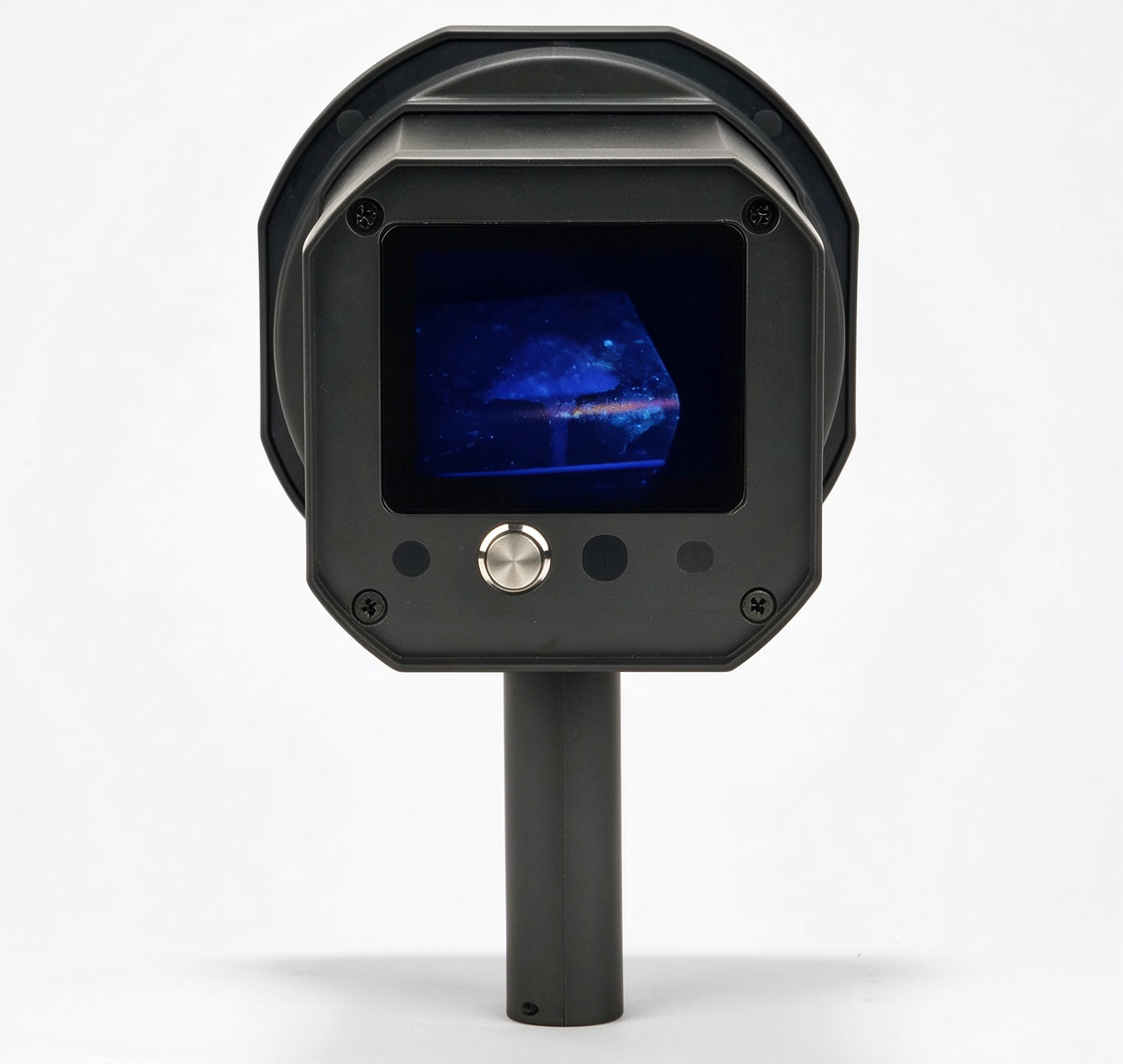
The LUYOR biofilm detection lamp uses multi-wavelength UV excitation to reveal microbial presence. The principle rests on the intrinsic fluorescence of microbial metabolites:
Tryptophan
NADH
Flavins (FAD, FMN)
By exciting these fluorophores, the lamp produces a visible signal from bacterial cells and biofilm-associated residue that would otherwise go undetected.
The key figures behind the advantage:
Detection speed: seconds, against hours or days for culture and PCR
Coverage: wide-area surface scanning instead of random point sampling
Accuracy: fewer false negatives, because the whole area is visible
Applications include:
Food production: Listeria monocytogenes, Salmonella spp. and Escherichia coli O157:H7 on processing lines.
Healthcare settings: Staphylococcus aureus and Pseudomonas aeruginosa in high-touch areas.
Industrial water systems: Legionella and biofilm-forming bacteria in piping and reservoirs.
Why this dual focus matters
Biofilm detection on its own solves part of the problem: planktonic bacteria, whether pathogenic or opportunistic, remain a key risk factor. A detection system that resolves both free-floating bacteria and biofilm-associated communities gives a fuller picture of the protection in place.
In operating terms, this means:
less downtime, through real-time hotspot mapping
better compliance with ISO 22000, HACCP and healthcare standards
less reliance on reactive laboratory diagnosis
The convergence of microbiology and optical physics has produced tools that change bacterial detection strategy at a basic level. By making planktonic bacteria and biofilm visible under UV fluorescence, instruments such as the LUYOR biofilm detection lamp give fast, data-based insight into where contamination occurs.
From hospital wards to food production lines, in settings where a single bacterial community can compromise safety, real-time microbial detection is no longer a luxury but an operational necessity.

Email: info@xinysun.com

Tel: 131-2093-6518

Address: 1525 Minqiang Road, Bldg 26, Songjiang, Shanghai

Copyright 2026 Xinysun Instrument (Shanghai) Co., Ltd. All rights reserved.
ICP:ICP-2026046447




 Industrial Test Instruments


