Many clean plants run strict disinfection routines and periodic sampling, yet still record repeated microbial exceedances. The hidden cause is usually biofilm, which the eye cannot see: it clings to equipment seams, conveyor belts, drains and cold-storage corners, forms a protective layer that resists routine cleaning, and keeps harboring pathogens such as Listeria. This article explains why biofilm is hard to remove, how it creates compliance and brand risk, and how a UV fluorescence survey turns invisible contamination into visible spots that a team can find, clean and check again.
In high-standard clean production such as food processing and pharmaceuticals, visible cleanliness is not the same as real hygiene. Many plants follow their disinfection procedures strictly and still sample on a regular schedule, yet microbial counts keep exceeding the limits, and the core problem is biofilm, which cannot be seen with the naked eye. These microbial communities attach firmly to equipment seams, conveyor belts, drains and the corners of refrigeration equipment, forming a protective film that resists routine disinfection and cleaning while continuing to harbor pathogens such as Listeria. They become a persistent source of recontamination and can readily lead to failed product, compliance exposure and damage to the brand.
Traditional hygiene testing depends on sending samples to a laboratory and on sampling at points chosen largely at random. It is slow, it lags behind the event, and it cannot pinpoint hidden contamination blind spots, so biofilm problems are hard to eliminate at the source. To address this, Xinysun Instruments (Shanghai) Co., Ltd. offers the LUYOR biofilm detection lamp, giving plants a direct way to survey hygiene on site and to take some of the uncertainty out of clean-area control.
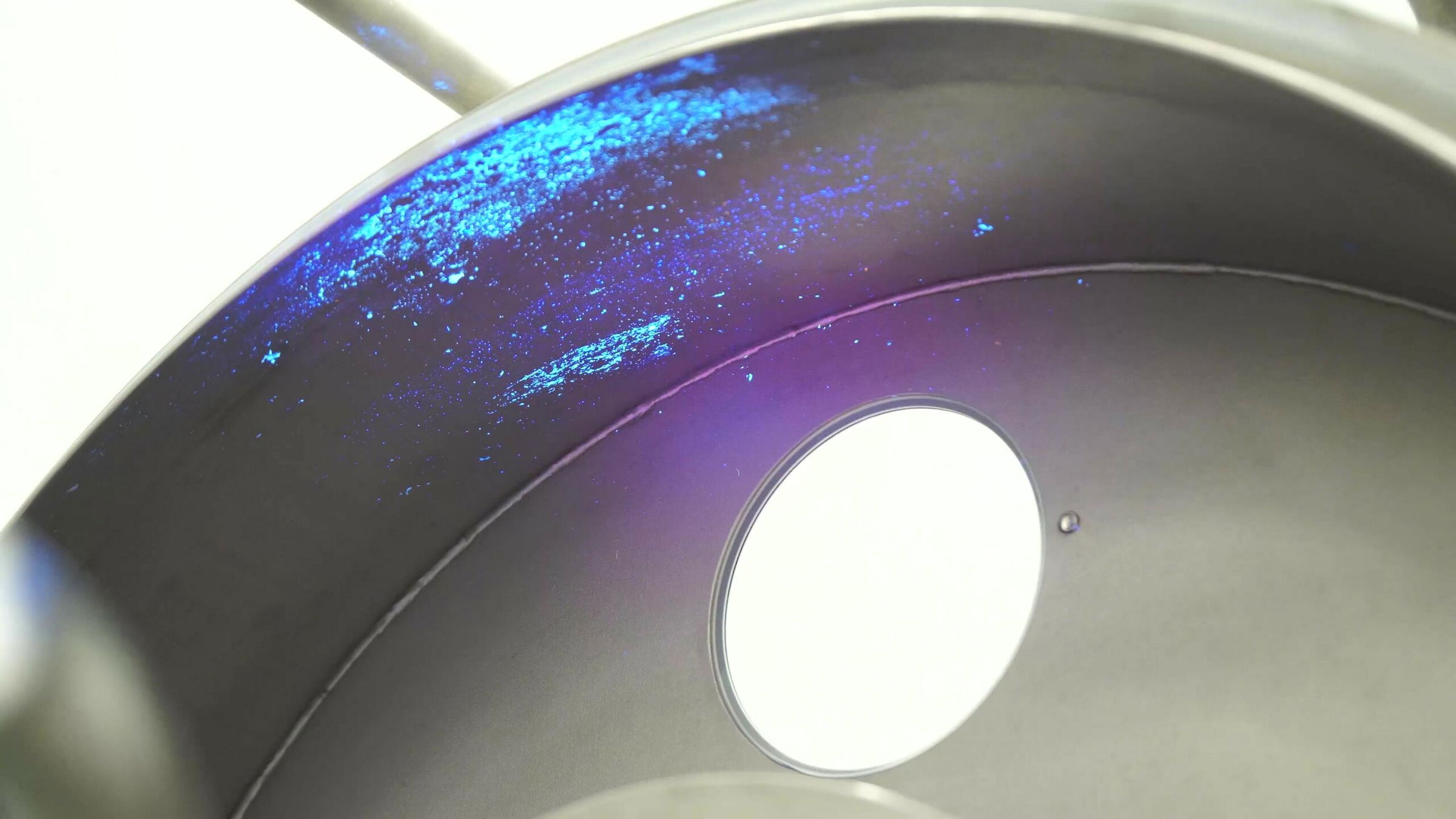
The lamp uses UV fluorescence. No reagent is needed and there is no culture to wait for: switch it on and the survey can start. By exciting the autofluorescence of microorganisms and biofilm, it makes contamination hidden in equipment crevices and damp corners visible, so high-risk points can be located rather than guessed at, and inspection becomes faster and better targeted. The housing is portable and durable enough for the conditions found on a shop floor, and operation is simple enough for front-line inspection staff to pick up quickly.
As a tool for hygiene compliance in food and pharmaceutical production, the LUYOR biofilm detection lamp fits into routine cleaning, disinfection acceptance checks and risk surveys. It helps teams find microbial contamination earlier, supports the environmental monitoring system, holds the line on production cleanliness standards, and backs the quality controls behind food safety and pharmaceutical manufacturing.
Related sections and models
This article belongs to the biofilm detection section.
Other sections on the same product line include biofilm detection lamps (UV-A excites the autofluorescence of biofilm, so contamination the eye cannot see is developed on the spot) and industrial test instruments (the entry point for the four lines: UV inspection, speed measurement, stroboscopic observation and surface inspection).
Models mentioned in this article: LUYOR-330, XEPU-1720. The range, accuracy and accessory list of each model are given on its product page.

 Breadcrumb: Home > Solutions > Biofilm Detection
 Updated:2026-11-16
 Views:







 Industrial Test Instruments


