
Solutions
 Breadcrumb: Home > Solutions > Biofilm Detection
 Updated:2026-11-16
 Views:
XEPU-1720 is a UV biofilm detection lamp that uses multi-wavelength UV to make biofilm, bacteria, fungi and organic residue fluoresce, so large vessels and work areas can be swept quickly and fewer contaminated spots are missed. Using a food plant as the setting, the article explains how the inspection works, where the lamp fits in the sanitation routine and what to watch for in use, and it sets multi-wavelength UV equipment against hygiene verification requirements such as EPA methods, giving selection points for a plant that is specifying a lamp.
XEPU-1720 is a UV inspection lamp built for detecting biofilm and surface contamination. Multi-wavelength UV light reveals what the eye cannot see - biofilm, bacteria, fungi and organic residue - and its wide coverage lets large vessels and work areas be inspected quickly, which lowers the risk of contamination going unnoticed. The lamp is used in food manufacturing, biotechnology, pharmaceuticals and healthcare, where it offers a practical working method.
The XEPU-1720 Biofilm Detector Lamp is a UV inspection tool designed specifically for detecting biofilms and surface contaminants. Utilizing multi-wavelength UV technology, it reveals contaminants invisible to the naked eye, including biofilms, bacteria, fungi, and various organic residues. With its broad detection range, XEPU-1720 enables rapid and precise inspection of large surface areas, minimizing the risk of undetected contamination. Widely applicable across industries such as food manufacturing, biotechnology, pharmaceuticals, and healthcare, XEPU-1720 delivers practical and efficient solutions.
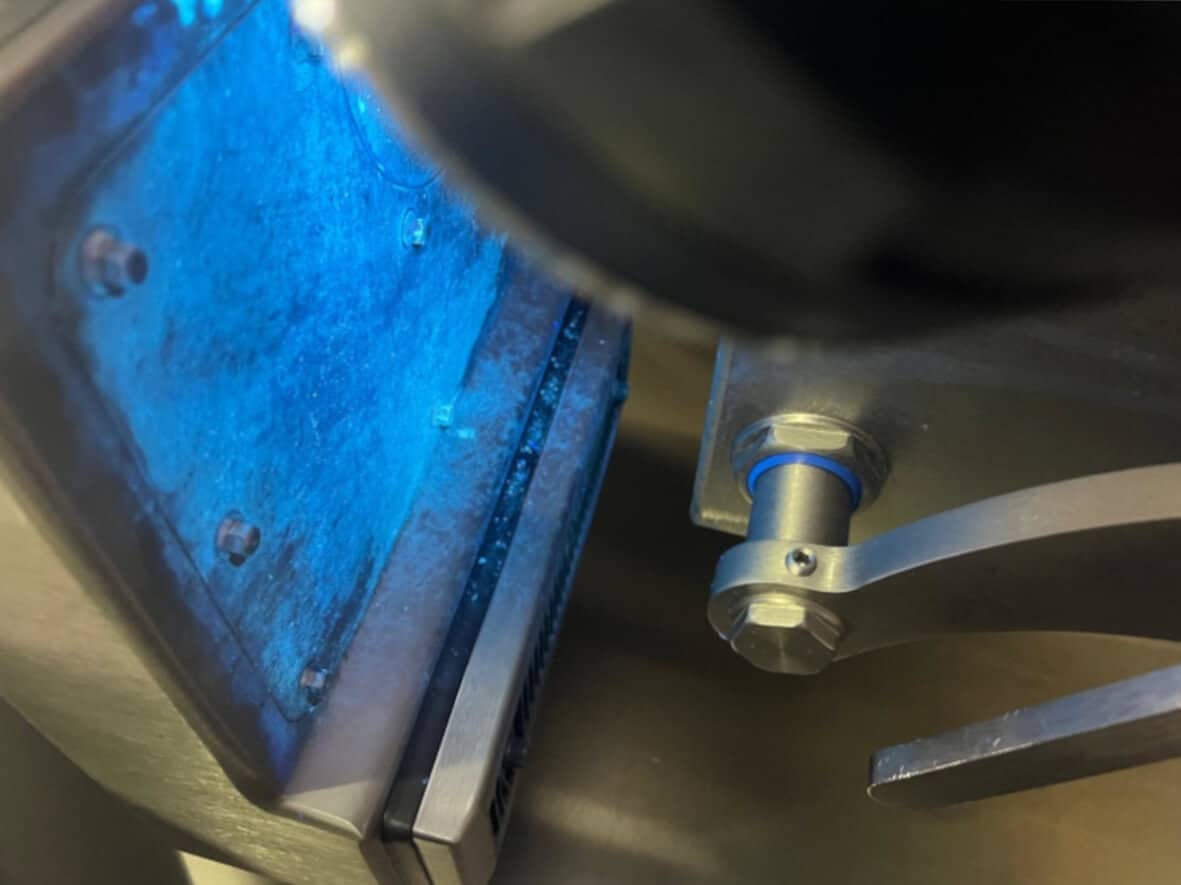
Integration with ATP testing for comprehensive contamination risk control
Integrates with ATP Testing Enables Comprehensive Contamination Risk Control
Testing has to be simple and the reading has to be clear. ATP swabs are widely used, yet they carry statistical uncertainty, they depend on random sampling, they consume costly consumables, and they can return false positives or false negatives.
Facilitates Easy Testing and Accurate Interpretation
Although ATP testing is widely used, it has several limitations, including statistical uncertainty, random sampling, high consumable costs, and risks of false positives or negatives.
XEPU-1720 combined with ATP testing
Together the two methods give environmental hygiene a more complete solution: the UV technique covers the areas that random swabbing misses, and it supports the ATP result rather than replacing it. Because no consumables are needed, the UV survey can be repeated as often as the schedule allows, which raises the overall accuracy of the monitoring program.
XEPU-1720 combined with ATP testing
Provides a Complete Solution for Environmental Sanitation
XEPU-1720's advanced UV technology complements ATP testing by overcoming random sampling limitations. With no need for consumables, it delivers a comprehensive solution while enhancing inspection accuracy.
This article belongs to the biofilm detection section.
Other sections on the same product line include biofilm detection lamps (UV-A excites the autofluorescence of biofilm, so contamination the eye cannot see is developed on the spot) and industrial test instruments (the entry point for the four lines: UV inspection, speed measurement, stroboscopic observation and surface inspection).
Models mentioned in this article: XEPU-1720, LUYOR-330. The range, accuracy and accessory list of each model are given on its product page.

Email: info@xinysun.com

Tel: 131-2093-6518

Address: 1525 Minqiang Road, Bldg 26, Songjiang, Shanghai

Copyright 2026 Xinysun Instrument (Shanghai) Co., Ltd. All rights reserved.
ICP:ICP-2026046447




 Industrial Test Instruments


