Solutions
 Breadcrumb: Home > Solutions > Biofilm Detection
 Updated:2026-11-16
 Views:
"Looks clean" is not the same as clean. Biofilm is formed by bacteria and fungi bonding to a surface, and a conventional ATP swab samples a single point a few millimeters across, so seams and dead zones are easily missed. This article compares the blind spots of the swab method with area-wide visual inspection and describes how the LUYOR-330 portable biofilm detection flashlight works without contact or reagents and shows contamination as you scan. It sets out typical applications, the organisms of concern and the operating steps, so food, beverage and pharmaceutical sites can locate contamination sources faster and close the loop between inspection and cleaning.
A biofilm is a complex microbial ecosystem formed by one or more species, with the organisms attaching to surfaces in different arrangements depending on the type of manufacturing environment they colonize. The microorganisms that make up a biofilm can include bacteria and fungi. In food, beverage and pharmaceutical processing, once a biofilm forms it contaminates product by introducing pathogenic or spoilage bacteria, with far-reaching consequences for product safety and consumer health.
What makes this harder is that biofilm is difficult to recognize by eye, and routine cleaning does not readily remove it. A surface can look as good as new while biofilm is still present - a latent hazard that has to be detected, eliminated and prevented from recurring.
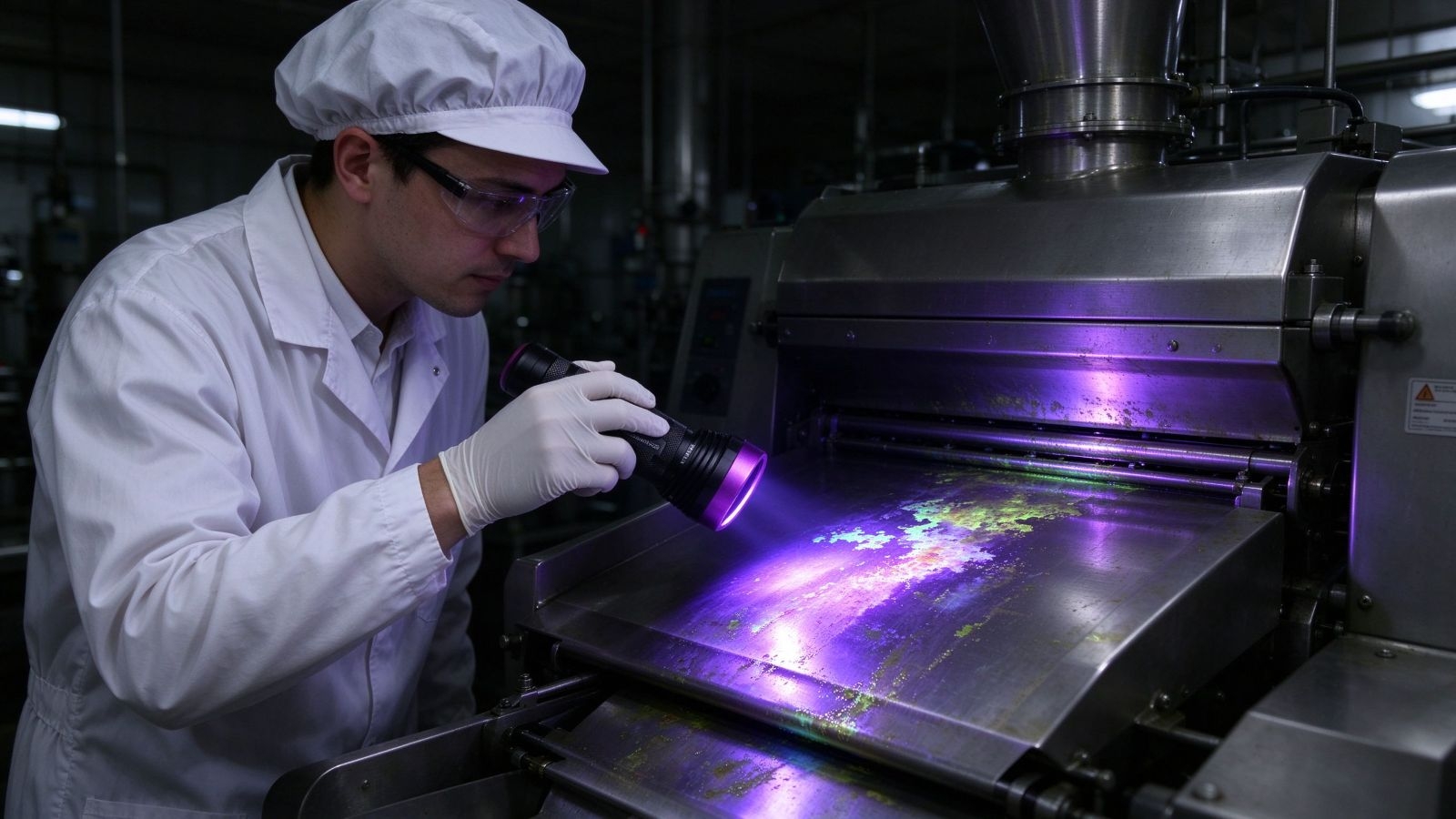
Many plants rely on ATP swab systems to verify cleaning. This sampling method has a natural limitation: sampling is confined to the swab point, while contamination tends to collect in dead zones such as fixture gaps, pipe bends, seals and conveyor surfaces - a contamination patch a few millimeters across can be missed entirely. Hygiene, food safety and quality staff need a faster, more complete way to see directly where the contamination sits.
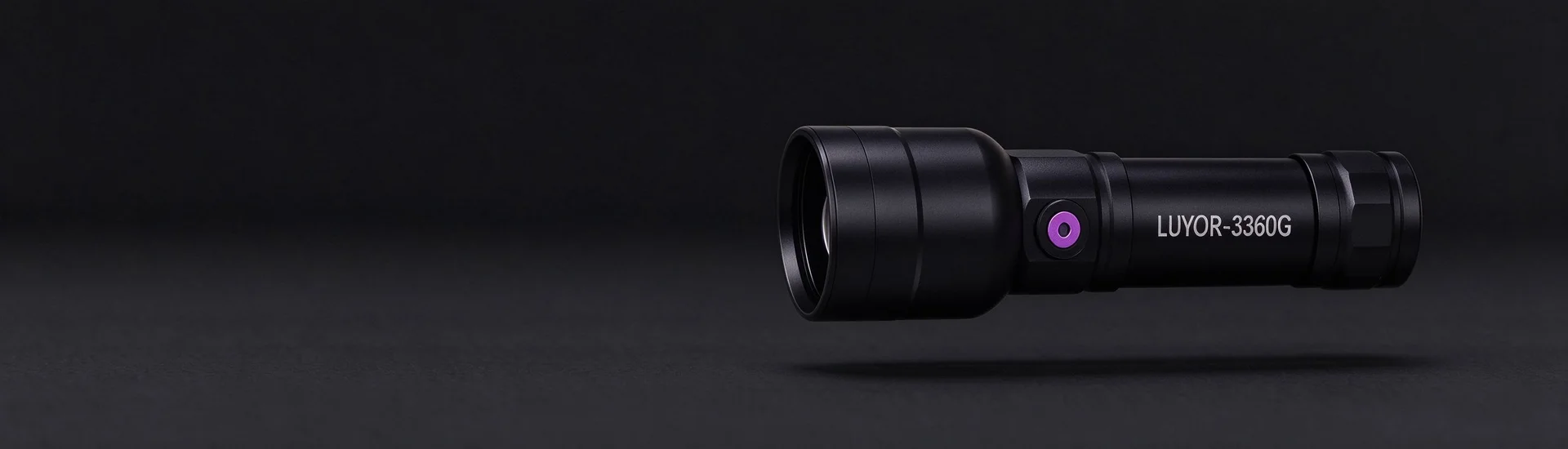
The LUYOR-330 biofilm detection lamp is a portable biofilm detection flashlight. It uses long-wave ultraviolet A (UVA) excited fluorescence to identify bacterial protein, biofilm and other surface contaminants invisible to the eye, without any liquid, dye or reagent. Contamination fluoresces under the UV light, so the operator can locate it visually on the spot.
Key points:
| Feature | Description |
|---|---|
| Handheld and portable | Flashlight format with a compact body that reaches into fixtures, piping, conveyors and other tight spaces for spot checks at any time |
| Non-contact, no reagents | No liquid, dye or reagent is needed, so no secondary contamination is introduced and the surface is neither touched nor damaged |
| UVA fluorescence | Long-wave UV-A excited fluorescence quickly identifies bacterial protein, biofilm and surface residue |
| Ready to use | No warm-up; switch it on and inspect, reading the fluorescence directly by eye |
| Covers sampling blind spots | Covers the whole illuminated area, avoiding the millimeter-scale gaps of ATP swab spot checks |
| Suits several industries | For food, beverage, pharmaceutical, dairy, meat, seafood, vegetable and fruit production environments |
The LUYOR-330 is particularly suited to high-risk process steps where biofilm matters:
Dairy and dairy products: Listeria monocytogenes, Staphylococcus aureus, E. coli, Bacillus spp., Enterococcus spp., Cronobacter spp., Lactobacillus spp.
Meat and meat products: Salmonella spp., Staphylococcus aureus, Listeria monocytogenes, E. coli O157:H7, Campylobacter jejuni, Clostridium perfringens, Enterobacter cloacae and others
Seafood: Listeria monocytogenes, Staphylococcus spp., Vibrio spp.
Vegetables and fruit: E. coli, Salmonella, Listeria monocytogenes, Cronobacter, Bacillus cereus
After cleaning is complete, switch on the LUYOR-330 and shine it slowly over the surface to be checked.
Watch for a fluorescence reaction within the illuminated area.
Fluorescence marks residue or biofilm; clean and disinfect that area again immediately.
Build the check into the daily hygiene verification routine and close the loop of inspect, clean, re-check to keep biofilm from forming again.
Biofilm cannot be ruled out by a surface that "looks clean". The LUYOR-330 portable biofilm detection flashlight works without contact and without reagents and shows contamination on the spot, so food, beverage and pharmaceutical plants can find blind spots faster and protect product quality and consumer safety.
Contact us for the full LUYOR-330 specifications, a demonstration video or a trial unit.
This article belongs to the biofilm detection section.
Other sections on the same product line include biofilm detection lamps (UV-A excited biofilm autofluorescence reveals contamination that the eye cannot see) and industrial test instruments (the entry point for UV inspection, rotational speed measurement, stroboscopic observation and surface inspection).
Models mentioned in this article: LUYOR-330, XEPU-1720. Ranges, accuracy and accessory lists for each model are listed on the product pages.

Email: info@xinysun.com

Tel: 131-2093-6518

Address: 1525 Minqiang Road, Bldg 26, Songjiang, Shanghai

Copyright 2026 Xinysun Instrument (Shanghai) Co., Ltd. All rights reserved.
ICP:ICP-2026046447




 Industrial Test Instruments


