Products
PRODUCTS Breadcrumb: Home > Products > Life Science Instruments > Irradiation Systems
 Overview
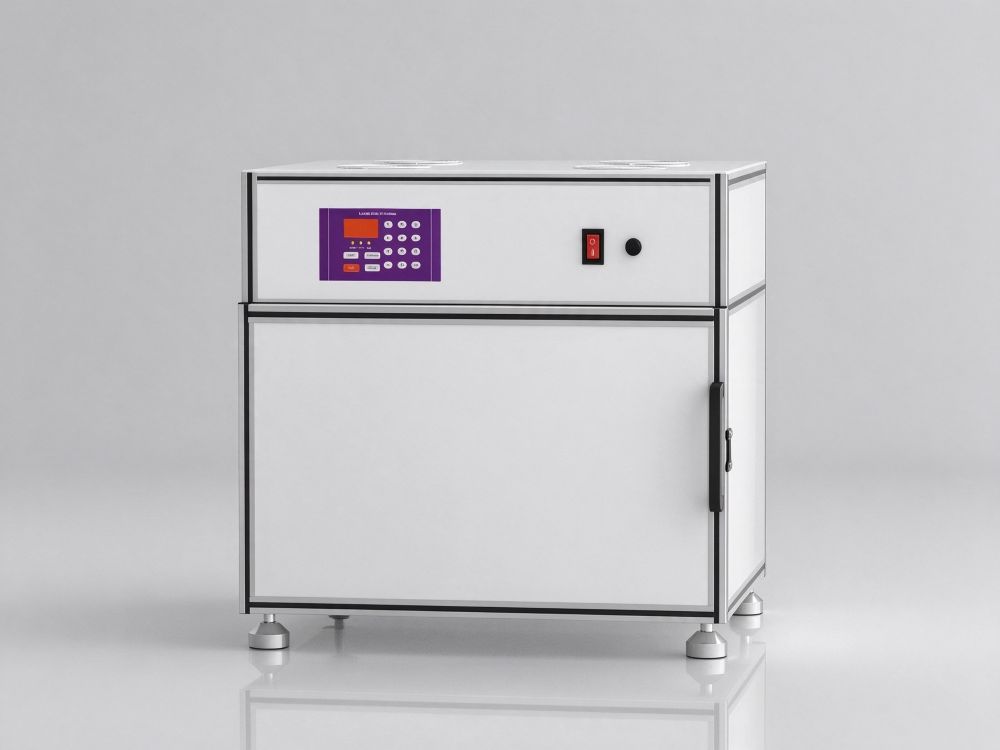
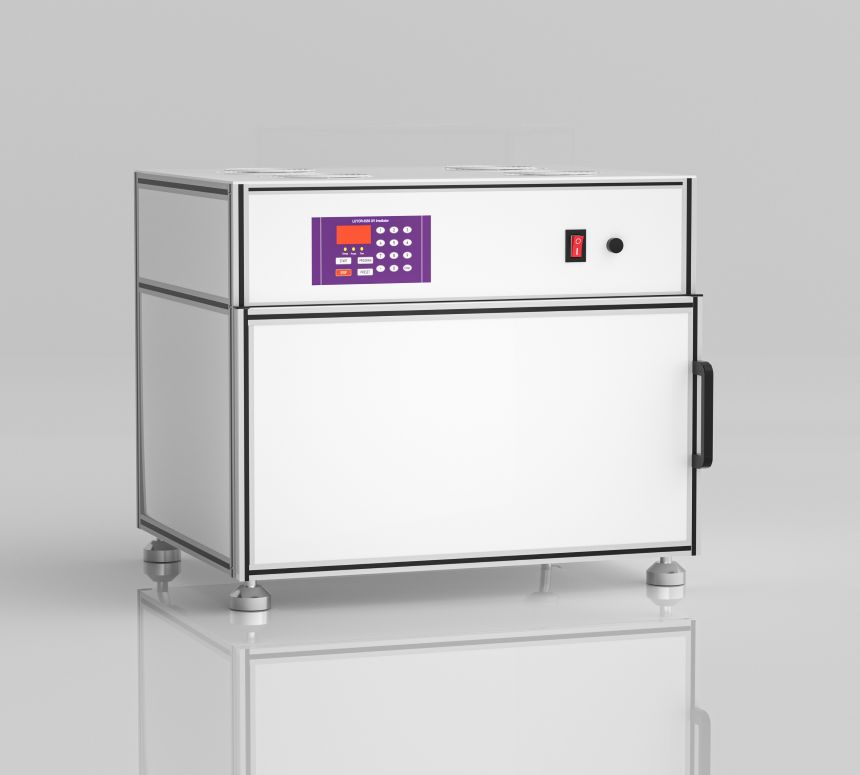
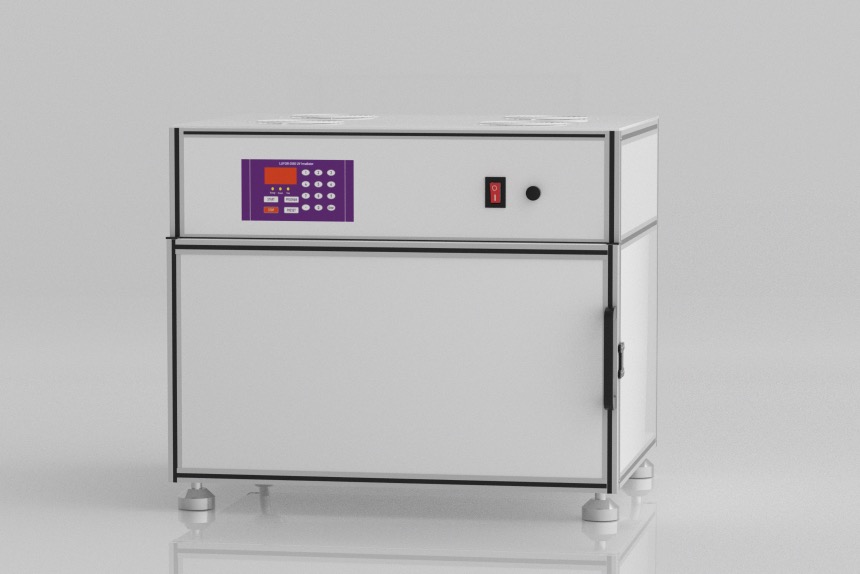
LUYOR-3550 is a 68x55x32 cm UV chamber with 20 x 15 W lamps, selectable UVA, UVB or UVC output, a sliding platform and time plus energy dose control.
Equipment requirements for UV exposure work come down to three things:how large the samples are, how many bands you need, and whether dose must be reproducible. Small irradiators suit small samples such as plates and slides. Once the sample becomes a whole animal, a batch of dishes, or a large material panel, size and uniformity become prerequisites - if the sample does not fit, or fits with half of it shadowed, any later discussion of dose is meaningless.
LUYOR-3550 is positioned to fill exactly this gap:a chamber large enough for laboratory animals and batch samples, while keeping dose measurement and multi-band capability.
| Requirement | Common approach | How LUYOR-3550 handles it |
|---|---|---|
| Large samples (animals, batch vessels, material panels) | Open lamp frame, strongly affected by ambient light and placement | 68×55×32 cm closed chamber plus sliding sample platform, ample room for placement |
| Multiple UV bands needed | Buy several single-band units | UVA/UVB/UVC selectable, with an optional two-band control panel |
| Dose must be recorded and reproducible | External meter and manual timing | Built-in UV and temperature sensors with closed-loop control, stops automatically at the set dose |
| Heat load during long exposures | Door opened between runs to cool down, unstable conditions | 4 high-power fans, sample temperature below 37 ℃ |
| Lab power and floor space | High-power xenon systems often need dedicated utilities | About 360 W and about 50 kg, fits a standard laboratory |
The three bands differ widely in biological effect, so selection starts from the experiment itself:
| Band | Peak wavelength | Irradiance | Lamp life | Typical use |
|---|---|---|---|---|
| UVA | 365 nm | 7 mW/cm² | About 4000 hours | Skin photoaging models, cosmetic UVA modeling, photosensitizer activation, material light-stability testing - deeper penetration, relatively mild biological effect |
| UVB | Mid-wave | 2.4 mW/cm² | About 4000 hours | Skin sunburn and epidermal damage models, photobiology research, UV aging of materials - acts on the epidermis, marked biological effect |
| UVC | 254 nm | 8 mW/cm² | About 9000 hours | Disinfection, surface treatment of instruments and packaging, UV mutagenesis, surface modification of materials - high energy, shallow penetration, efficient microbial inactivation |
| Blue light Optional | 450 nm | By configuration | By configuration | Optogenetics, blue-light photosensitive systems, visible-light photocatalysis, and other work that needs a visible band |
UV lamp output falls steadily with operating hours, and chamber contamination, ambient temperature, and supply fluctuations add further variation. If a protocol is written as "expose for 30 minutes", then the same method can deliver clearly different actual doses on new and aged lamps, and this difference is invisible from the outside - it typically shows up as results drifting month by month, with no obvious cause.
LUYOR-3550 uses measurement + closed loop:
A calibrated sensor measures dose: the chamber sensor includes a high-precision analog-to-digital converter and a temperature sensor, and measures the actual UV dose;
Closed-loop control holds the dose constant: whatever happens to lamp aging, contamination, or temperature, the panel adjusts to the measured value so the set dose is delivered accurately;
Two setting modes: time mode sets the UV exposure time; energy mode sets the UV energy and stops automatically at the target;
Continuous intensity adjustment: the dimming dial sets UV intensity, so one unit covers both low-dose chronic modeling and high-dose accelerated testing.
| Model | LUYOR-3550 (UVA/UVB/UVC bands selectable, two-band control panel available, optional 450 nm blue light) |
| Chamber dimensions | 68 cm × 55 cm × 32 cm |
| Sliding sample platform | 67 cm × 52 cm |
| Overall dimensions | 76 cm × 64 cm × 65 cm |
| Weight | About 50 kg |
| Light source | 20 × 15 W UV lamps |
| Irradiance | UVA 7 mW/cm²; UVB 2.4 mW/cm²; UVC 8 mW/cm² |
| Spectral range | 1-2 bands (UVA, UVB, UVC, single or combined), plus optional 450 nm blue light |
| Control | Time mode (set exposure time) + energy mode (set exposure energy) + dimming dial (set irradiance) |
| Dose control | Built-in calibrated sensor (high-precision ADC and temperature sensor), closed-loop constant dose |
| Sample temperature | Below 37 ℃ (4 high-power fans) |
| Lamp life | UVA about 4000 hours; UVB about 4000 hours; UVC about 9000 hours |
| Power consumption | About 360 W |
| Power supply | 230 VAC, 3 A |
UVA exposure modeling on human fibroblasts, skin models, and animal skin, with cumulative dose set in J/cm², for sunscreen and anti-photoaging efficacy evaluation.
UV exposure studies on mice, rats, guinea pigs, and rabbits; the chamber holds cages and keeps sample temperature below 37 ℃ to avoid heat stress.
UV exposure of dishes, multiwell plates, and bacterial plates, with several groups treated at once and a common dose for group comparison.
Plant UV stress and photomorphogenesis studies, with bands applied separately and exposure time and dose recorded and repeatable.
Light-stability and UV aging tests on materials, coatings, packaging, and pharmaceuticals, with shorter cycles and more controlled conditions than outdoor exposure.
UVC disinfection studies on instruments, packaging, and vessel surfaces, plus UV curing, sealing, and bonding processes that need stable UV output.
Keep the door closed during operation, and do not look at the lamps or expose skin to chamber UV with the door open
UVC (254 nm) carries higher risk to eyes and skin, so take extra care when working with the UVC band
Disconnect power before changing lamps or cleaning the chamber, and keep clearance around the unit for ventilation and heat dissipation
Record the band, irradiance, and cumulative dose together with the exposure setup (lidded or open, sample position)
Keep sample positions on the platform as consistent as possible and repeat runs with the same layout
Recheck chamber dose as lamps approach end of life rather than judging by operating hours alone
Experiment type: animal, cell, material, or disinfection
Bands needed: UVA, UVB, UVC, single or combined
Target dose and required single-exposure duration
Sample size and batch count
Second band control panel (two-band configuration)
450 nm blue light option
Spare lamps
UV radiometer (for independent dose checks)
Send us these details and we can calculate the irradiance and lamp configuration you need, check whether the exposure time fits your plan, and quote price and lead time. Units ship from stock in Shanghai, and consumables such as lamps can be ordered on an ongoing basis.
The main differences are sample size and number of bands. LUYOR-3450 is built for quantitative UVA exposure of 96-well cell culture plates, with a 26×32×15 cm chamber and standard 365 nm. LUYOR-3550 is a mid-size chamber: 68×55×32 cm, a 67×52 cm sliding platform, 20 × 15 W lamps, and UVA/UVB/UVC single or combined. Use the 3450 for cell phototoxicity work; choose the 3550 for animals, larger samples, or two bands at once.
365 nm UVA penetrates deeper with a mild biological effect, which suits skin photoaging models and photosensitizer activation. UVB is used for sunburn and epidermal damage models. 254 nm UVC has high energy and is mainly used for disinfection, material surface treatment, and UV mutagenesis. You can specify any band, or order a single band to hold cost down, or add a second control panel for combined exposure.
Yes. The unit takes two UV band control panels, each driving a separate spectral range with independent settings and constant-dose output. This suits protocols that apply two bands in sequence or in combination, such as a cumulative damage study with UVA followed by UVB.
It means the UV dose the sample actually receives stays the same whether lamps age, the chamber is contaminated, or temperature shifts. A calibrated sensor measures dose, the sensor includes a high-precision analog-to-digital converter and a temperature sensor, and the panel adjusts in closed loop to the measured value, so dose does not drift as lamps age.
The chamber is 68 cm × 55 cm × 32 cm and has a 67 cm × 52 cm sliding platform that pulls out for loading. It holds several multiwell plates, a number of dishes, a whole mouse cage, or a batch of material samples; the count depends on sample height and layout.
Yes. Four high-power fans hold the sample compartment below 37 ℃, which suits mice, rats, guinea pigs, rabbits, and cell cultures and avoids heat effects on results.
Yes. The dimming dial on the panel sets UV intensity, covering both low-dose chronic modeling and high-dose accelerated tests; with energy mode the run stops automatically at the set dose, with no manual timing.
UVA and UVB lamps last about 4000 hours and UVC lamps about 9000 hours, which supports long uninterrupted runs. Lamps are replaced as complete tubes; log accumulated hours and recheck chamber dose after replacement.
Yes, and this is one of the typical uses of the 3550. A cosmetics R&D group uses it for UVA modeling on human fibroblasts at a fairly high dose of 15 J/cm², delivered within 30 minutes. UVA irradiance is high, which suits evaluation work that needs a large cumulative dose.
Yes. The chamber is large enough for several material samples, UVA or UVB can be set singly or in combination, and energy mode stops the run at the target dose. Compared with outdoor exposure, cycles are shorter and conditions are controlled and repeatable.
Yes. The 254 nm UVC band provides high irradiance for disinfection studies on instruments, packaging, vessel surfaces, and materials, and for UV mutagenesis and surface modification. Note that UVC carries higher risk to eyes and skin, so run the unit with the door closed.
Keep the door closed while the unit runs; do not look at the lamps or expose skin to chamber UV with the door open. Disconnect power before changing lamps or cleaning the chamber. Place the unit away from permanent workstations and keep clearance for ventilation. Follow the supplied manual and our on-site guidance for specific procedures.
The 67 cm × 52 cm platform slides out of the cabinet so you can arrange, label, and remove samples outside the chamber, which shortens door-open time and reduces the risk of knocks. It is particularly convenient for plates and dishes that must be lined up neatly.
Keep the chamber clean and free of oil and residue that would affect light transmission; check lamps periodically for marked decay or damage and judge replacement by accumulated hours; keep the cooling duct clear. The unit is a conventional UV chamber with no complex optical path, so routine maintenance is cleaning and lamp replacement.
State the experiment type (animal, cell, material, or disinfection), the bands needed (UVA/UVB/UVC or a combination), the target dose and single-exposure duration, and sample size and count. We will confirm band configuration, lamp count, and accessories, and provide price and lead time.
Send inquiry

Email: info@xinysun.com

Tel: 131-2093-6518

Address: 1525 Minqiang Road, Bldg 26, Songjiang, Shanghai

Copyright 2026 Xinysun Instrument (Shanghai) Co., Ltd. All rights reserved.
ICP:ICP-2026046447




 Products
 Applications
 Previous:
 Back to list

 Industrial Test Instruments


