
Products
PRODUCTS Breadcrumb: Home > Products > Industrial Test Instruments > Tachometer Sensors
Xinysun supplies LUYOR laser and photoelectric tachometer sensors: the ROLS-5PW laser sensor for distances up to 7 m, the SPLS-5PW self-powered laser sensor with its signal module, and matching photoelectric sensors. They measure the speed of motors, fans, pumps and production lines without contact, output stable pulses and resist ambient light, suiting long-term online monitoring in industrial environments.
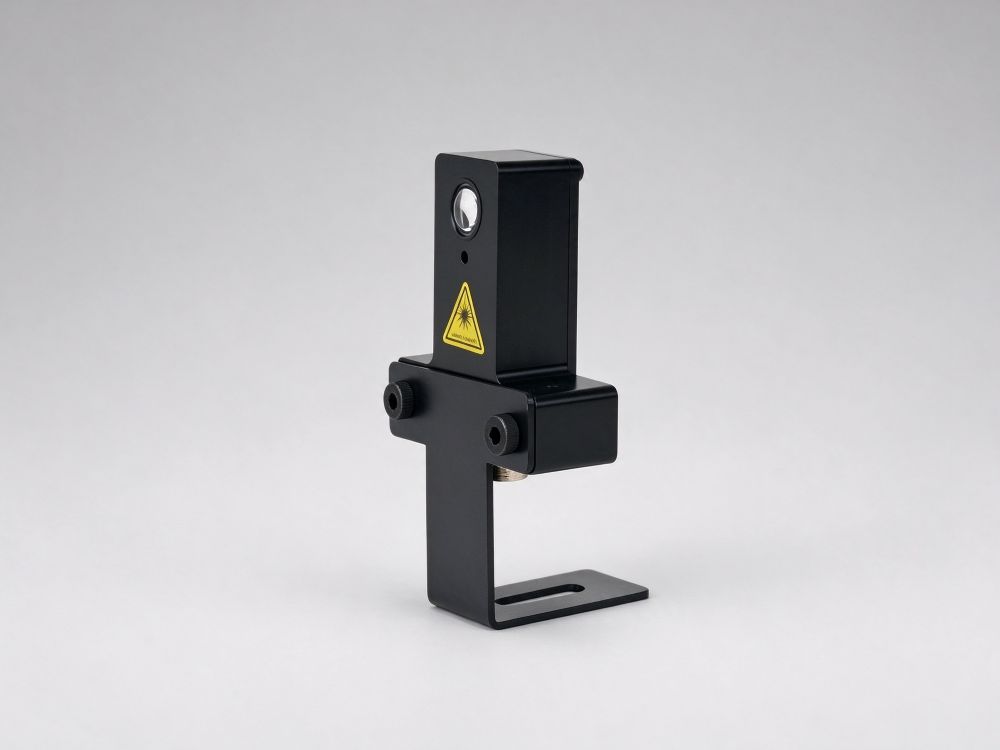
 Model: LUYOR ROLS-5PW

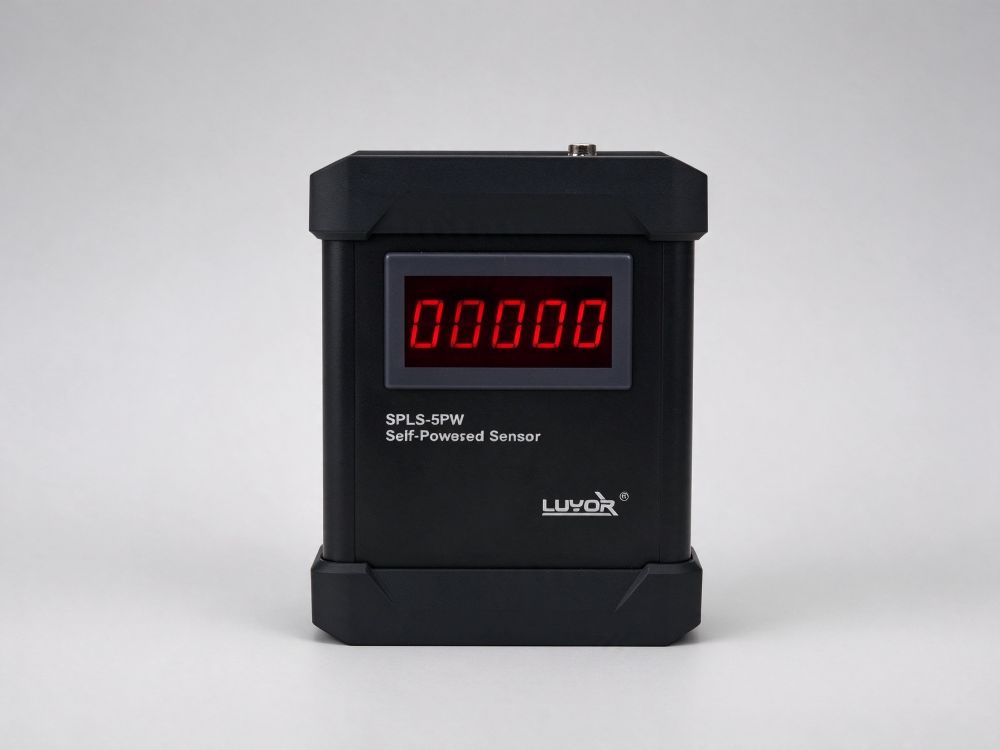
Model: SPLS-5PW
Select a sensor in this order: first measure the distance. If the measurement point is accessible and close, a photoelectric sensor is enough; a laser is needed only when the sensor must be mounted far away or ambient light is complex. Second, check the output interface: lead-wire types (-W) connect to PLCs, panel meters and data-acquisition terminals; plug types (-P) plug directly into handheld meters and stroboscopes, suiting routine rounds. Third, consider the environment: high temperature, tight spaces and wash-down areas have different protection and construction requirements.
| Model | Light Source | Measuring Range | Distance / Off-Angle | Output and Power |
|---|---|---|---|---|
| ROLS-5PW | 650nm laser | 1-300000 rpm | Up to 7m | 5V TTL / PNP output, 5V power, IP60, 38g |
| SPLS-5PW | 650nm laser (self-powered) | 1-300000 rpm | Up to 7m | 0-5V TTL, BNC, built-in lithium battery about 60 hours |
| ROS-W / ROS-P | Visible red LED | 1-250000 rpm | 0.9m / 45° off-angle | 3-15Vdc, negative pulse; P type with 1/8 inch plug |
| ROLS-W / ROLS-P | 650nm Class 2 laser | 1-250000 rpm | 7.6m / 60° off-angle | Open-collector output, M18 threaded body, optional 24V |
| SPSR-115 | Power supply module (for P-type sensors) | - | - | One TTL pulse per revolution, BNC, NiMH about 40 hours |
| ROS-HT-W-25 | Incandescent white light | 1-50000 rpm | 0.76m / 30° off-angle | 6-24Vdc positive pulse, -25 to 125℃ |
| MiniVLS 211 | 635nm Class II laser | 0.1-250000 rpm | 100-2000mm / 80° incidence angle | 5Vdc, NPN open collector, IP67, M12 four-pin connector |
The comparisons above are compiled from the published specifications on each product page. For exact configurations, prices and lead times, please refer to the relevant product page or call the number at the bottom of the page. Xinysun Instruments (Shanghai) Co., Ltd. supplies LUYOR and XEPU instruments for industrial inspection, UV curing and speed measurement.
A tachometer sensor does not display numbers; it does one thing - output one electrical pulse per revolution. When the light beam strikes a reflective mark on the rotating part and bounces back, the receiver conducts once and produces a square wave; downstream devices such as a panel tachometer, a PLC high-speed counter input or a stroboscope convert this pulse train into a speed reading.
So choosing a sensor means choosing three things: whether the light can hit the mark (distance and off-angle), whether the signal can be recognized downstream (level and interface), and whether it can survive once installed (temperature, protection and cabling). For the light source, red LEDs are inexpensive and suit short distances; a 650nm laser can reach over 7m and resists ambient light well, suiting equipment such as fans, pumps and motors where the sensor cannot be mounted close.
1) Mount the bracket: the sensor must be rigidly fixed, not held by a magnetic base on a vibrating housing; for M18-threaded or M12-connector models, prefer a threaded mount.
2) Aim at the mark: power on and check the indicator, align the visible spot with the center of the reflective tape, then lock it down; leave margin in both distance and off-angle to avoid missing the target due to thermal expansion during operation.
3) Wire it up: the three wires are power, ground and signal; ground the shield at the control cabinet end only, to avoid a ground loop and the interference it introduces.
4) Verify: turn the shaft over slowly to check that pulses are counted correctly, then raise it to the working speed; use an oscilloscope or PLC high-speed counter to check the duty cycle, since too narrow a pulse width will cause missed pulses.
Even when measuring the same speed, the wrong interface means no connection. Before purchasing, specify the input requirements of the downstream equipment clearly - this matters more than the model name.
| Output Type | Typical Wiring | Compatible Downstream Devices |
|---|---|---|
| 5V TTL | 5V power, signal, ground | Stroboscopes, counter cards, microcontrollers and data acquisition |
| Open collector (NPN) | Requires an external pull-up resistor | PLC high-speed counter inputs, panel meters |
| PNP | Sourcing input | Sourcing input modules on European PLCs |
| Negative pulse | Signal to ground | Some handheld tachometers and older panel meters |
| 4-20mA (via transmitter) | Two-wire | DCS, recorders, remote I/O |
- Online monitoring of fans and pumps: the sensor is permanently mounted near the bearing housing, with pulses feeding a PLC for overspeed and stall alarms.
- Belt conveyors and elevators: slip monitoring, with a delayed alarm when speed falls below the set value.
- Engines and dynamometer test rigs: high-temperature sensors rated -25 to 125℃, mounted near the flywheel or pulley.
- Printing and packaging machinery: roll-speed synchronization, with pulses serving as the reference for line speed and registration.
- Cleanrooms and tight spaces: IP67 stainless-steel housings and M12-connector models are washable and easy to wipe down.
- Use with a stroboscope: the sensor provides the trigger pulse and the stroboscope flashes at the same frequency to freeze motion.
- Selection and brands: Tachometer sensor selection guide: laser, photoelectric and self-powered, How to Choose a Laser Tachometer Sensor? Laser vs. Photoelectric, Six Models Compared and Wiring Tips, Tachometer vs. tachometer sensor: 12 frequently asked questions answered
- Concepts and principles: Measuring Over 10000 rpm on a Test Rig: Why Reflective Tape Falls Off and How to Draw the Mark
Photoelectric types use a red LED, work at about 0.9m with a 45° off-angle, and are low-cost but rely heavily on reflective tape, suiting routine short-distance speed measurement. Laser types use a 650nm laser, can measure beyond 7m with an off-angle up to 60°, and strongly resist ambient light, suiting fans, pumps and motors where the sensor cannot be mounted close or where long-distance online monitoring is needed.
-W is the lead-wire type, with three tinned wires that connect to the terminals of panel meters, frequency converters, PLCs and recorders, suiting fixed installation. -P is the plug type, with a 1/8 inch (3.5mm) plug that connects directly to a handheld tachometer, stroboscope or power module, suiting rounds and temporary measurements. Both offer the same measuring performance; only the interface differs.
For high-temperature environments choose the ROS-HT-W-25: an incandescent white light source in a 303 stainless-steel body, rated -25 to 125℃, for measuring engines, cooling systems and dynamometers. Where space is limited choose the MiniVLS 211: an IP67 stainless-steel housing with an M12 four-pin connector, an optical range of 100-2000mm and an 80° incidence angle, giving generous installation tolerance.
Check three things in order. First, the level: an open-collector output must have a pull-up resistor, or it may fail to drive a PLC input directly. Second, shielding: route signal and power cables separately and ground the shield at one end only. Third, pulse width: at high speed the pulses narrow, and if the PLC input filter time is set too long, pulses will be lost - reduce the filter time or use a high-speed counter module.
Yes, you can wire them in parallel, but you must calculate the load. When an open-collector output drives two inputs in parallel, the pull-up current and the two input currents add up and may exceed the sensor's drive capability, showing up as lost pulses at high speed. A safer approach is to choose a model with dual outputs, or add a signal splitter/isolator. TTL outputs should not be paralleled directly, as they can pull each other low.
Reflective tape is the most versatile: stick it on and use it, with the highest contrast. Reflective targets suit high-temperature or oily environments and are reusable. Natural marks such as keyways, coupling bolts and blades need no extra work, but there is often more than one mark, so you must set the pulses per revolution to the actual count or the reading will be off by a multiple. Another risk with natural marks is inconsistent reflectivity between surfaces, which tends to cause missed pulses at low speed.
Mainly cleaning the lens. Oil, dust and cutting-fluid mist on the window reduce signal amplitude, and the first symptom is lost pulses at high speed rather than no signal at all. Wipe it during the equipment's routine inspection cycle and check whether the cable has chafed at vibration points. On IP67 models, clean the window with a cotton swab and anhydrous alcohol; do not use acetone.

Email: info@xinysun.com

Tel: 131-2093-6518

Address: 1525 Minqiang Road, Bldg 26, Songjiang, Shanghai

Copyright 2026 Xinysun Instrument (Shanghai) Co., Ltd. All rights reserved.
ICP:ICP-2026046447




 Products
 Applications
 Industrial Test Instruments


