
Products
PRODUCTSFluorescent leak detector dye selection: oil-soluble LUYOR-6100 for engine oil, hydraulic oil and fuel systems (yellow-white fluorescence); water-based LUYOR-6200 (green) and LUYOR-6300 (blue) for boilers, tanks and water pipelines. Includes dosing ratios, package sizes and 365 nm leak detection lamp selection. Authorized distributor, in stock in Shanghai.
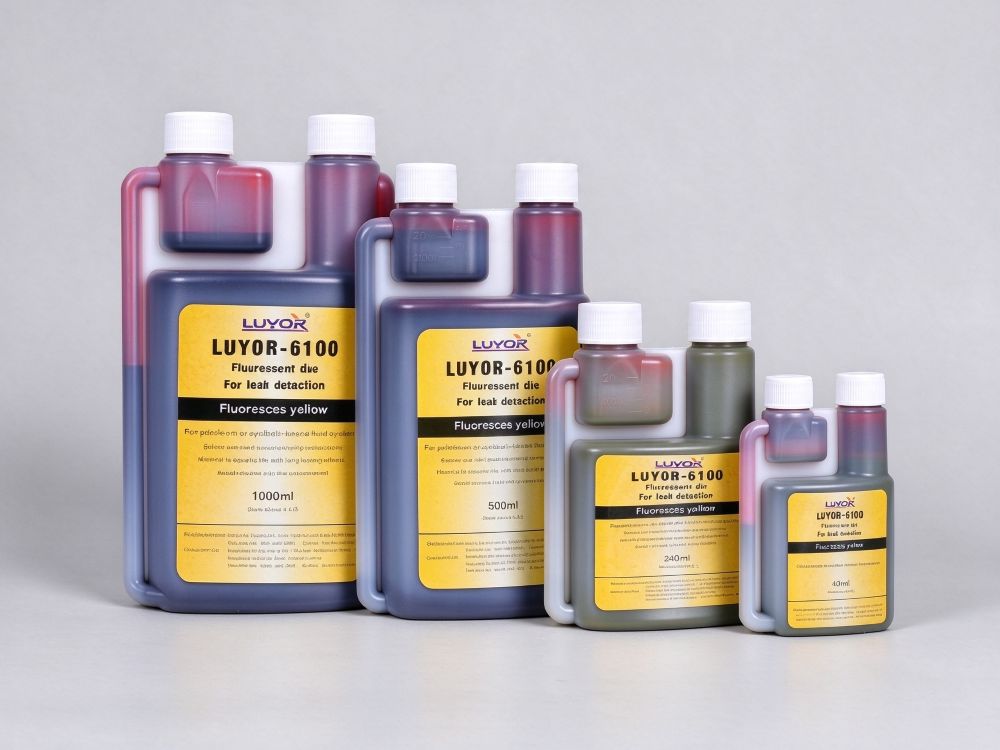
 Model: LUYOR-6100

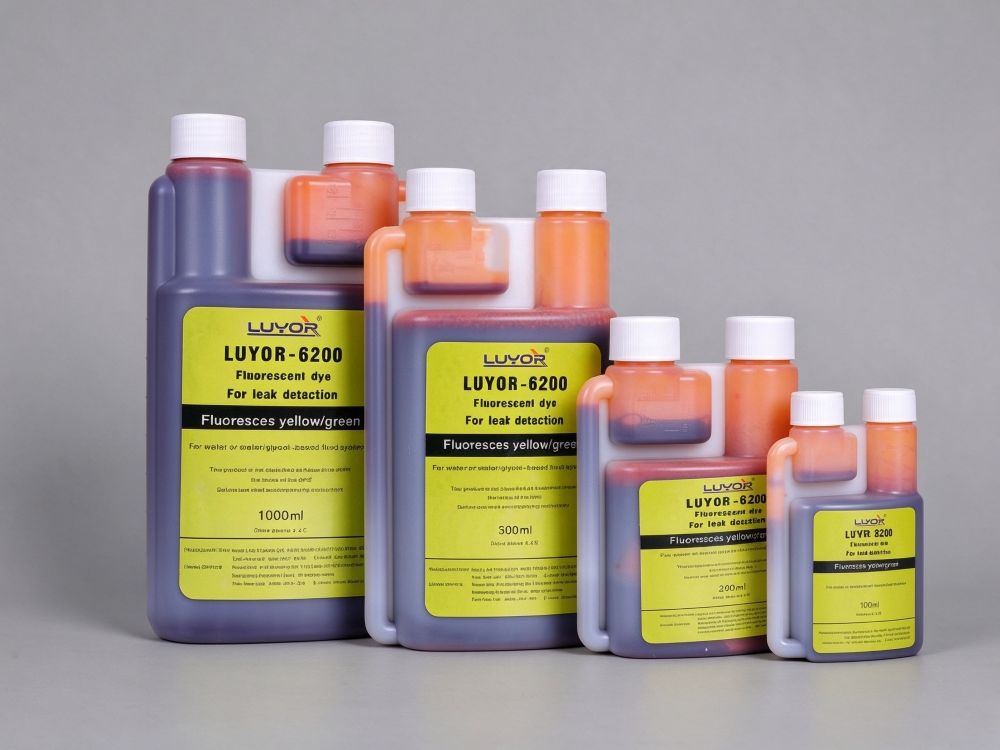
Model: LUYOR-6200
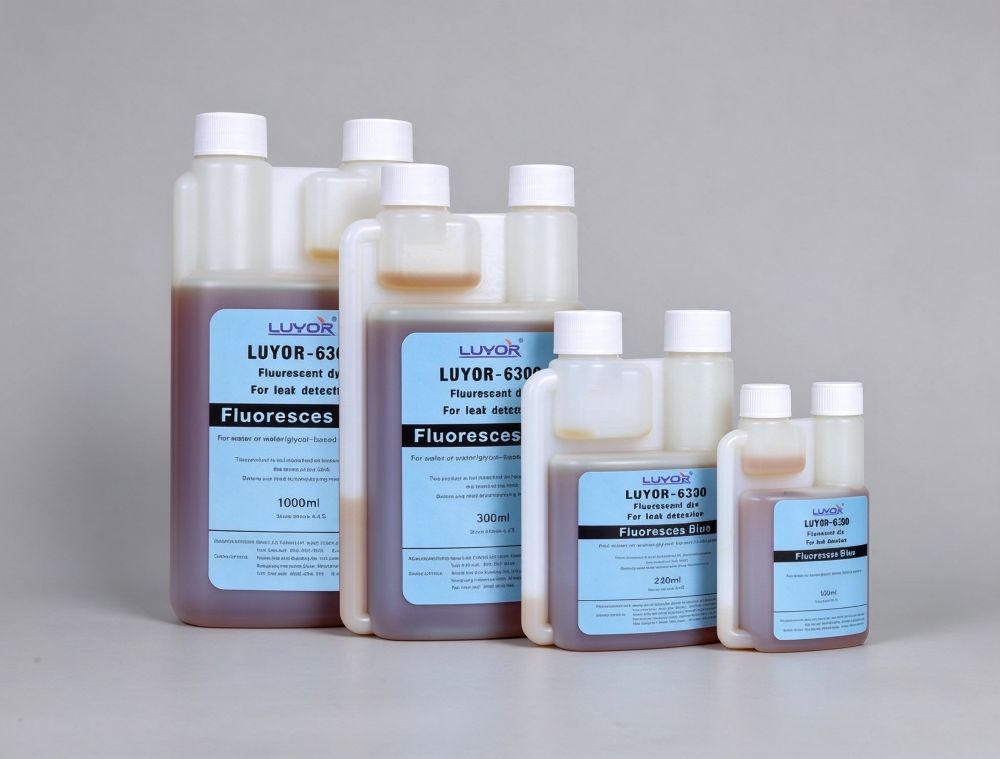
Model: LUYOR-6300
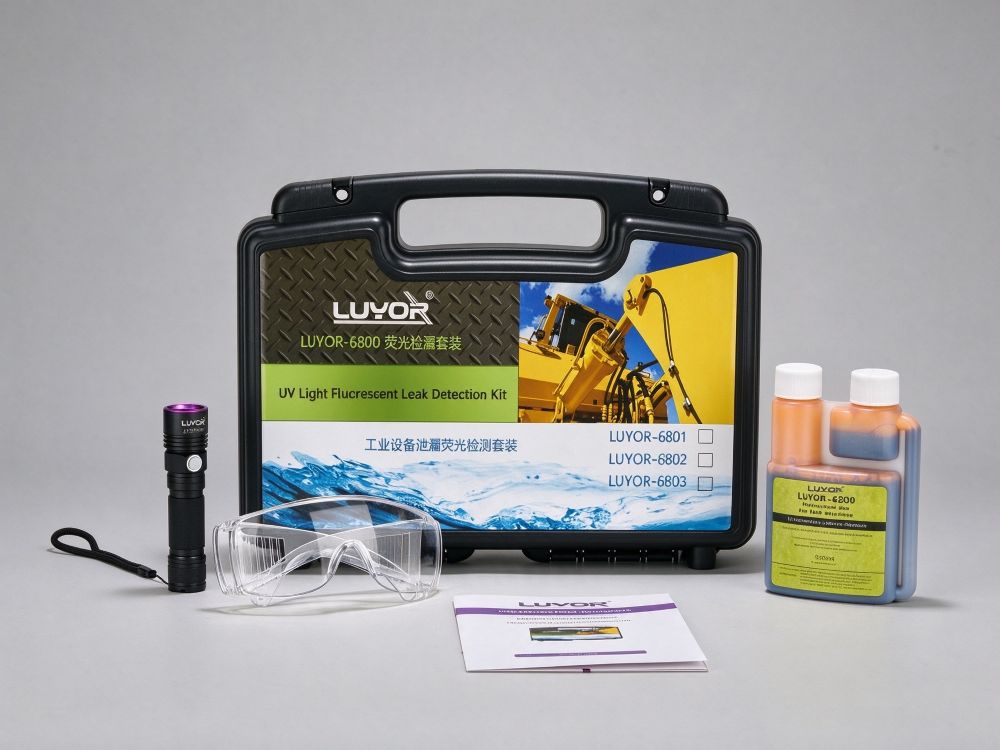
Model: LUYOR-6802
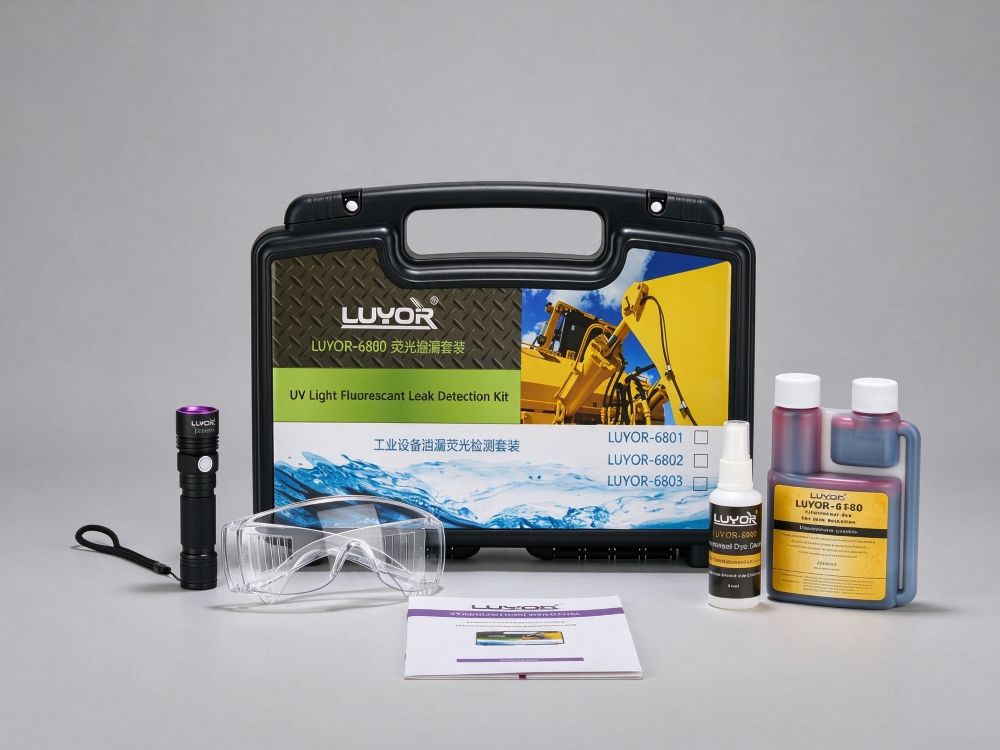
Model: LUYOR-6801
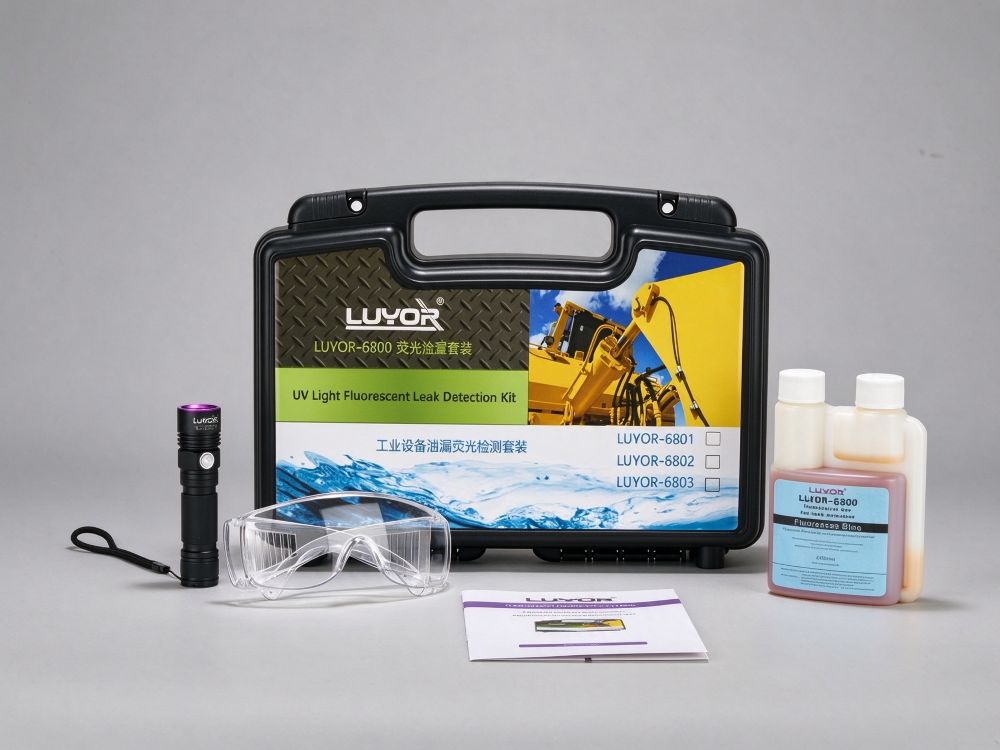
Model: LUYOR-6803
Choosing the wrong formulation is the most common mistake: an oil-soluble dye added to a water system separates and fails, while a water-based formula cannot disperse evenly in an oil circuit. The correct sequence is to identify the system medium first (oil-based for lubricating oil, hydraulic oil and fuel; water-based for boilers, cooling water, circulating water and water-based hydraulics), then decide the fluorescence color (use green and blue to distinguish zones when multiple water circuits run in parallel), and only finally consider whether to buy a kit or a single dye.
| Model | Type | Fluorescence Color | Recommended Ratio | Applicable Systems |
|---|---|---|---|---|
| LUYOR-6100 | Oil-soluble concentrate | Yellow-white | 0.5-2.5ml per liter of oil | Engine oil, hydraulic oil, fuel, transmissions |
| LUYOR-6200 | Water-based | Green | 1000:1 to 500:1 | Boilers, pumps, storage tanks, pipelines |
| LUYOR-6300 | Water-based | Blue | 500ml treats approx. 3000L of water | Zone discrimination across multiple water circuits |
| LUYOR-6801 | Oil-based kit | Yellow-white | Includes lamp + 6100 + cleaner | Hydraulics, compressors, gearboxes, fuel |
| LUYOR-6802 | Water-based kit | Yellow-green | Includes 365nm lamp + 6200 | Cooling water, circulating water, water-based hydraulics |
| LUYOR-6803 | Water-based kit | Blue | Includes 365nm lamp + 6300 | Parallel water circuits, seal performance testing |
| SPI-WGB / SPI-WGG | Spectroline water-soluble tracer | Blue dye / green dye | Dilute per NSF-certified ratio | Water, water-glycol and coolant systems |
The comparisons above are compiled from publicly available parameters on the individual product pages. For exact configuration, pricing and lead time, please refer to the corresponding product page or call the number at the bottom of this page. Xinysun Instruments (Shanghai) Co., Ltd. supplies LUYOR and XEPU instruments for industrial inspection, UV curing and speed measurement.
The idea behind fluorescent leak detection is to add a small amount of fluorescent dye to the system medium so it circulates with the oil or water to every corner. When the medium seeps out through a crack, sealing surface or fitting, the dye comes with it and glows brightly under a 365nm UV lamp, making the leak location immediately obvious. It is faster than pressure-holding or soap-water tests when the system is running, the leak is hidden, or disassembly would be costly.
The first thing that determines success is not the lamp but formulation compatibility: oil-soluble dyes dissolve only in petroleum-based oils, and water-based formulas are for water and water-containing systems only. Adding the wrong one does not merely reduce performance — it separates outright and can contaminate the system.
1. Identify the system: Use oil-based for lubricating oil, hydraulic oil, fuel and transmission oil; water-based for boilers, cooling water, circulating water and water-based hydraulics.
2. Add at the right ratio: 0.5-2.5ml per liter of oil for oil-based dyes; dilute water-based dyes 1000:1 to 500:1, and dilute further for small-volume leak checks.
3. Circulate: Run the system for 5-10 minutes (extend to tens of minutes for water systems depending on line length) so the dye disperses fully.
4. Inspect in a dark environment: Turn off the lights or use a hood and sweep the 365nm lamp slowly along fittings, welds and sealing surfaces; yellow-green or blue fluorescence marks the leak.
5. Record and finish: Photograph and mark the location; after the test, treat the system as required (oil-based usually needs no flushing, water-based is drained normally), then recheck to confirm the repair.
Choose the formulation first, then the color, and finally decide whether to buy a kit or a single dye.
| Formulation | Representative Model | Ratio | Applications and Cautions |
|---|---|---|---|
| Oil-soluble | LUYOR-6100 (yellow-white fluorescence) | 0.5-2.5ml per liter of oil | Engine oil, hydraulics, fuel, transmissions; not for water-based systems |
| Water-basedGreen | LUYOR-6200 | 1000:1 to 500:1 | Boilers, cooling water, circulating water; first choice for single-circuit systems |
| Water-basedBlue | LUYOR-6300 | 500ml treats approx. 3000L of water | Use alongside green to distinguish zones in parallel water circuits |
| Kit | 6801 / 6802 / 6803 | Includes lamp + dye + accessories | Everything needed on site in one package, avoiding mismatched wavelength and ratio |
- Automotive and construction machinery: Locating micro-leaks in engine oil circuits, gearboxes, hydraulic cylinders and radiators.
- Central air conditioning and chillers: Finding hidden leaks in condensate and cooling water systems.
- Boilers and heat exchangers: Confirming leaks at welds, tube sheets and flanges.
- Hydraulic power units and compressors: Early seepage at fittings and seals.
- Buried and concealed pipelines: Add dye section by section and identify the leaking segment by fluorescence.
- Seal acceptance testing: Use two colors to identify circuits running in parallel.
- Operation and Interpretation: How to Make Early Leak Detection Effective: Cost Curves, Interpretation Thresholds and Patrol Procedures, Fluorescent Leak Detection Explained: Wavelength, Sensitivity, Tracer Chemistry and 18 Field Questions, Preventive Maintenance Plans for Hydraulic Systems: Integrating LUYOR-6100 Fluorescent Leak Detection into Patrols…
- Field and Literature Case Studies: How to Find Leaks in Paper Mill Equipment? Applications of Fluorescent Leak Detection Dyes on Paper Machines, How to Find Leaks in Water Systems? Applications of the LUYOR-6802 Fluorescent Leak Detection Kit
No. LUYOR-6100 is an oil-soluble dye that mixes only with petroleum-based oils; added to a water system it separates and fails. 6200 and 6300 are water-based formulas that cannot disperse evenly in an oil circuit. Determine the medium first: use the 6100 series for lubricating oil, hydraulic oil, fuel and transmission oil; use the 6200 or 6300 series for boilers, cooling water, circulating water and water-based hydraulics.
For oil-based dyes, add 0.5-2.5ml per liter of oil, run for 5-10 minutes and inspect with a 365nm blacklight; leaks show yellow-white fluorescence, and no flushing is needed afterward — oil performance is unaffected. Dilute water-based dyes 1000:1 to 500:1, or as far as 5000:1 for small-volume checks such as container welds; afterward, simply drain the system as usual.
For a single system either color is fine. When multiple water circuits run in parallel, or you need to identify which circuit is leaking, add 6200 (green) and 6300 (blue) to different circuits and distinguish them by fluorescence color — far faster than shutting down circuits one by one. Do not mix the two colors within the same system, or the distinction is lost.
When added at the recommended ratio, a quality fluorescent dye is fully miscible with the oil and the dosage is extremely small (typically below one part in a thousand), so lubrication and service life are unaffected and most manufacturers' warranty terms remain valid. However, an excessive ratio can change the oil's color and certain test readings, so check the equipment maker's oil specification before adding.
It depends on the leak rate and circulation path: an obvious leak shows within minutes; an extremely small leak may require running the system for several hours or even a day or two so the dye can seep to the surface with the medium and build up to a visible concentration. If you cannot find it, extend the run time, clean the surface and recheck, or raise the dye concentration (without exceeding the recommended maximum).
Residue from an oil-based system can be wiped with a standard cleaner and usually needs no special treatment; a water-based system is simply drained and flushed. What you must avoid is mistaking residual fluorescence for a new leak — thoroughly clean around the original leak after the test, then recheck to see whether it seeps again.
The most practical choice is a 365nm model with intensity above 3000 μW/cm² and a moderate spot size: a handheld focused lamp suits fittings and welds, while a large-area model suits pipeline scanning. 395nm also excites the dye, but its abundant visible violet light and poor contrast make oil reflections easy to mistake for fluorescence; use 365nm when documenting acceptance tests.

Email: info@xinysun.com

Tel: 131-2093-6518

Address: 1525 Minqiang Road, Bldg 26, Songjiang, Shanghai

Copyright 2026 Xinysun Instrument (Shanghai) Co., Ltd. All rights reserved.
ICP:ICP-2026046447




 Breadcrumb:
 Products
 Applications
 Industrial Test Instruments


