Products
PRODUCTSSurface inspection light selection: collimated, yellow-green, green handheld and benchtop even-light models compared, including LUYOR-3320 collimated (8 deg grazing, 45000 lux), 3325G portable yellow-green, 3360G flashlight and 3318 benchtop lamp, for particle, scratch and fingerprint inspection on wafers, coatings and polished surfaces in cleanrooms. In stock in Shanghai.
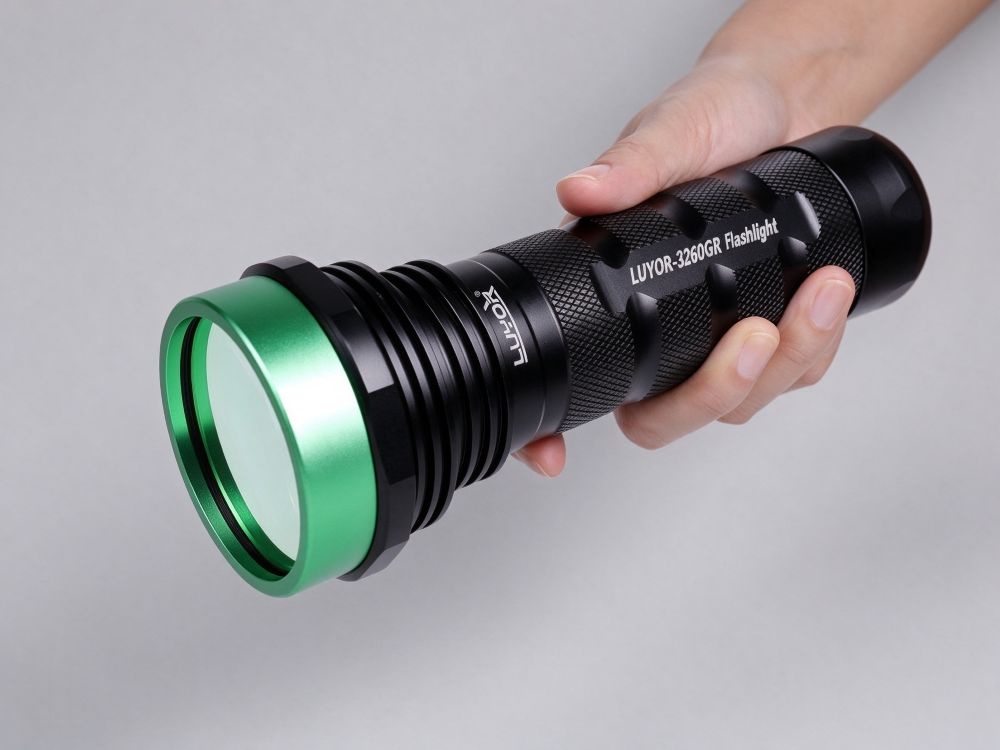
 Model: LUYOR-3260G

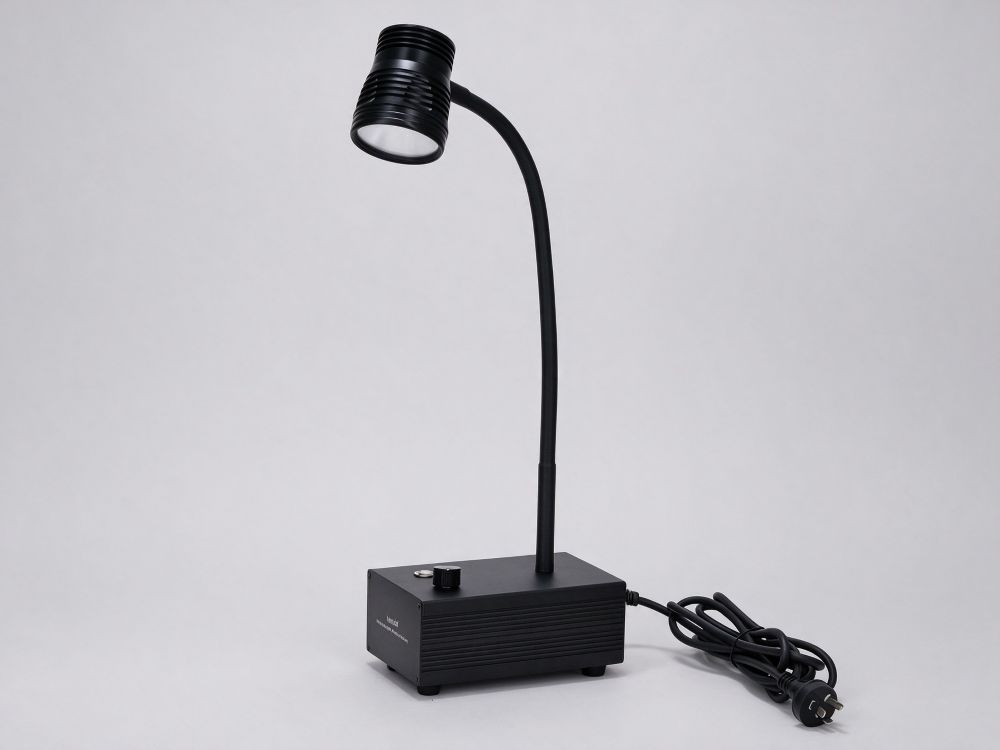
Model: LUYOR-3318
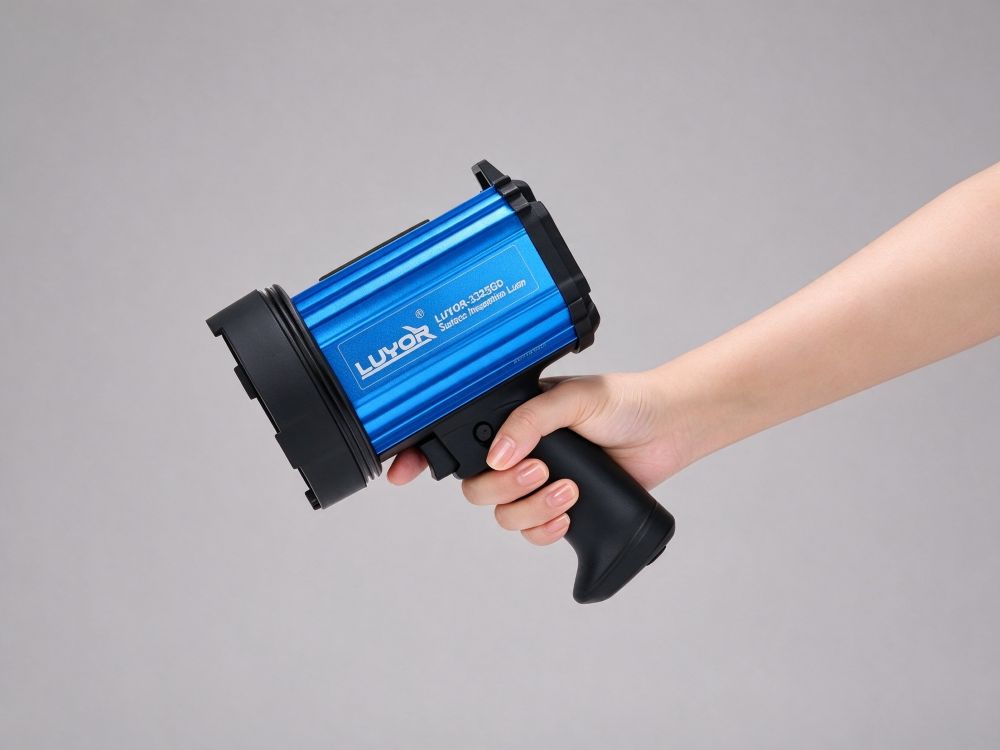
Model: LUYOR-3325G
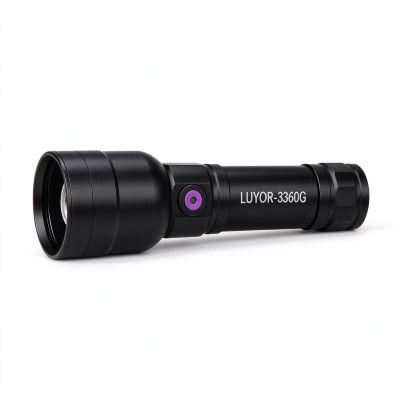
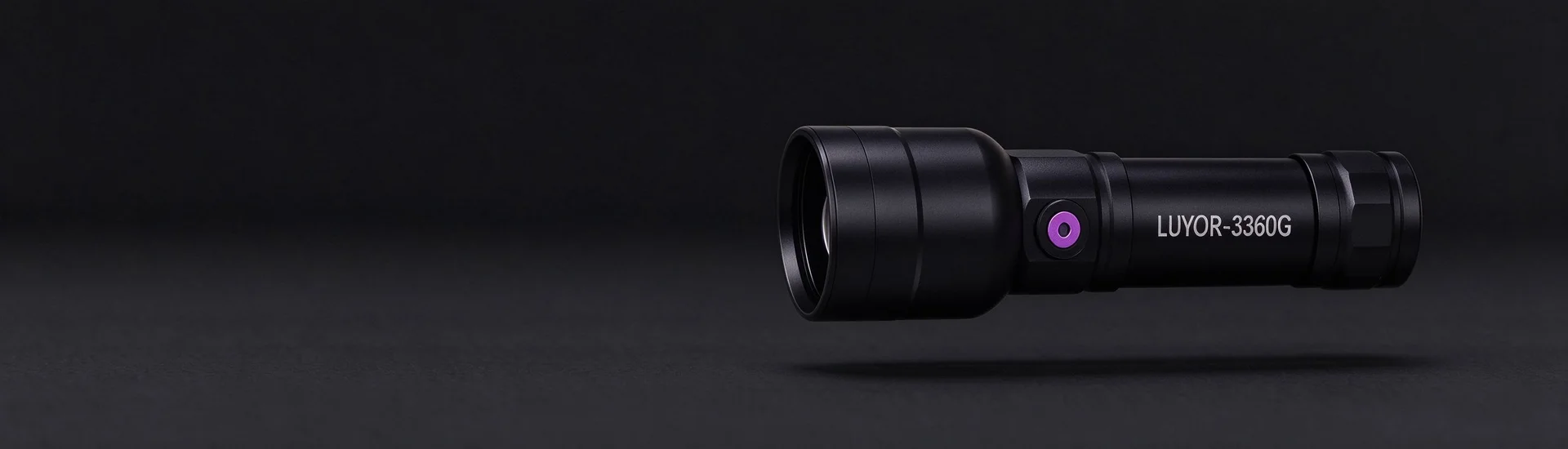
Model: LUYOR-3360G
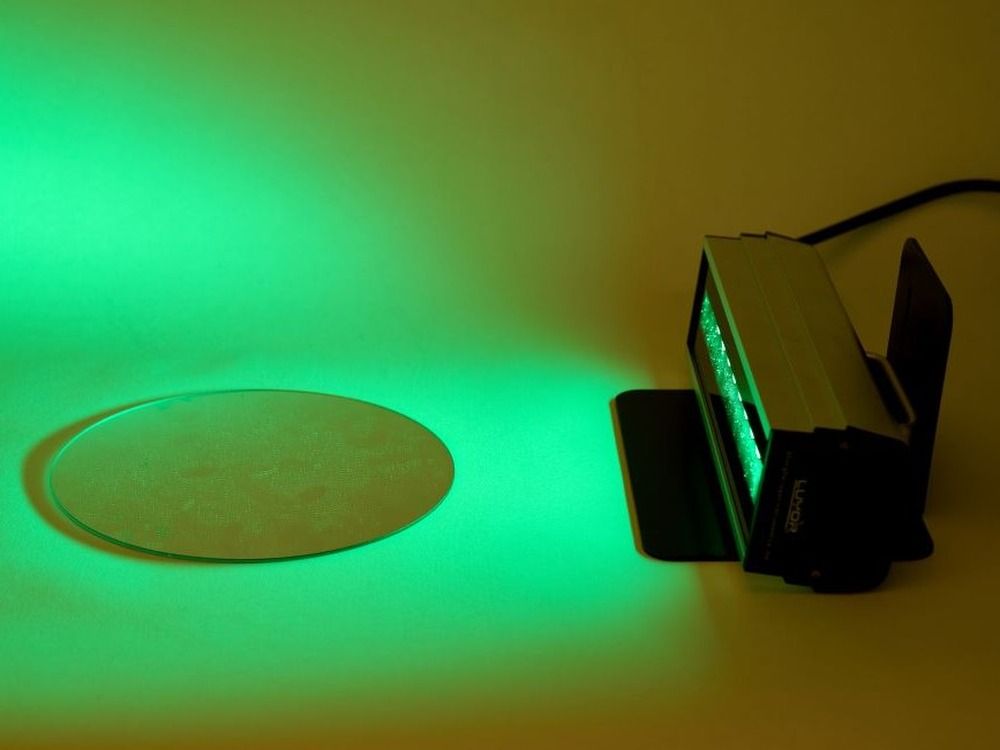
Model: LUYOR-3320
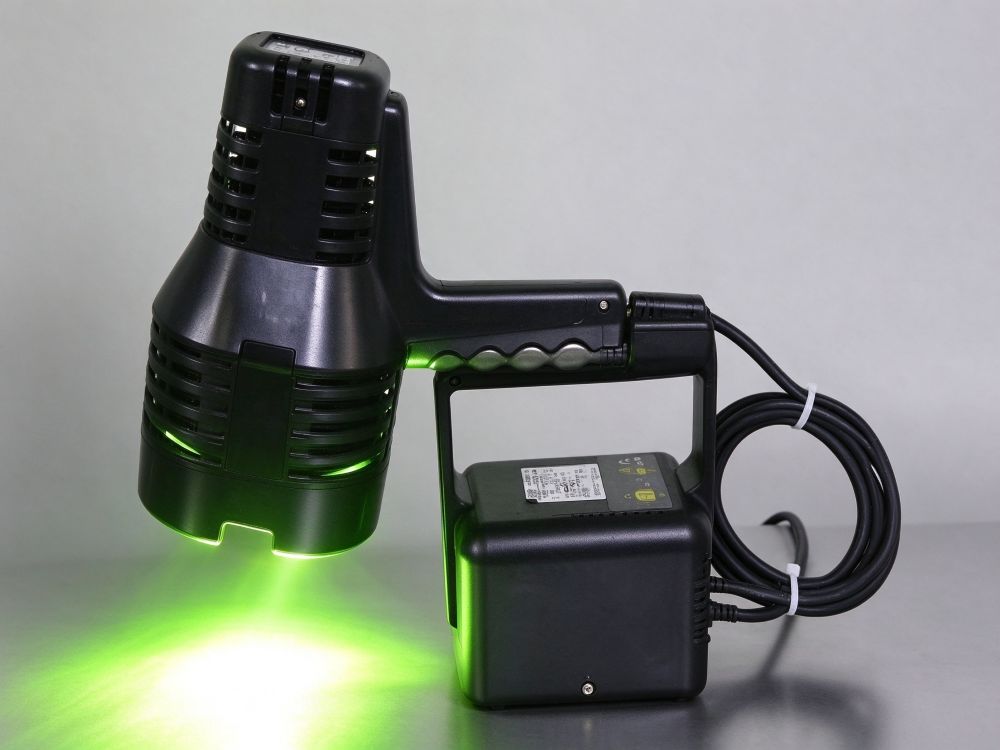
Model: UVP B-100YP
The key decision point for a surface inspection light is the light color. The human eye is most sensitive to yellow-green light around 555nm; at the same power it gives the highest visual brightness and the strongest contrast for fine scratches and particles, and because it contains no short-wavelength blue-violet components it will not excite optical brighteners on the workpiece into producing interfering fluorescence. White light suits overall appearance inspection, while yellow-green light is better for finding very fine defects. The second decision point is the beam format: a flashlight is flexible, a collimated light strip gives even coverage, and a bench model with a flexible arm suits a fixed workstation.
| Model | Form Factor | Light Color / Wavelength | Irradiance / Beam Footprint | Features |
|---|---|---|---|---|
| LUYOR-3260G | Flashlight | Yellow-green, 585nm narrow band | Ø150mm at 38cm | IP67, 21cm total length, fits inside equipment |
| LUYOR-3325G | Portable | 570-580nm monochromatic light | Even beam footprint, no flicker | 36W, 900g, handheld or with bench stand |
| LUYOR-3360G | Flashlight (zoomable) | Yellow-green light | 280000 lux in a 5cm spot at 40cm | 20W, 5000mAh, 3-4 hours runtime |
| LUYOR-3320 | Collimated light strip | Green / white | 45000 / 51000 lux at 30cm, 30×1.5cm strip | 8° vertical / 60° horizontal beam, does not shine into the eyes |
| LUYOR-3318 | Bench top | Warm white 3000K / cool white 6000K | Ø30cm at 30cm, 49000 / 59000 lux | 24W, 500mm flexible arm, fanless for cleanroom use |
| UVP B-100YP | Bench top (mercury lamp) | Yellow-green (below 500nm filtered out) | Detects defects down to 10μm | 100W, aluminum housing, yellow filter prevents fluorescence interference |
The comparisons above are compiled from the published specifications on each product page. For exact configurations, prices and lead times, please refer to the relevant product page or call the number at the bottom of the page. Xinysun Instruments (Shanghai) Co., Ltd. supplies LUYOR and XEPU instruments for industrial inspection, UV curing and speed measurement.
The job of a surface inspection light is to separate 10-100μm particles, scratches, burrs and water marks from the background. Two things matter: the angle at which the light strikes the surface, and whether the light color lets the eye see differences in light and dark. At a grazing angle, particles cast long shadows; with normal illumination the surface reflects evenly, which suits haze residues and color differences. Simply raising brightness without changing the angle usually just makes the light more glaring.
In terms of color, the human eye is most sensitive to yellow-green light around 555nm; at the same power it gives the highest visual brightness and the strongest contrast for fine scratches, and it contains no short-wavelength blue-violet components that could excite optical brighteners on the workpiece into interfering fluorescence. White light suits overall appearance and color-difference judgment, while yellow-green light is more effective for finding very fine defects.
1) Set the angle: use grazing illumination (optical axis less than 30° to the surface) for particles, burrs and scratches; use normal illumination for fingerprints, water marks, haze residues and uneven coating.
2) Set the distance: maintain the stated distance for the specified irradiance; moving closer brightens the surface but shrinks the beam footprint and worsens uniformity. For large-area inspection use a collimated light strip or a bench lamp to avoid brightness fluctuations from hand shake.
3) Set the background: yellow-green light gives the strongest contrast on dark workpieces; on light or reflective workpieces adjust the angle so defects fall on the shadow side, and use a black velvet cloth underneath if necessary.
4) Record the criteria: write down 'at what distance, what angle and what light color the defect was seen' in the work instruction, so results are comparable between different inspectors.
Consider all three parameters together: irradiance determines whether you can see, beam footprint determines how much area you can see at once, and light color determines how strong the contrast is.
| Inspection Target | Recommended Light Color | Irradiance and Format | Notes |
|---|---|---|---|
| Particles, burrs, scratches | Yellow-green 570-585nm | Over 30000 lux at 30cm, grazing | Longer shadows make defects easier to spot |
| Fingerprints, water marks, haze residues | White 3000-6000K | 50000 lux at 30cm, normal | Even reflection is needed to reveal marks |
| Wafers, coated surfaces, glass | Yellow-green light or collimated strip | 30×1.5cm strip, 8° normal | Collimated light is even and does not shine into the eyes |
| In-line inspection in cleanrooms | Warm/cool white, fanless | Ø30cm footprint, flexible arm | Avoids fan-induced airflow disturbance and particle generation |
- Semiconductors and displays: particles on wafer surfaces, pinholes in coatings, photoresist residue.
- Precision machinery: scratches and burrs on guide rails, sealing faces and bearing raceways.
- Coating and injection molding: orange peel, sink marks, dust spots, release-agent residue.
- Medical devices and clean assembly: post-cleaning residue, fingerprints, fibers.
- Optics and glass: scratches, chipped edges and water marks, best seen at an angle with a collimated strip.
- Incoming inspection: agree on the same light color and irradiance with suppliers to reduce judgment disputes.
- Selection and brands: 18 Questions About Surface Inspection Lights: Choosing Yellow-Green, White or Yellow Light and How to Illuminate Correctly, How to Choose a Surface Inspection Light? White vs. Yellow-Green vs. UV and Four LUYOR Models Compared..., How to Choose a Particle Inspection Light? The Roles of 365nm Blacklights and Surface Inspection Lights, and Six Devices...
- Operation and interpretation: How to Inspect Particle Contamination on Wafer Carriers and FOUP Interiors, Surface Cleanliness Before Coating: How the LUYOR-3360G Yellow-Green Light Reveals Oil and...
The human eye is most sensitive to yellow-green light around 555nm; at the same power it gives the highest visual brightness and the strongest light-dark contrast for fine scratches and particles. It also contains no short-wavelength blue-violet components, so it will not excite optical brighteners or oil residues on the workpiece into interfering fluorescence. White light suits overall appearance and color-difference inspection, while yellow-green light is more effective for finding very fine defects.
Grazing illumination means the light is almost parallel to the surface, so raised particles and burrs cast long shadows; it is best for finding particles and scratches. Normal illumination makes the surface reflect evenly and suits fingerprints, water marks, haze residues and color differences. Most stations need both angles, and an adjustable lamp head or a collimated strip (such as the LUYOR-3320) is more convenient than a fixed flashlight.
Not recommended. Cleanrooms have strict limits on particle generation, and a fan-cooled fixture can blow out accumulated internal dust and disturb airflow. Choose a fanless model with passive or external cooling, such as the LUYOR-3318, which is rated fanless and cleanroom-safe, and clean and wipe the fixture before bringing it in.
It depends on particle size and background contrast. For particles above 50μm, 30000 lux of yellow-green grazing light at 30cm is usually sufficient; 10μm-class defects require higher irradiance and a shorter distance, or a collimated strip with a microscope. Note that irradiance is not the only variable: with the wrong angle, even a bright light will not reveal shadows.
Observing diffuse reflection is safe, but you should not look directly at the lamp head or at specular reflections. Collimated-strip models are designed with an 8° vertical beam precisely to avoid shining into the operator's eyes. For long inspection sessions under bright light, wear filter glasses matched to the wavelength; they protect your eyes and improve contrast.
Three points: do not use fan-cooled fixtures, since the fan blows out accumulated internal dust and disturbs airflow; the housing must be wipeable with alcohol and must not shed particles; and clean the exterior before entering the cleanroom. Models such as the LUYOR-3318, rated fanless and cleanroom-safe, are better suited to in-line use.
Turn off auto white balance or lock it manually so the camera does not correct the yellow-green light to gray-white; reduce exposure by about one stop to preserve highlight detail; and add a filter matched to the wavelength in front of the lens to improve contrast. When photographing particles, light from the side to make shadows visible - this reveals defects more easily in the photo than frontal fill light.

Email: info@xinysun.com

Tel: 131-2093-6518

Address: 1525 Minqiang Road, Bldg 26, Songjiang, Shanghai

Copyright 2026 Xinysun Instrument (Shanghai) Co., Ltd. All rights reserved.
ICP:ICP-2026046447




 Breadcrumb:
 Products
 Applications
 Industrial Test Instruments


