
Products
PRODUCTS Breadcrumb: Home > Products > Life Science Instruments > Irradiation Systems
 Overview
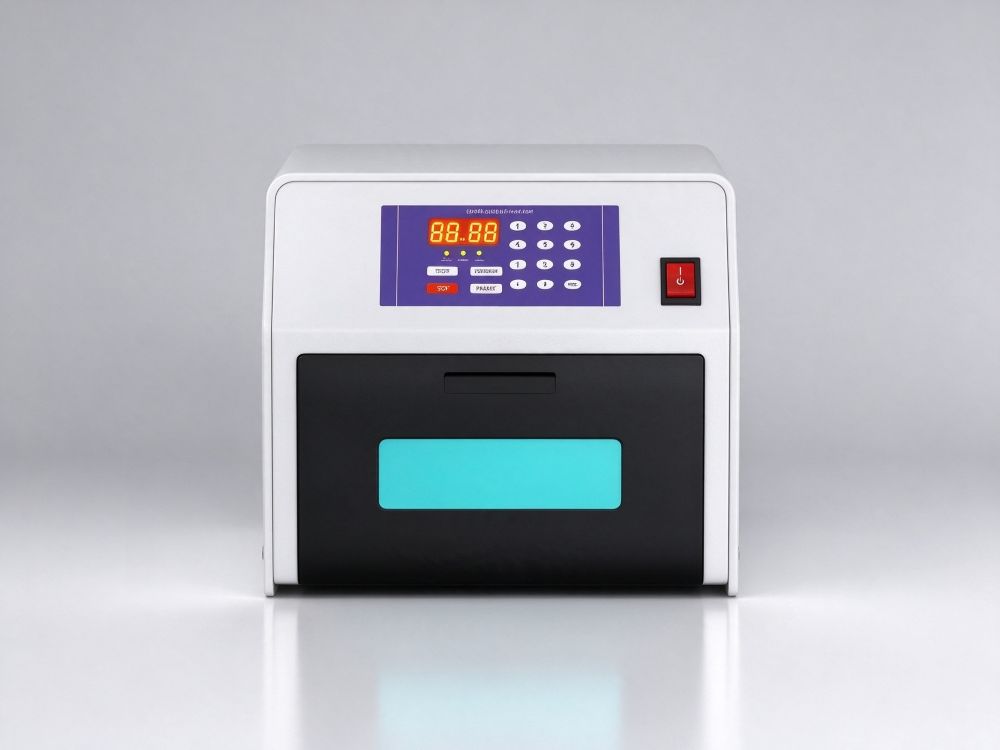
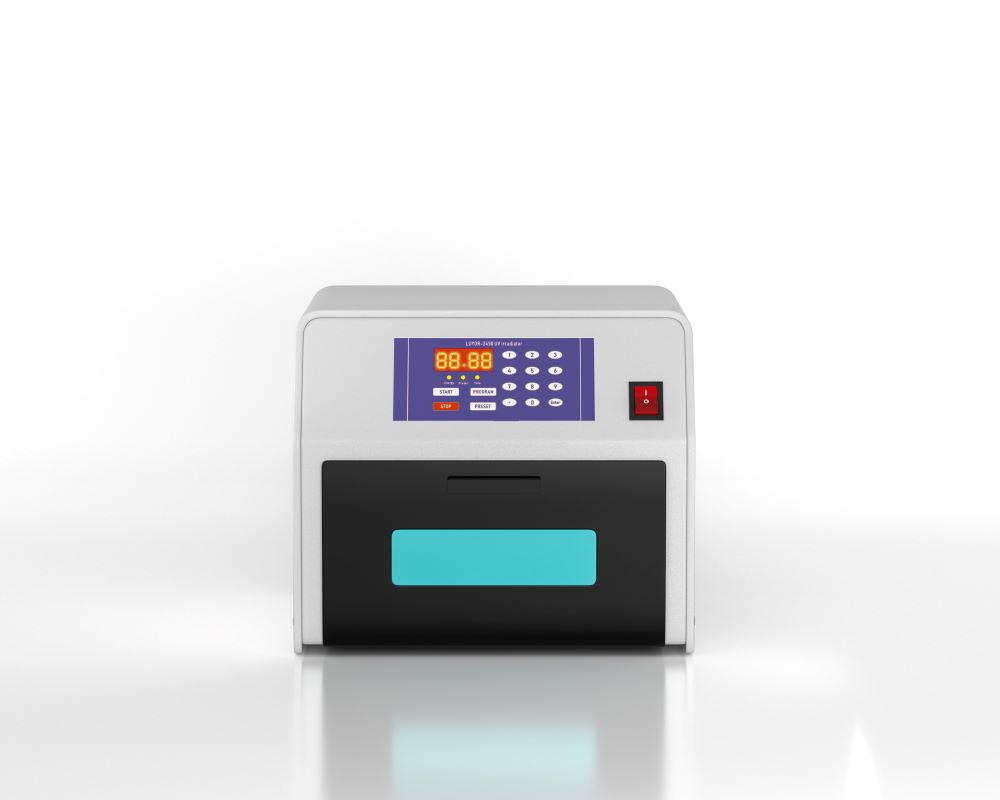
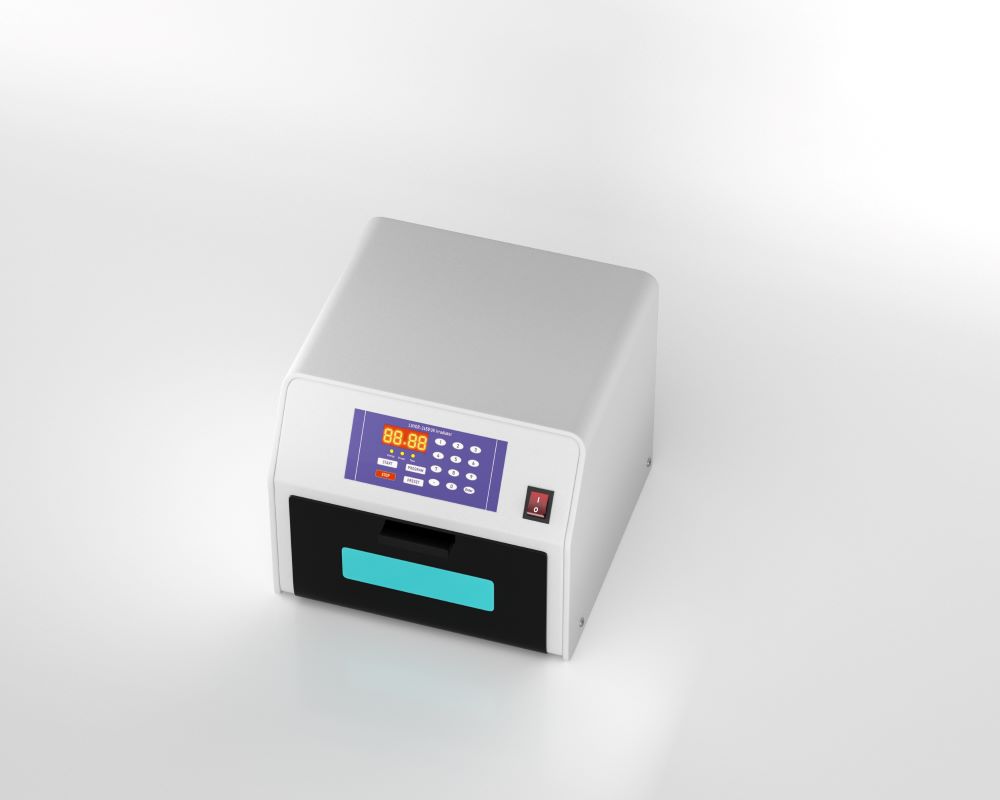
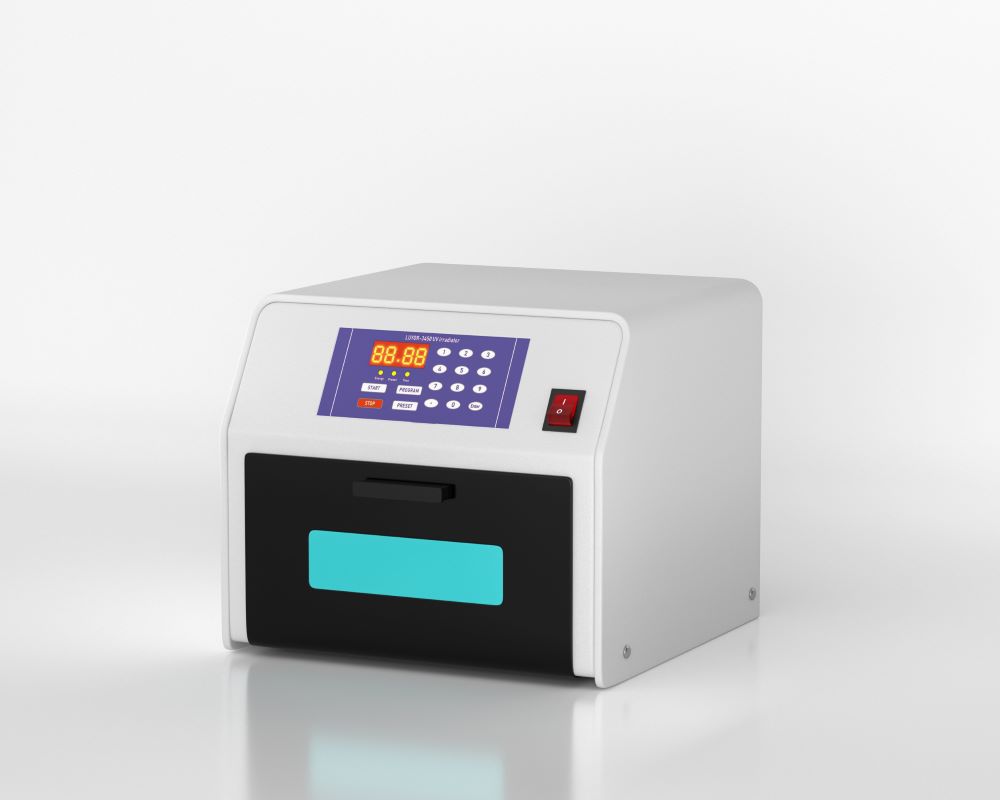
LUYOR-3450 cell phototoxicity irradiator runs 3T3 NRU tests at 1.69 mW/cm2 for 50 min, with a 365 nm sensor, closed-loop dose control and auto stop.
A suitable cell phototoxicity irradiator is defined not by how bright the lamp is, but by whether the dose can be quantified, recorded and reproduced. Phototoxicity conclusions rest on comparing two data sets: the toxicity of the test substance with and without UV irradiation. That makes irradiation a variable of the experiment, not a supporting step. If the dose is uncertain from run to run, the resulting "phototoxic / not phototoxic" call loses comparability - the same sample can give different conclusions on different days or in different hands.
Two substitutes are common in practice, and both have clear problems:
The UV lamp in a biosafety cabinet or clean bench: its 254 nm output is UV-C, a completely different band from the UVA required by 3T3 NRU; intensity also falls as the tube ages, there is no dose measurement, and it can only serve as a sterilizing source, not a quantitative irradiation source.
Solar simulators: the spectrum approximates full sunlight and brings in UVB and visible light, mixing multi-factor damage into the result; system power is often around 500 W with an obvious heat load; and common configurations still need an external UV meter for calibration and timing.
The LUYOR-3450 takes the problem back to basics: only the band you need, only the dose you set, with sample temperature controlled during irradiation.
| Item | Clean bench UV lamp | Solar simulator | LUYOR-3450 |
|---|---|---|---|
| Spectral range | 254 nm (UV-C) | Full solar spectrum, including UVB and visible light | 365 nm UVA single band (other wavelengths optional) |
| Power class | typically 10-30 W | mostly around 500 W | approx. 60 W at full power |
| Dose measurement | none | most models need an external meter | built-in 365 nm sensor, closed-loop integration with auto stop |
| Sample temperature | uncontrolled | noticeable heat, extra cooling needed | below 37 ℃, dual-fan cooling |
| Sample fit | no defined sample position | mostly large samples or a walk-in room | two standard 96-well plates laid flat, several users in parallel |
| Safety | exposure risk depends on operator habits | needs a dedicated room and protection | safety door lock, UV cuts off when the door opens |
First, its place in the workflow: the LUYOR-3450 covers the UV irradiation step after dosing and before detection. Everything else (cell seeding, test substance incubation, viability assay) stays in the regular cell lab; the instrument only turns the irradiation step from uncontrolled into controlled.
Add the test substance to the seeded 96-well plate per protocol and complete pre-incubation
Include a non-irradiated control group (same plate or a parallel plate) to separate drug toxicity from phototoxicity
After power-up, confirm the set energy or time matches this run's protocol
Place the plate flat in the sample position inside the chamber; do not stack plates or offset them noticeably
Confirm the plate lid and well caps are in the state the protocol requires (open or closed, or replaced with clear film)
Close the door and start; the unit integrates the energy measured inside the chamber and stops automatically at the set dose
Remove the plate, change the medium per protocol and return it to the incubator
Run the viability assay at the specified time point (e.g. NRU neutral red uptake or another method)
Record the actual delivered energy in the experiment record
Compare viability between irradiated and non-irradiated groups to reach the phototoxicity call
When the same batch is repeated on different days, only equal doses are comparable
If results vary widely, check the dose record and plate placement first, then the reagents
Putting UV irradiation under microprocessor control gives two switchable modes:
| Item | Time mode | Energy mode (recommended for phototoxicity tests) |
|---|---|---|
| Set value | irradiation duration | cumulative dose (J/cm²) |
| When tubes age | actual dose drops, with nothing visible from outside | irradiation time extends automatically, dose stays the same |
| Supply and temperature drift | shows up directly in the dose | absorbed by the integration loop, dose unaffected |
| Comparability of results | conditions must be re-established after a tube or unit change | dose can be recorded and compared directly |
| Typical use | aligning with a fixed duration from existing literature | 3T3 NRU, photosensitizer evaluation, and any dose-dependent experiment |
The implementation is not complex, but it needs a sensor and an algorithm: the in-chamber 365 nm UV sensor is accurate to ±5% and samples 5 times per second, and the microprocessor computes the remaining irradiation energy in real time. In other words, the unit does not estimate from preset brightness times time; it integrates the value measured inside the chamber, so intensity loss from tube aging, chamber contamination or temperature change is compensated automatically.
The standard configuration is 365 nm UVA, the common band for the 3T3 NRU phototoxicity test and most phototoxicity and photosensitizer work. Other tube configurations can be fitted to the experiment:
| Wavelength | Band | Common use |
|---|---|---|
| 365 nm Standard configuration | UVA | 3T3 NRU in vitro phototoxicity test, phototoxicity evaluation of cosmetics and chemical raw materials, photosensitizer cell studies |
| 395 nm | Near UV | UV curing, photoinitiator systems, excitation of some photosensitive materials |
| 450 nm | Blue | Blue-light photosensitive systems, optogenetics (photosensitive protein activation), some photocatalytic reactions |
| 525 nm | Green | Photodeformable materials, excitation of specific photosensitive dyes |
| 660 / 760 nm | Red / near infrared | Photodynamic and photothermal therapy research, photothermal material evaluation |
| 808 nm | Near infrared | Photothermal conversion materials, deep-penetration irradiation work |
| White light | Visible | Visible-light photocatalysis, screening of photoreaction conditions |
| Model | LUYOR-3450 (standard 365 nm; other wavelengths optional or custom) |
| Power supply | 220 VAC, 50 Hz |
| Power consumption | approx. 60 W at full power |
| Light source | 4 × 365 nm, 8 W UV tubes |
| UVA irradiance range | 1.3 mW/cm² - 2.5 mW/cm², factory set 1.7 - 1.9 mW/cm² |
| Fixed program | UVA intensity 1.69 mW/cm², 50 minutes |
| Energy setting range | 0.025 – 99.99 J/cm² |
| Time setting range | 0 - 599.5 minutes |
| Built-in sensor | 365 nm UV sensor, ±5% accuracy; 5 samples per second, microprocessor computes remaining irradiation energy in real time |
| Chamber dimensions | W 26 cm × D 32 cm × H 15 cm |
| Sample capacity | 2 standard 96-well cell culture plates |
| Chamber temperature | dual-fan cooling, chamber temperature below 37 ℃ |
| External dimensions | W 31 cm × D 34 cm × H 31 cm |
| Weight | approx. 10 kg |
| Source life | approx. 5000 - 8000 hours |
| Safety design | safety interlock door lock; UV source switches off automatically when the door opens |
| Control | microprocessor control, irradiation energy and time set independently |
In vitro phototoxicity testing of cosmetic ingredients, chemical raw materials and drug candidates, and cytotoxicity comparison of photosensitizers and photothermal materials in photodynamic and photothermal therapy research. Quantitative irradiation is the precondition for these experiments.
Light controls the release of photosensitive drugs or carriers for controlled drug release. Stable, repeatable illumination is needed to compare release curves across formulations and light parameters.
UV LEDs or UV sources for curing resin forming, UV-curable adhesives, coatings and inks. Setting conditions by energy makes it easy to compare cure degree across formulations.
Developing new photodeformable materials through photochemical and photophysical effects requires repeated irradiation at controlled doses with recorded response; energy mode fixes the irradiation conditions as an experimental parameter.
Light controls photosensitive proteins to intervene in and demonstrate cell activity. The 450 nm blue configuration suits common optogenetic systems; irradiation time and dose are set per protocol.
Photocatalyst development and screening of photochemical synthesis conditions need parallel comparison. The 96-well format irradiates many samples at once with stable output, so conditions compare directly.
The unit has a safety interlock door lock and cuts the UV source when the door opens, so normal operation produces no UV exposure
Still, do not look at the tubes in the chamber with the door open; disconnect power before changing tubes
Place the unit away from staffed workstations and keep ventilation and cooling clearance
Keep plates flat and do not stack them, so lower samples are not shadowed and under-dosed
Decide per protocol whether the lid stays on, and fix that detail in the SOP - lid-on and lid-off give different doses and change the result
Confirm the set energy matches the protocol before irradiation, and record the measured energy after
LUYOR-3450 main unit (standard 365 nm tube configuration)
Power cord and supplied documents
Factory parameter setting: intensity 1.7-1.9 mW/cm²
Other wavelength tube configurations (395/450/525/660/760/808 nm, white light, etc.)
Spare tubes
UV meter (if independent periodic checks are required)
We provide more than the instrument: send us your experimental design (test substance type, cell system, planned irradiation conditions, detection method) and we can help confirm the wavelength configuration and starting irradiation conditions; if you need to align with a fixed duration or fixed dose from existing literature or methods, we can check the parameter settings together. The unit is in stock in Shanghai, and accessories and consumables can be ordered long term.
The LUYOR-3450 uses 365 nm UVA tubes with the spectrum concentrated in the UVA band and no UVB; full power is about 60 W, against roughly 500 W for common solar simulators, so the heat load and cooling burden differ greatly. It has a built-in 365 nm UV sensor and microprocessor: set the energy, it runs automatically and stops at the set dose, with no external UV meter and no need for manual attendance or frequent lamp adjustment.
The 3T3 NRU test examines the cytotoxicity a test substance shows under UV irradiation. Irradiating with the 365 nm UVA band alone removes the extra damage variables from UVB and visible light, so the result can be attributed to the substance's own phototoxicity. The LUYOR-3450 standard configuration is 365 nm UVA, factory set to 1.7-1.9 mW/cm², and irradiance is adjustable over 1.3-2.5 mW/cm².
The instrument has a built-in program of UVA intensity 1.69 mW/cm² for 50 minutes, matching common 3T3 NRU in vitro phototoxicity conditions, and it can be called directly. You can also skip the fixed program and set irradiation energy or time yourself to follow your lab's protocol.
The irradiation chamber measures W 26 cm × D 32 cm × H 15 cm and holds 2 standard 96-well cell culture plates laid flat. With smaller dishes or other vessels, several groups can be placed in the chamber at once; the number depends on vessel shape and arrangement.
No. The chamber uses dual-fan cooling and holds the temperature below 37 ℃, consistent with cell culture conditions, so thermal effects do not interfere with the phototoxicity result. This matters especially for long exposures such as 50 minutes.
A 365 nm UV sensor inside the chamber, accurate to ±5%, samples data 5 times per second, and the microprocessor computes the remaining irradiation energy in real time and stops automatically at the set value. Intensity changes from tube aging, supply drift or chamber contamination are compensated automatically, so recorded doses can be compared and reproduced.
No. Irradiation energy is measured inside the chamber by the built-in sensor under closed-loop control, which is the unit's own quantity reference. If your lab has separate metrology or periodic check requirements, an external UV meter can be added for regular comparison as an option.
Yes. Besides the standard 365 nm, configurations at 395 nm, 450 nm, 525 nm, 660 nm, 760 nm, 808 nm and white light are available for photodynamic, photothermal, UV curing, optogenetic and other excitation needs, and custom builds are possible. Tell us the application before ordering and we will help confirm the wavelength and tube configuration.
Source life is about 5000-8000 hours, clearly longer than the xenon lamps in common solar simulators. The tubes are standard UV tubes and replace as a whole unit; no frequent repositioning of the source is needed. Log cumulative tube hours so you can assess after replacement whether chamber intensity still meets the set requirement.
The unit has a safety interlock door lock that cuts the UV source when the door opens, so the operator and people nearby receive no UV exposure. That is one reason it suits routine cell work better than an open UV source.
No long warm-up is needed. The unit uses UV tubes with microprocessor closed-loop control; set the parameters at power-up and run. Because dose accumulates from energy measured in the chamber, short-term intensity drift does not change the delivered dose.
Yes. The unit provides a stable source for in vitro cell illumination work, including cytotoxicity evaluation of photosensitizers and photothermal materials and photoinduced drug release. If the experiment needs red or near-infrared bands such as 660 nm or 808 nm, choose that wavelength configuration at ordering.
Yes. Output is stable, chamber illumination is even, and the unit stops on energy, which suits parallel condition screening; the 96-well format also connects easily with standard microplate readers and workflows. For larger sample counts or longer exposures, see the UV irradiation chambers in the same series.
The unit is about W 31 cm × D 34 cm × H 31 cm and weighs about 10 kg, so it fits a standard lab bench or a cell culture room bench; keep it near the clean bench and incubator for convenience. It runs on 220 VAC 50 Hz; leave cooling clearance around it.
The unit is in stock in Shanghai, with installation guidance and parameter setting advice; tubes and other consumables are available long term. If your protocol needs a different wavelength, a different fixed program or special vessel adaptation, contact us to confirm customization and lead time.
They serve different purposes: a cell phototoxicity irradiator (such as the LUYOR-3450) delivers a set dose to cell samples, with the dose integrated in a closed loop by the in-chamber sensor and stopped at the set value; a UV meter (see UV meters / UV radiometers) is a separate instrument that measures irradiance, typically used for periodic checks and value comparison. Use the former for formal phototoxicity testing, and the latter when chamber intensity needs calibration or rechecking.
The LUYOR-3450 irradiation chamber has dual-fan cooling and holds the chamber below 37 degrees, which suits batch irradiation on a standard cell culture bench. If you need continuous illumination inside an incubator (e.g. long optogenetic stimulation), see the LUYOR-3480 microplate cell irradiator, an LED irradiation source that can go inside an incubator.
Dose control is the core: check whether a built-in UV sensor does closed-loop integration (not just timing), the energy setting range and accuracy, whether the chamber holds standard 96-well plates flat, and whether chamber temperature is controlled. For large batches or animal samples, see the large-chamber approach of the LUYOR-3550 UV irradiation chamber.
The LUYOR-3450 has been used as a quantitative UVA irradiation source in peer-reviewed research. The published abstract is summarized below:
| Reference | Irradiation protocol | Conclusion |
|---|---|---|
| Triazine UV filters EHT and HEB phototoxicity evaluation Wei et al., 2025 J. Dermatol. Sci. Cosmet. Technol. 2: 100087 (Hubei Polytechnic University) | 3T3 neutral red uptake phototoxicity test per OECD 432: UVA dose 5 J/cm2, chamber intensity 1.69 mW/cm2 for 50 minutes with auto stop at dose; chlorpromazine (CPZ) as positive control | PIF of 1 for both EHT and HEB, MPE 0.044 and 0.098 respectively, below the OECD 432 threshold, judged not phototoxic; guinea pig in vivo skin test results consistent |
DOI: 10.1016/j.jdsct.2025.100087 (download link in the reference block above). For dose conversion, positive controls and record keeping when setting up an in vitro phototoxicity platform per OECD 432, see 18 Questions on Cell Phototoxicity Irradiation Systems; for measured chamber intensity and dose validation data for the LUYOR-3450, contact us.
Send inquiry

Email: info@xinysun.com

Tel: 131-2093-6518

Address: 1525 Minqiang Road, Bldg 26, Songjiang, Shanghai

Copyright 2026 Xinysun Instrument (Shanghai) Co., Ltd. All rights reserved.
ICP:ICP-2026046447




 Products
 Applications
 Previous:
 Back to list

 Industrial Test Instruments


