
Products
PRODUCTS Breadcrumb: Home > Products > Life Science Instruments > Irradiation Systems
 Overview
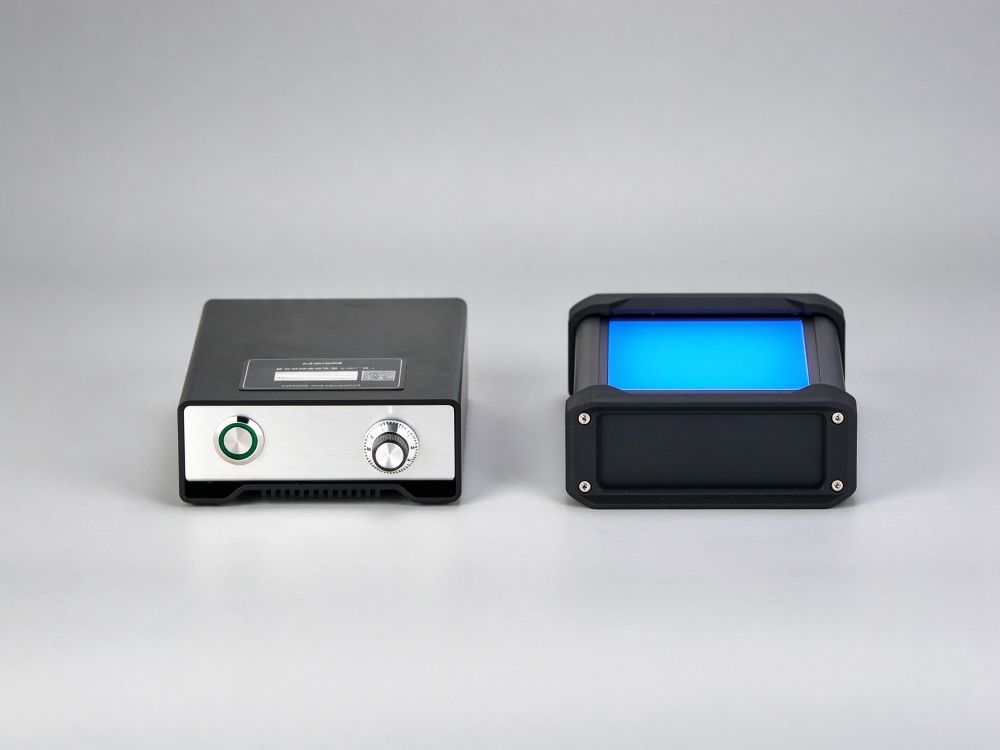
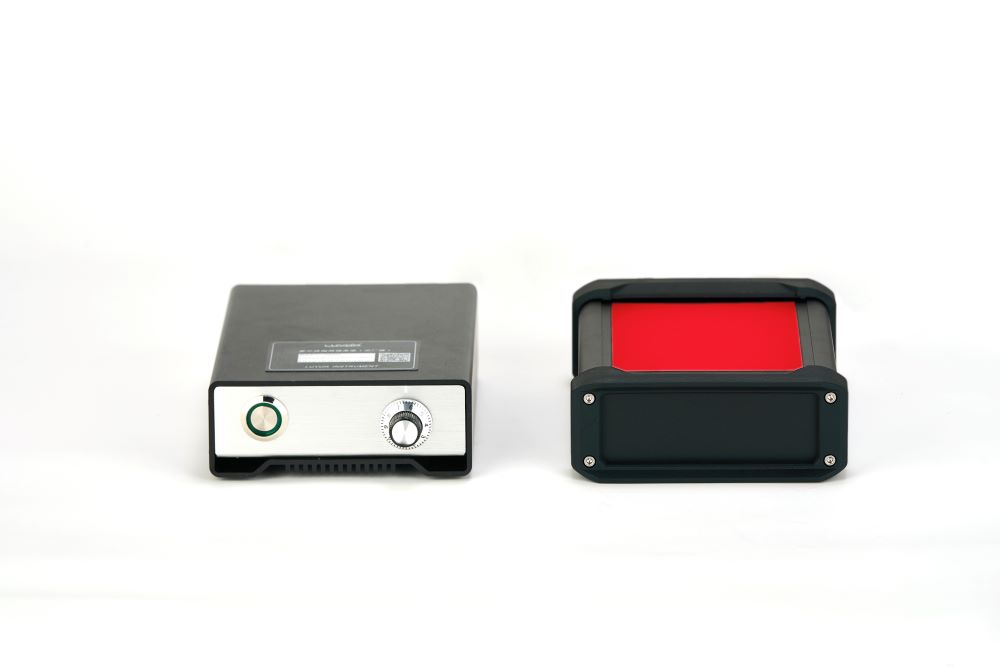
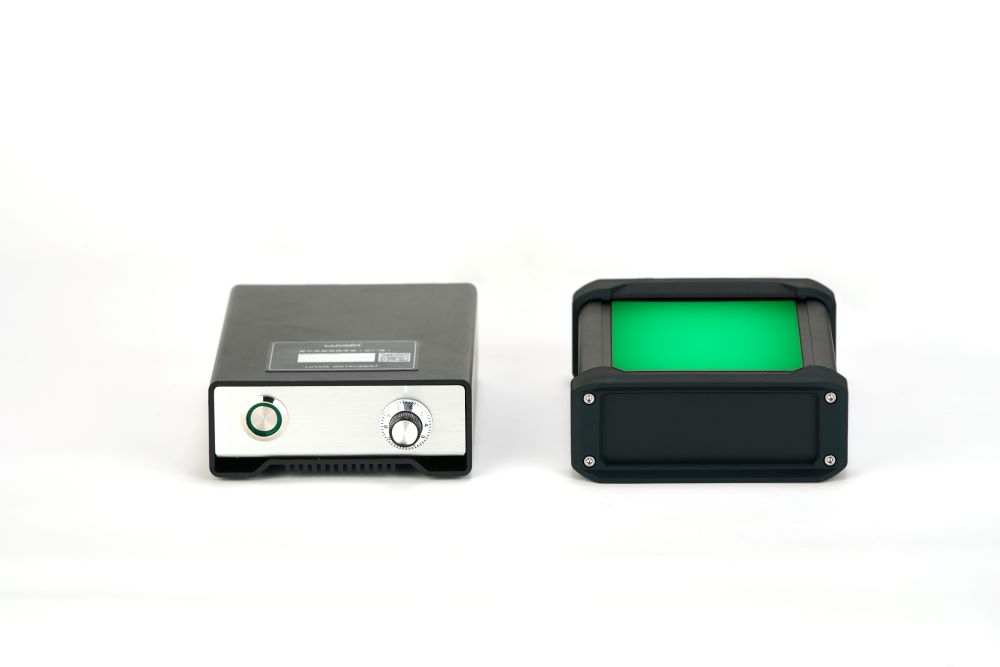
LUYOR-3480 is a flat LED microplate irradiator for 6-96 well plates, covering 365-808 nm across 11 wavelengths, with a head that fits in a 37 C incubator.
In vivo optogenetics has a mature toolkit: fibers, implanted probes, and lasers working together to drive targeted neurons in a living animal. Move the experiment back to a dish - cultured cells, bacteria, zebrafish and larvae, organoids - and that toolkit stops fitting. Addressing 96 wells one at a time is slow and inconsistent, and a laser puts a small spot on the plate that covers a small part of it.
Many labs bridge the gap with substitutes, each with clear shortcomings:
| Substitute | Main problem | LUYOR-3480 design response |
|---|---|---|
| Handheld UV lamp or fluorescence flashlight | Distance and angle change with the hand, dose varies between wells, parameters cannot be recorded | Fixed emitting surface, the plate lies flat and is exposed, constant distance and angle |
| Inverted microscope light source | Optics designed for viewing, the field covers few wells, ties up the microscope for long periods | Independent source, works alongside the microscope, no contention |
| Home-made LED panel | Wavelength and intensity are achievable, but there is no humidity protection or thermal design, incubator use is risky, and other labs cannot reproduce the parameters | Designed for incubator humidity, adjustable wavelength and intensity, parameters can be written into the method |
| Benchtop UV chamber (such as LUYOR-3450) | Good closed-loop dose control, but bands are mainly UV and the chamber does not fit a whole plate in an incubator | LED bands from UV to near-infrared, thin head fits whole into the incubator |
The excitation wavelength of an optogenetic tool governs the result: blue-light channels (ChR family) excite near 470 nm, while red-shifted channels and chloride pumps are more efficient near 590 nm. A wrong wavelength will not ruin the experiment, but activation kinetics drop markedly. The table lists common photosensitive tools and the recommended unit wavelength:
| Tool protein / system | Typical excitation | Recommended configuration |
|---|---|---|
| ChR2 (H134R) | 470 nm blue | LUYOR-3480-470nm |
| ChETA / oChIEF (high-frequency) | 470–490 nm | LUYOR-3480-470nm |
| CheRiff | About 460 nm | 450nm or 470nm |
| Chronos | About 530 nm | LUYOR-3480-525nm |
| ChrimsonR | About 590 nm | LUYOR-3480-590nm |
| C1V1 | About 560 nm | 525nm or 590nm |
| eNpHR3.0 (chloride pump, inhibition) | 525–650 nm, center about 578 nm | LUYOR-3480-590nm |
| Arch / ArchT (inhibition) | About 566 nm | LUYOR-3480-590nm |
| GtACR1 / eOPN3 | About 512–515 nm | LUYOR-3480-525nm |
| Jaws (red-shifted inhibition) | About 632 nm | LUYOR-3480-630nm |
| QuasAr2 (voltage imaging) | About 640 nm | 630nm or 660nm |
Other bands have clear uses beyond channel proteins:365/405 nm for photo-uncaging and light-triggered drug release;420–450 nm covers flavoproteins and LOV-domain tools;525/590 nm is the main range for inhibitory tools and red-shifted channels;630/660/740/808 nm serves photodynamic therapy (PDT) development, photothermal work, and near-infrared penetration studies; white light serves photochemistry and material screening where the spectrum is not critical.
Two-color work is a common requirement: a ChR2 (470 nm activation) plus eNpHR3.0 (590 nm inhibition) pair, for instance, lets you open the channel with blue light and close it with yellow-green. Units ship with one wavelength per light head; you can order two heads of different wavelengths, or swap heads over the same plate to run two exposures in sequence.
In vitro optogenetics samples should spend most of their time in the incubator, not be carried out for exposure. The LUYOR-3480 is built around that requirement:
The head is a flat panel about the footprint of a plate, taking almost no shelf space in the incubator
A 2 m cable passes out of the cabinet to the controller outside
The controller runs at room temperature, away from 37℃ and high humidity
The emitting surface follows the standard 96-well footprint, so the plate sits directly on it
24-, 12-, and 6-well plates and dishes lie flat the same way, with the whole base covered
Both quartz and polystyrene plates work
The head is designed for 37℃ and high humidity and runs continuously for long periods
Fill and change medium outside the incubator to limit condensation on the emitting surface
Wipe the emitting surface with a soft cloth regularly to keep it clear
Continuous intensity adjustment and settable time cover short pulses through exposures of several hours
For stem cell differentiation and other multi-day light protocols, the run continues through medium changes
The plate stays in the incubator, avoiding temperature and contamination swings from repeated moves
Dose in in vitro optogenetics depends on three things:wavelength, irradiance, and time. The literature usually reports mW/cm² and exposures from milliseconds to minutes; an undocumented "light for a while" cannot be written into a method, nor repeated by another group.
Choose from the excitation spectrum of the tool protein (see the previous section). For systems with published data, use the published wavelength; for a new system, check the excitation peak in the original tool protein paper.
The dial adjusts continuously from low to high. Start at the lower end used for comparable systems and run an intensity or time gradient before fixing parameters, so a high starting intensity does not confound the result with phototoxicity.
Dose = irradiance × time. Channel activation usually uses milliseconds to seconds, while differentiation and photopharmacology use continuous exposure over minutes; the timer is settable and long protocols can accumulate in several runs.
We suggest adding an optical power meter: if the dose goes into a paper's methods, or you need to verify values after a wavelength or light-head change, measure irradiance at a few well positions on the emitting surface and convert to time with the dose formula. Intensity varies with wavelength and setting, so measured values govern. We can advise on a matching UV radiometer or optical power meter.
All three belong to the laboratory irradiation family but serve different experiment formats. Start with two questions:where the sample sits (multiwell plate or large chamber), and which band you need (visible or UV).
| Item | LUYOR-3480 | LUYOR-3450 | LUYOR-3550 |
|---|---|---|---|
| Role | Multiwell LED photostimulation source | Quantitative phototoxicity chamber | Large-chamber UV irradiator |
| Light source | LED flat panel | 4 × 365 nm 8 W UV lamps | 20 × 15 W lamps |
| Bands | 365-808 nm, 11 stocked wavelengths plus white | 365 nm UVA standard, other wavelengths available | UVA/UVB/UVC single or combined |
| Samples | 6-96 well plates and dishes | Two 96-well plates, small vessels | Animals, large samples, batch materials |
| Dose control | Adjustable intensity and time | 0.025-99.99 J/cm², built-in sensor with closed-loop auto stop | Energy and time modes, constant-dose output |
| Operating environment | Head fits in a 37℃ incubator for long runs | Benchtop, chamber below 37℃ | Benchtop, sample compartment below 37℃ |
In short:for optogenetics or photostimulation with samples in multiwell plates inside an incubator, choose the 3480;for 3T3 NRU phototoxicity with closed-loop UVA dose, choose the 3450;for large samples, UVB/UVC, or batch exposure, choose the 3550. The three can also sit in one laboratory, each covering a different step.
Light activation and inhibition of cultured neurons, and in vitro models of channelopathies such as epilepsy and arrhythmia, using 470 nm activation with 590 nm inhibition for bidirectional control.
Light-controlled iPSC differentiation, organoid and zebrafish larvae stimulation; samples stay in the incubator, which suits a head that delivers light inside the cabinet for days.
Drug screening for photodynamic therapy (PDT) development, photoswitch compounds, and photo-uncaging work: 630/660 nm for porphyrin photosensitizers, 365/405 nm for caged compounds.
Blue-light systems such as Cry2-based targeted protein expression and biomolecular condensation, and light-controlled CRISPR/Cas9 editing; supplied at 470 or 450 nm.
Light-response studies on retinal cells and in vitro light exposure steps in ophthalmic drug development, with bands from blue to red chosen for the target cell.
Homogeneous photoreactions, photocatalyst screening, and light aging of materials; white light and 365-808 nm monochromatic light cover broad screening and wavelength-specific reactions respectively.
Three differences. Wavelengths are built for photosensitive tools (11 stocked wavelengths from 365 to 808 nm plus white, with narrow emission half-width, which an ordinary lighting panel does not deliver); the emitting surface follows the multiwell plate footprint, covering the whole plate evenly; and the housing and cable are designed for incubator use, so the head can work for long periods in a 37℃ humid incubator while the controller stays outside.
Per the standard configuration it fits 6, 12, 24, 48, and 96-well plates, with 96-well as the main format: the emitting surface matches a standard 96-well footprint, and the plate sits directly on it. Flat-bottom vessels such as dishes and cell culture flasks also lie flat for exposure with the whole base covered. Quartz and polystyrene plates both work.
Yes, and this is what separates it from a conventional benchtop chamber: the light head and controller are separate, so the head goes into the incubator with the plate and a 2 m cable runs out to the controller. The head is designed for incubator humidity and runs for long periods at 37℃ and high humidity.
The unit uses an LED flat panel that emits from the whole surface, which is far more even well to well than a point source or a handheld lamp. If your experiment demands strict well-to-well consistency (for a published method, for example), measure irradiance at a few well positions with an optical power meter and record the measured values with the settings.
Intensity adjusts continuously on the controller and exposure time is settable; together they give the light dose the sample receives (dose = irradiance × time). Start at the lower intensity used in comparable published work and run a gradient pre-test in intensity or time before fixing the parameters.
ChR2 and its variants (H134R, ETA, oChIEF) use 470 nm; CheRiff at about 460 nm uses 450 or 470 nm; Chronos at about 530 nm uses 525 nm; ChrimsonR at about 590 nm uses 590 nm; eNpHR3.0 centered near 578 nm and Arch/ArchT at about 566 nm use 590 nm; GtACR1 and eOPN3 at about 515 nm use 525 nm; Jaws at about 632 nm uses 630 nm. Tell us the tool protein before ordering and we will help confirm the wavelength.
Two-color work is possible: a common pair is ChR2 (470 nm activation) with eNpHR3.0 (590 nm inhibition). Units ship with one wavelength per head; for two colors, order two heads of different wavelengths, or swap heads over the same plate for two exposures in sequence. Neither approach requires moving the plate.
Dose (J/cm²) = irradiance (mW/cm²) × time (s) ÷ 1000. Both pulsed and continuous protocols are common in vitro: channel activation usually uses pulses from milliseconds to seconds, while stem cell differentiation and photopharmacology use continuous exposure over minutes. The timer is adjustable and long protocols can accumulate over several runs. Start from comparable published work and build a gradient.
For routine phenotypic work, no: run at the set intensity and time. If the dose goes into your methods, or you need to verify values after changing wavelength or light head, add an optical power meter or UV radiometer and measure irradiance on the emitting surface. We can advise on a matching meter.
LEDs are a cold source with none of the UV heat load of a 365 nm lamp, and the head sits inside a 37℃ incubator, so there is no additional heat source; well temperature follows the incubator's own control. Compared with a chamber-type UV irradiator, the 3480 carries far less thermal management burden.
The three belong to one laboratory irradiation family with different roles: the 3480 is a multiwell LED photostimulation source with wider wavelength coverage that goes into the incubator, aimed at in vitro optogenetics and photobiology; the 3450 is a 365 nm UVA quantitative chamber with a built-in sensor and energy-based auto stop, aimed at 3T3 NRU phototoxicity testing; the 3550 is a large-chamber UV irradiator with UVA/UVB/UVC options, suited to animals, large samples, and batch exposure.
The head is designed for high humidity, with protection on the panel and housing, and the 2 m cable reaches from inside the incubator to the controller outside. In daily use, fill and change medium outside the cabinet to limit condensation, wipe moisture and residue off the emitting surface with a soft cloth, and keep medium from spilling into panel seams.
Leave unexposed wells or a whole plate on the same or a parallel plate as the control, held for the same time under identical culture conditions. If you expose whole plates, cover the control wells with an opaque lid or aluminum foil, taking care not to press on the liquid surface. Phototoxicity experiments also need a light-alone group without test article, to separate photosensitizer effects from the effect of light.
365, 405, 420, 450, 470, 525, 590, 630, 660, 740, and 808 nm plus white are stocked; other wavelengths from 250 to 1100 nm and white can be customized. Stocked wavelengths ship from Shanghai; contact us for lead time and minimum order on custom wavelengths, with a response usually within 2 hours on business days.
Units ship from stock in Shanghai, with installation guidance, wavelength selection, and exposure-condition advice. LED sources last long and need no routine consumable replacement; if a head or controller fails, it can be returned for repair. If your protocol changes (a new wavelength or a two-color setup), contact us to assess an expansion.
Any experiment whose conclusion depends on which wavelength, what intensity, and how long: in vitro optogenetics and photobiology stimulation, light-driven stem cell and organoid differentiation, light control in zebrafish and larvae, photopharmacology dosing, photochemistry and material screening, and quantitative cell phototoxicity tests such as 3T3 NRU. Wherever you need whole-plate consistency and recordable parameters, the LUYOR-3480 is a steadier choice than a handheld lamp or a microscope light source.
Ordinary LED panels usually lack humidity protection and thermal design, so incubator use is risky and parameters are hard to reproduce. A UV chamber (such as the LUYOR-3450) has good closed-loop dose control but is mainly UV and its chamber does not take a whole plate into an incubator. The LUYOR-3480 head is designed for the incubator, covers UV to near-infrared, is thin enough to place whole, and offers adjustable intensity and time that can be written into a method, which makes it a better fit for quantitative 96-well exposure.
Send inquiry

Email: info@xinysun.com

Tel: 131-2093-6518

Address: 1525 Minqiang Road, Bldg 26, Songjiang, Shanghai

Copyright 2026 Xinysun Instrument (Shanghai) Co., Ltd. All rights reserved.
ICP:ICP-2026046447




 Products
 Applications
 Previous:
 Back to list

 Industrial Test Instruments


