
Products
PRODUCTS Breadcrumb: Home > Products > Industrial Test Instruments > Tachometer Sensors
 Overview
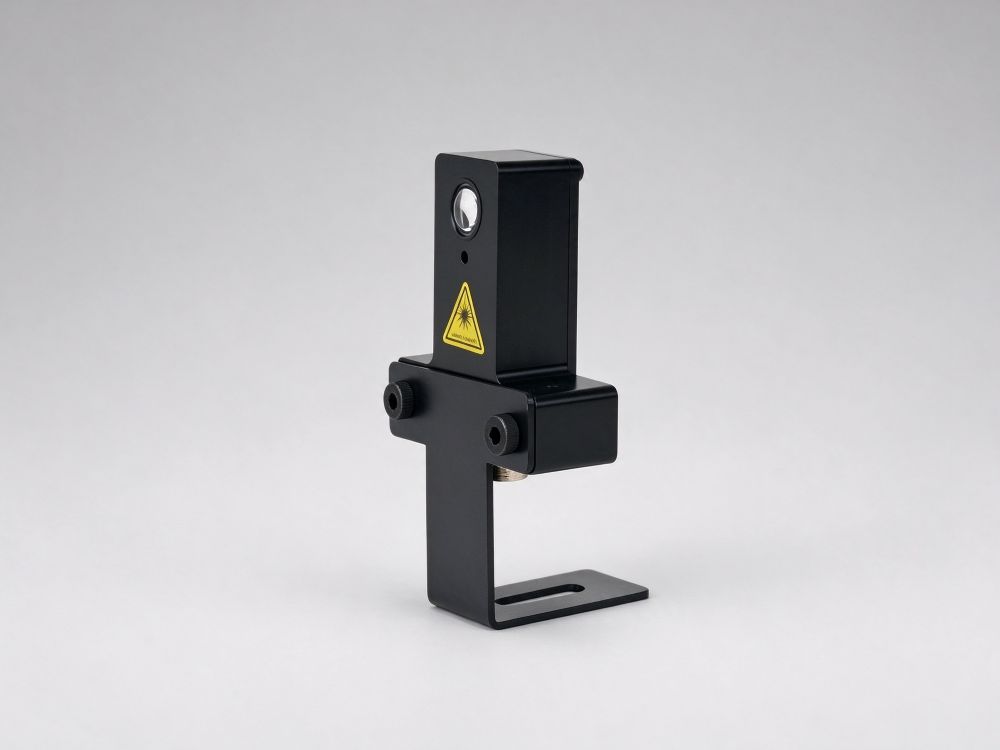
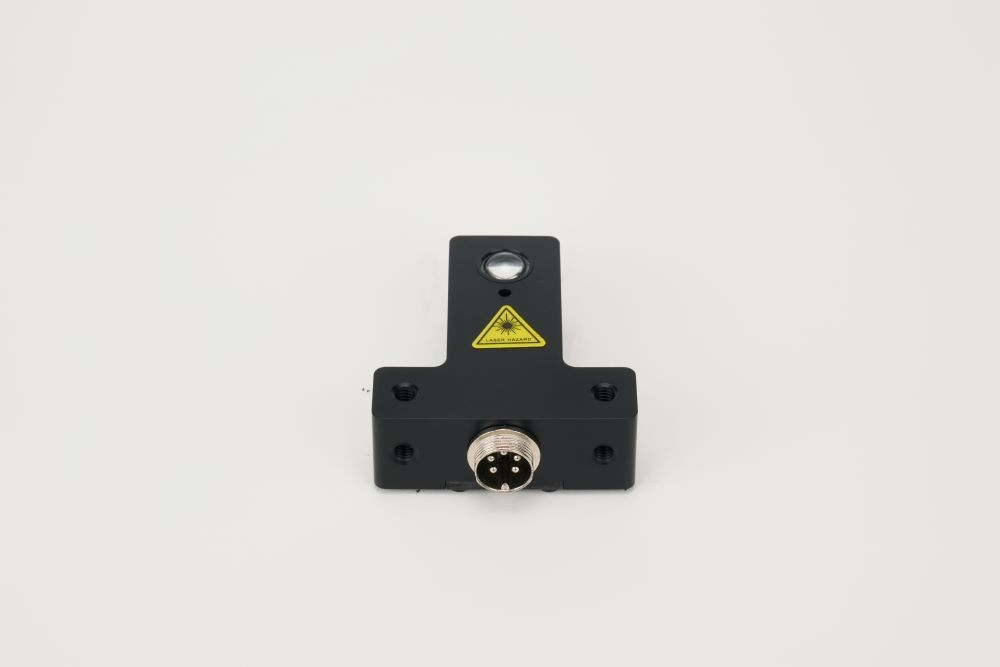
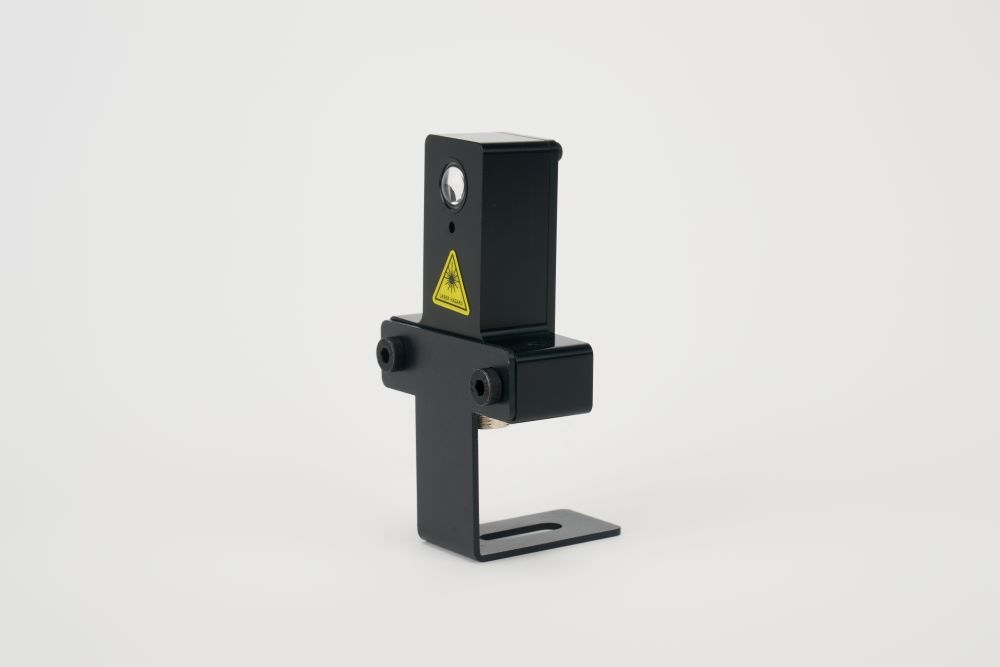
ROLS-5PW is a fixed-mount laser tachometer sensor with 1-300,000 rpm range, up to 7m sensing distance and 5V TTL / PNP pulse output. A 650nm modulated laser and high-frequency filter reject ambient light for stable RPM measurement.
A laser tachometer sensor is not a handheld tachometer. The ROLS-5PW is a fixed-mount, non-contact laser speed sensor designed to live on a machine or test stand and output a pulse train for a meter, PLC or data acquisition system. It measures from 1 to 300,000 rpm at distances up to 7m, using a 650nm modulated laser and a high-frequency filter to stay stable under shop-floor lighting. This page explains how it works, how to wire it, which of the five variants to choose, and where it fits.
A handheld tachometer is right for spot checks: point, read, move on. A fixed sensor is right when speed must be watched continuously, logged, or used for control. The ROLS-5PW belongs to the second group - it is installed once and reports speed as an electrical signal, so it can feed a display, a controller or a recorder without an operator holding it.
If you only need occasional readings, a handheld unit is simpler. If you need a permanent measurement point, alarm thresholds or integration with a PLC, use a sensor.
The sensor emits a modulated 650nm laser beam toward a marked or reflective target on the rotating part. Each return pulse corresponds to one revolution. A large-diameter receiving lens collects weak reflections, while a built-in high-frequency filter rejects steady ambient light, so the sensor remains stable under fluorescent lamps, sunlight or process glare.
Because the beam is modulated, the receiver looks for its own signal pattern rather than any light that happens to hit the detector. That is the practical difference between a laser sensor and a simple photoelectric head.
The ROLS-5PW provides a pulse output at 5V TTL level with a PNP (source) signal. Three wires carry power, ground and signal; when using a shielded cable, connect the shield to the designated ground at the controller end only, to avoid ground loops.
The sensor has internal reverse-polarity, short-circuit and over-voltage protection, including 15V for one minute. Protection is not a substitute for correct wiring - confirm supply voltage and pinout before powering on.
The pulse output can feed a dedicated panel tachometer such as the LUYOR-910, a PLC high-speed counter, a data acquisition card for test-stand logging, or a strobe for synchronised visual inspection. Match the input type: the sensor is 5V TTL / PNP, so a sinking-only input may need an interface.
ROLS-5PW is the standard 5V model. ROLS-5PW-25 and ROLS24-5PW-25 specify alternate connector or cable options; ROLS24-5PW uses a 24V supply. SPLS-5PW is the self-powered variant with an internal lithium battery. Select by the supply voltage and connector available at your installation, not by measurement range, which is shared across the family.
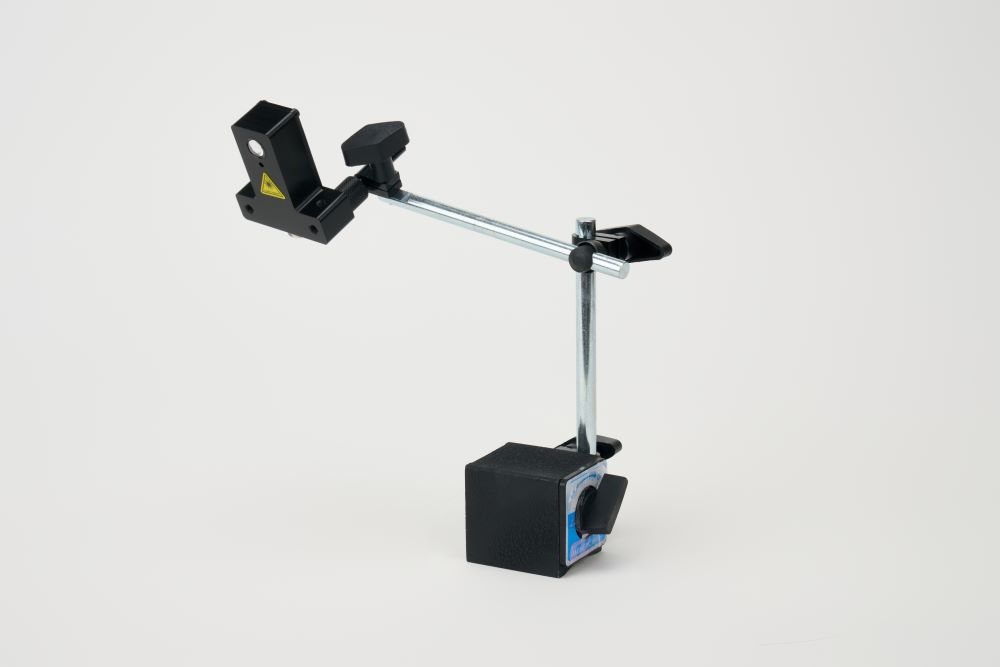
Mount the sensor rigidly on a bracket aimed at a clean reflective target, keep the working distance within 7m, connect power and signal with the shield grounded at one end, then power up and confirm the indicator responds to rotation. For best results, use a matte target with a single reflective mark so each revolution produces one clean pulse.
Use it on shafts, spindles, fans, rollers and test rigs where a non-contact point is needed. In drone and eVTOL propulsion test stands, the modulated laser variant is preferred for propeller speed because the beam tolerates the vibration and changing ambient light of a rig environment.
The laser is Class 2, under 2mW at 650nm. Do not stare into the beam or aim it at reflective surfaces that could send it toward people. The stated range assumes a suitable target and clean optics; dust on the lens or a poorly reflective target will reduce the reliable distance.
| Parameter | Specification |
|---|---|
| Product type | Fixed-mount laser photoelectric tachometer sensor (non-contact speed probe) |
| Model | ROLS-5PW (also ROLS-5PW-25, ROLS24-5PW, ROLS24-5PW-25, SPLS-5PW) |
| Output signal | Pulse output, 5V TTL level, PNP (source) signal |
| Measuring range | 1-300,000 rpm (1-5,000Hz) |
| Sensing distance | Up to 7m (manufacturer recommends within 7.6m) |
| Supply voltage | 5V DC (ROLS24 series 24V; SPLS internal lithium battery) |
| Operating current | Under 30mA |
| Protection | Reverse polarity, short circuit, over-voltage 15V / 1 minute |
| Laser | 650nm modulated laser, output under 2mW, Class 2 |
| Anti-interference | Built-in high-frequency filter, immune to ambient light |
| Optics | Large-diameter reflective lens captures weak return signals |
A laser sensor uses a focused, modulated beam and works at longer distances with better rejection of ambient light; a photoelectric LED sensor is typically shorter-range and lower-cost. Choose laser for long stand-off, high speed or difficult lighting; choose photoelectric for close, controlled installations.
Pulses. The sensor outputs one pulse per revolution; an upstream meter, counter or PLC converts frequency into rpm. If you want a displayed speed value directly, pair it with a panel tachometer such as the LUYOR-910.
Power, ground and signal. Connect the shield of a shielded cable to ground at the controller end only. Confirm the supply is 5V for the standard ROLS-5PW and that the receiving input accepts 5V TTL / PNP.
The output is PNP (source). A PLC input that expects NPN (sink) will need an interface or a differently configured input module. Check the input specification before ordering.
The standard model runs on 5V DC and draws under 30mA. The ROLS24 variants use 24V; the SPLS-5PW is self-powered by an internal lithium battery.
The modulated laser and high-frequency filter are designed to reject steady ambient light. Mount the sensor rigidly - mechanical vibration that moves the beam off the target is a more common source of missed pulses than lighting.
Send inquiry

Email: info@xinysun.com

Tel: 131-2093-6518

Address: 1525 Minqiang Road, Bldg 26, Songjiang, Shanghai

Copyright 2026 Xinysun Instrument (Shanghai) Co., Ltd. All rights reserved.
ICP:ICP-2026046447




 Products
 Applications
 Previous:
 Back to list

 Industrial Test Instruments


