Products
PRODUCTS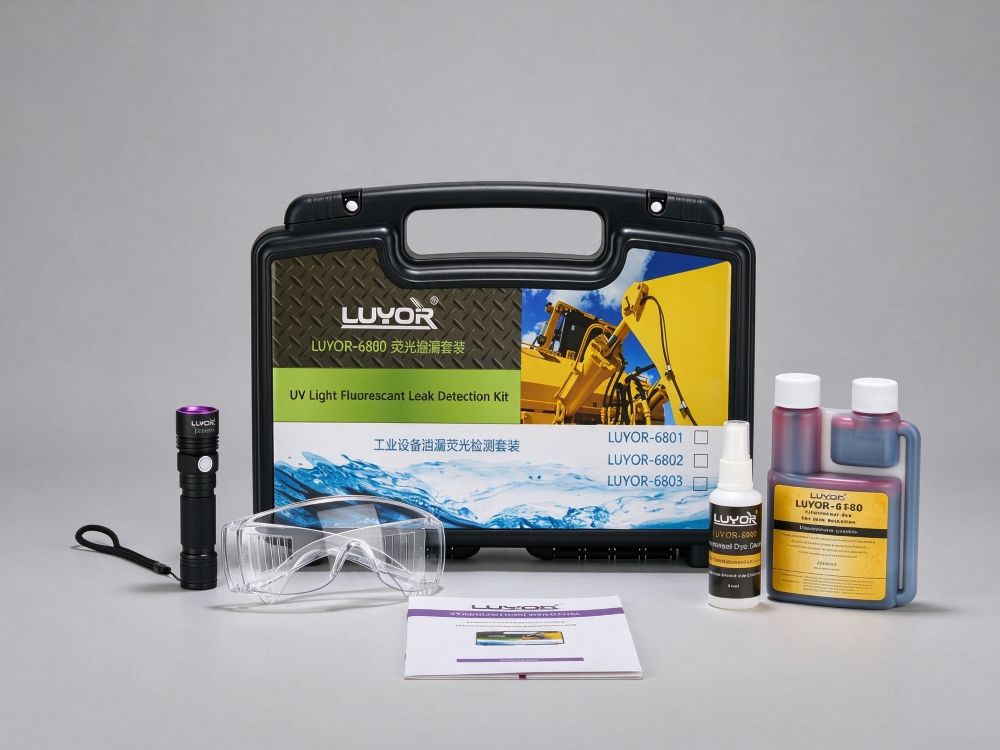
 Overview
LUYOR-6801 packs a LUV-100 365 nm UV lamp, 240 ml LUYOR-6100 oil tracer, cleaner and safety glasses in one case for hydraulic and gearbox leak checks.
LUYOR-6801 is an entry-level fluorescent leak detection kit for oil-based fluid systems. It is not a single bottle of tracer but a complete inspection packed into one carrying case: light source, tracer, cleaner, safety glasses, dosing labels, and documentation. For a maintenance crew this means no separate purchasing and no part numbers to cross-check - open the case and start work.
| Item | Specification | Purpose |
|---|---|---|
| LUV-100 UV leak detection lamp | Rechargeable lithium-ion, 365 nm high-power LED, aluminum reflector | Excites the tracer; leaks glow bright yellow-white under the lamp |
| LUYOR-6100 oil-based tracer | 240 ml two-neck bottle, yellow fluorescence | Fully miscible with mineral oil, travels with the oil circuit |
| Fluorescent dye cleaner | 60 ml | Wipes dye residue from the lamp lens, hands, and viewing surfaces |
| UV safety glasses LUV-10 | Clear lenses, fit over prescription glasses | Blocks 365 nm UV and protects the operator's eyes |
| Plastic carrying case | Holds all accessories in one case | Field transport and equipment storage |
| Documents and labels | Manual, certificate of conformity, warranty card, 5 hanging dye-dosing labels | Records dosing date and system for later re-inspection |
The five hanging dye-dosing labels are often overlooked but are genuinely useful: after dosing, hang one on the machine control panel or the oil tank with the date and the system name, and a check months later matches up directly without digging through records or adding tracer again.
The 6801 carries an oil-soluble tracer, so the rule is simple: the system must run a mineral-based oil. Typical cases:
| System type | Common leak points | What makes it hard on site |
|---|---|---|
| Hydraulic systems | Crimped ends of high-pressure hoses, cylinder rod seals, valve block mating faces | A high-pressure weep does not form drops and is hard to see once covered by oil sludge |
| Compressors | Shaft seals, oil separator connections, cooler tube sheets | Oil mist spreads, and the trail covers a wide area after shutdown |
| Engines | Front and rear crankshaft seals, oil pan mating face, turbocharger oil return line | Heavy grime on the block makes old and new traces hard to tell apart |
| Gearboxes and reducers | Input and output shaft seals, housing mating faces, drain plugs | Leak points sit under the housing, so the machine must be raised or entered |
| Fuel systems | Fuel line fittings, filter bases, injection pump ports | Fuel evaporates quickly, and a dried trace is nearly invisible |
Water systems - cooling water, circulating water, hydrostatic testing, water-based cutting fluid - need the water-based LUYOR-6802 or LUYOR-6803 instead. An oil-soluble tracer does not dissolve in water: it gathers into slicks on the surface, traces nothing, and can clog fine filters. The cost of using the wrong grade usually far exceeds the price of a bottle of tracer.
The recommended dose for LUYOR-6100 is 0.5-2.5 ml per liter of oil. Estimate total system volume from the tank plus the lines, cooler, and accumulators (typically 1.2-1.5 times the tank volume), then convert. Use the low end for small systems, and the high end for very small leaks or for oil that is already dark.
Add the tracer through the return line or the tank return port so that the flow shears and disperses it, rather than letting it settle on the tank floor. Attach a dosing label to the machine and write down the date.
Start the machine and run it under normal conditions for 5-10 minutes. The point is to get the tracer to every fitting and seal - light up after one or two minutes and the far ends of the circuit are easily missed.
Dim the ambient light and work along the pipe run with the LUV-100, section by section, concentrating on fittings, flanges, sealing faces, and hose crimps. Leaks appear bright yellow-white, a clear contrast to the faint blue natural fluorescence that most oils show under UV. Wear the LUV-10 glasses: they protect your eyes and also sharpen the fluorescence.
Mark each leak as you find it and grade it: obvious leaks go to a scheduled shutdown, weeps go into planned maintenance. After the repair no new dose is needed - the tracer is still in the system. Run the machine for a while and check the same spot; no fluorescence means the repair holds.
6100 is the tracer alone, so you still need a lamp and safety glasses. 6801 bundles them into a carrying case, which suits a maintenance crew that wants one case to grab and go. If your team already has a UV lamp, buying 6100 on its own costs less.
At 0.5-2.5 ml per liter, 240 ml covers roughly 100 to 480 liters of oil. Small hydraulic power units, single reducers, and passenger car engines fall inside that range. For large hydraulic systems or fleet-wide testing, add a larger grade of tracer sized to the actual oil volume.
No. At the recommended ratio the tracer does not change the viscosity grade or the main lubricating performance of the oil, and it can stay in the system long term, which is what makes repeat checks possible. If the machine carries strict oil certification or cleanliness requirements, take a sample before dosing to confirm.
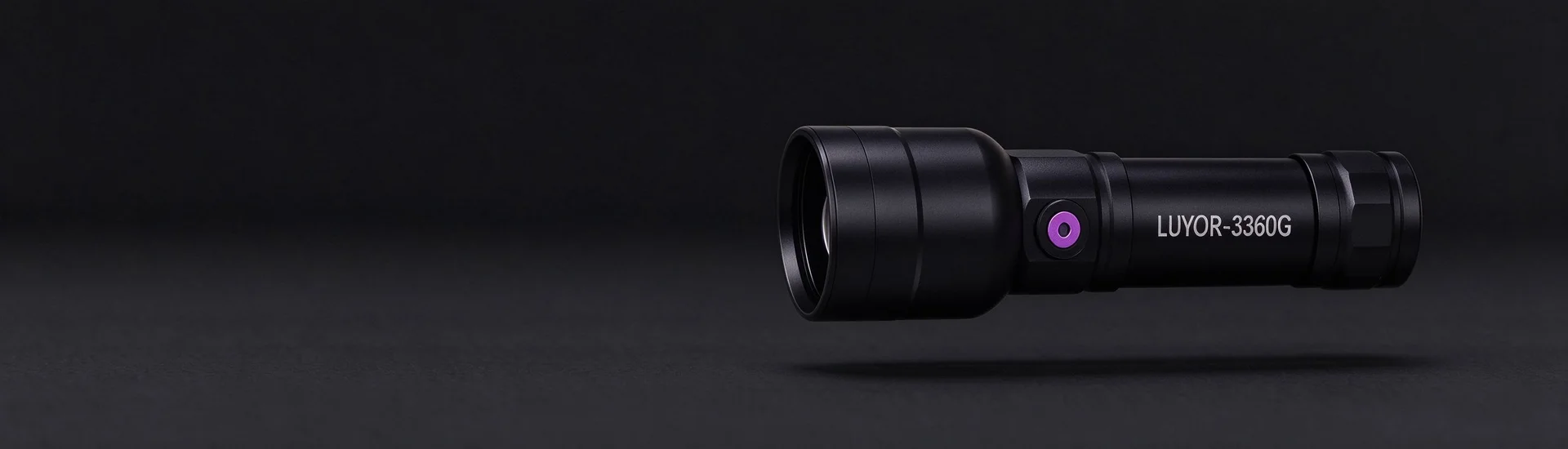
The LUV-100 is a rechargeable lithium-ion design with a built-in 365 nm high-power LED focused by an aluminum reflector. For long storage, top up the charge every few months to avoid over-discharge.
It depends on the leak rate. A clear leak shows as soon as circulation is complete; a very small weep may need hours, or a day or two, of running so the tracer can work its way through the seal gap.
If you need to work out a dosing plan from equipment type and oil volume, or need a high-intensity black light to go with the kit, send us the equipment list and we will help with the calculation.
Send inquiry

Email: info@xinysun.com

Tel: 131-2093-6518

Address: 1525 Minqiang Road, Bldg 26, Songjiang, Shanghai

Copyright 2026 Xinysun Instrument (Shanghai) Co., Ltd. All rights reserved.
ICP:ICP-2026046447




 Breadcrumb:
 Products
 Applications
 Previous:
 Back to list

 Industrial Test Instruments


