Products
PRODUCTS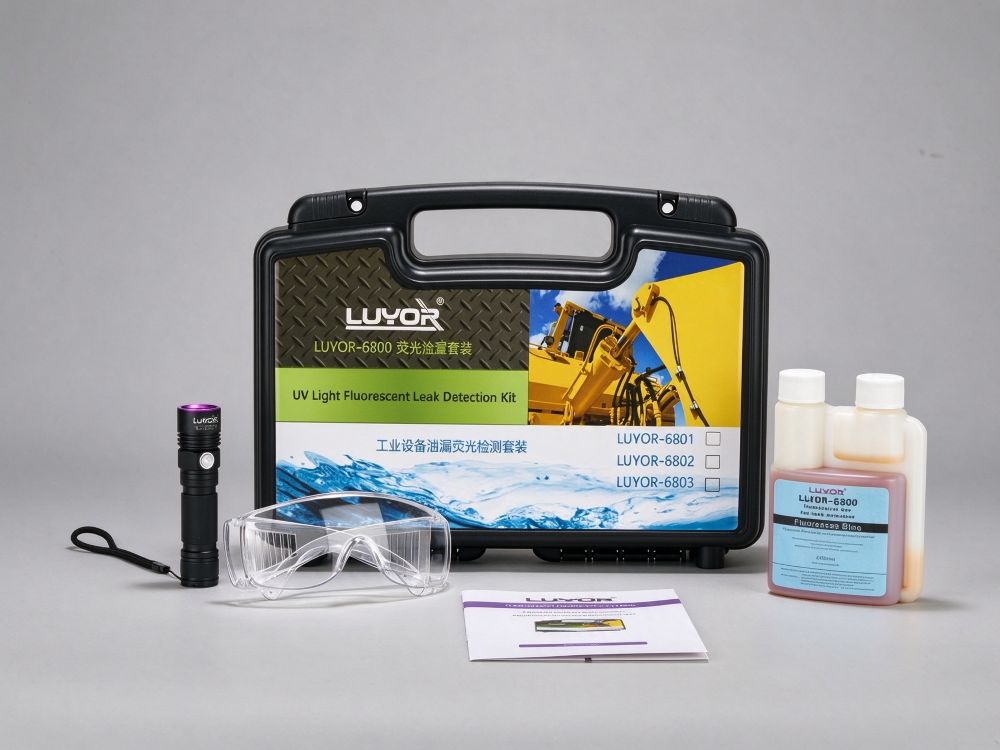
 Overview
LUYOR-6803 is a water-based leak kit with blue fluorescent tracer, a 365 nm lamp and case, so parallel cooling and process water circuits stay distinct.
On paper LUYOR-6803 and LUYOR-6802 look alike: both are water-based fluorescent leak detection kits, both with a 365 nm LED lamp, UV safety glasses, and a carrying case. The real difference is one item, and it matters a great deal at the reading stage - the 6803 carries LUYOR-6300, which fluoresces blue.
With a single water circuit the green and the blue perform the same. But where a plant runs cooling water, circulating water, process water, and hydrostatic test water at once, or where several machines in one shop are checked on the same day, colour is efficiency: green tells you which circuit, blue tells you which machine, and the walk back along the pipe to work it out is no longer needed.
| Item | Specification | Notes |
|---|---|---|
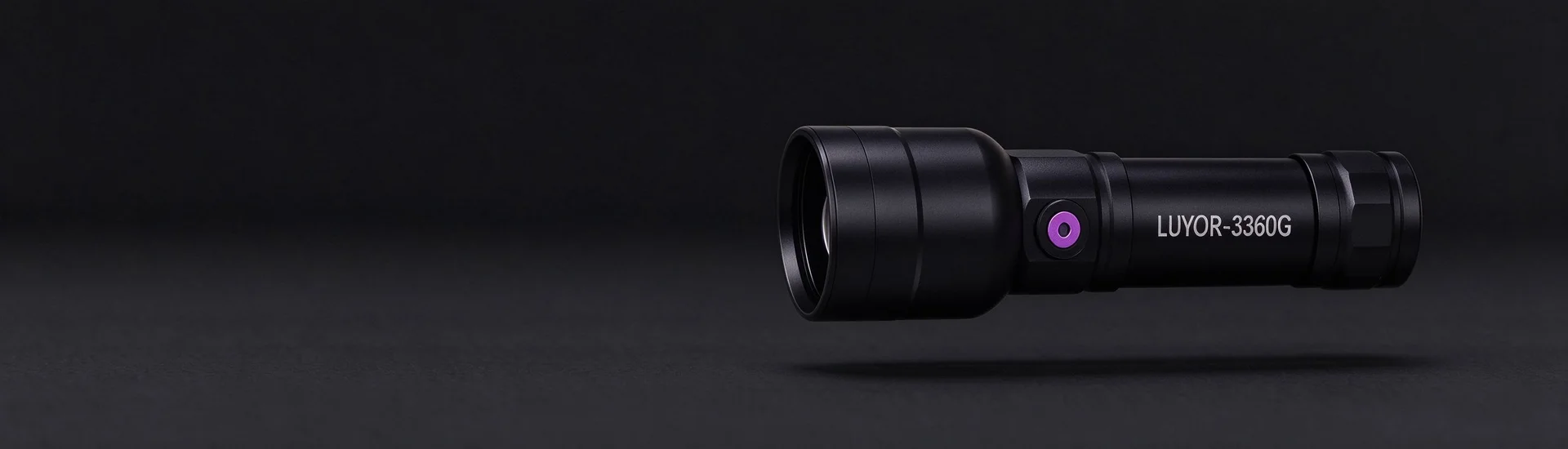
| 365 nm LED fluorescent leak detection lamp | High intensity, rechargeable battery | Excites the tracer; blue points are clear on water surfaces and wet areas |
| LUYOR-6300 water-based tracer | 240 ml, blue fluorescence | Miscible with water in any ratio, for tracing water systems |
| UV safety glasses LUV-10 | Clear lenses | Blocks UV and protects the eyes |
| Plastic carrying case | Holds the kit | Field transport and storage |
Compared with the 6802, the 6803 case does not include a dye cleaner - a water-based tracer wipes off with water and needs no solvent. That also makes it simpler to use.
| Site situation | Recommendation |
|---|---|
| One water system in the plant, a single machine to check | 6802 is enough, green fluorescence gives sufficient contrast |
| Several water circuits in parallel, and the leak has to be assigned to one | The blue of the 6803 separates it from green |
| Several machines in one shop checked in turn | Alternate the two colours so that tracer carried across systems does not confuse the reading |
| Seal performance testing on a product | 6803 is often used to show a leak after a test piece is filled |
| Separation from water-based cutting fluid and antifreeze | Compare against the base colour before deciding; blue usually separates from the natural fluorescence of common fluids |
Fill the test piece - a pipe run, a fitting, a small heat exchanger sample, a seal assembly - with water containing the tracer, let it stand or hold it under pressure for a period, then inspect the outer surface under the UV lamp. Blue fluorescence indicates a through leak path. Compared with pressure testing alone and watching a gauge, this method points to where the leak is, rather than merely showing that there is one.
The water-based tracer is used by mixing it with water; start at 1000:1, and go to 500:1 where the leak is very small or the water is dark. Dilute the concentrate in a little water and stir before pouring it into the system, so that no local pocket is over-concentrated while the rest is weak.
The UV lamp works better in a dark environment. When reading, distinguish blue fluorescence from the violet patch of the lamp itself: move the lamp slightly, and a fluorescent point stays where it is while the violet patch follows the lamp. This is a common early mistake.
When both colours are in use, always hang a dosing label on the machine giving the system name, the date, and the tracer model used. Months later that label is the direct basis for deciding which system a given fluorescent mark belongs to.
Not recommended. Mixed in the same water system, the two tracers give a colour between green and blue, and the point of a colour plan is lost. If you do need to change models, drain part of the system water before dosing.
The clearer the water, the higher the contrast. If the system water is cloudy or carries a lot of suspended solids, let it settle or filter it before reading under the lamp.
Not recommended. Industrial tracers are intended for equipment and industrial water systems. For potable water and for lines in direct contact with food, choose a product intended for that service under the relevant rules, or flush thoroughly after the check and confirm water quality.
It depends on site requirements. An ordinary industrial cooling water system can run on until the next water change; where water quality targets are strict, change the water after the inspection.
The lamp in the kit is rechargeable, so confirm the charge before leaving for a job. If it is stored for long periods, top it up every few months to avoid over-discharge shortening runtime.
If you have many systems and need a colour plan, or want to confirm how water quality affects fluorescence, send us the system list and we will help arrange it.
Send inquiry

Email: info@xinysun.com

Tel: 131-2093-6518

Address: 1525 Minqiang Road, Bldg 26, Songjiang, Shanghai

Copyright 2026 Xinysun Instrument (Shanghai) Co., Ltd. All rights reserved.
ICP:ICP-2026046447




 Breadcrumb:
 Products
 Applications
 Previous:
 Back to list

 Industrial Test Instruments


