
Products
PRODUCTS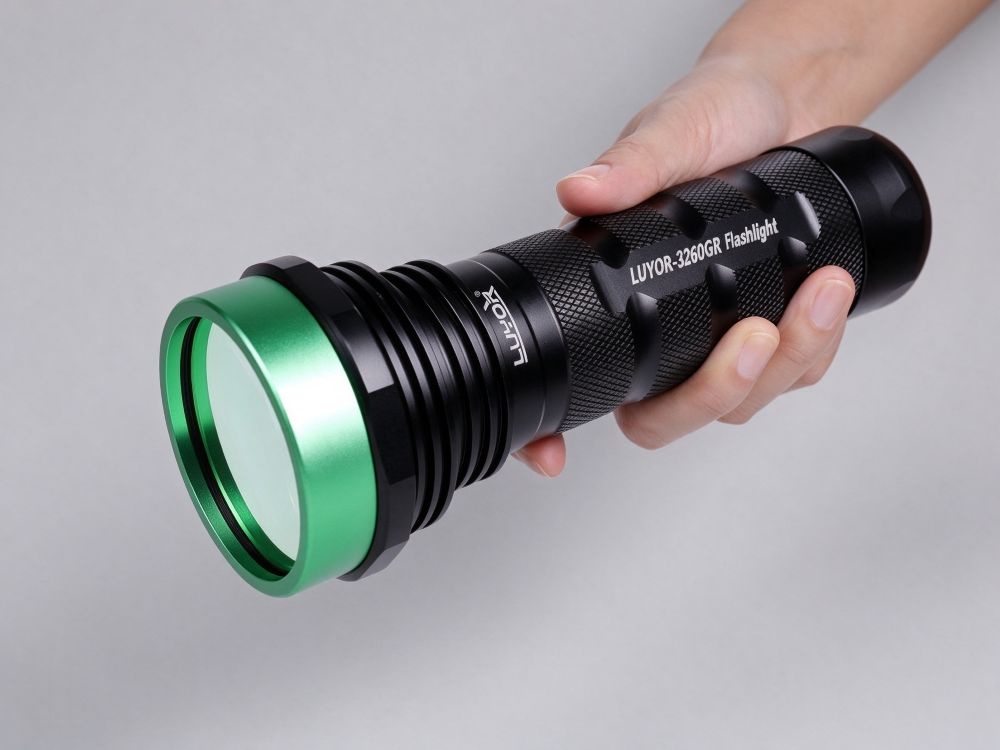
 Overview
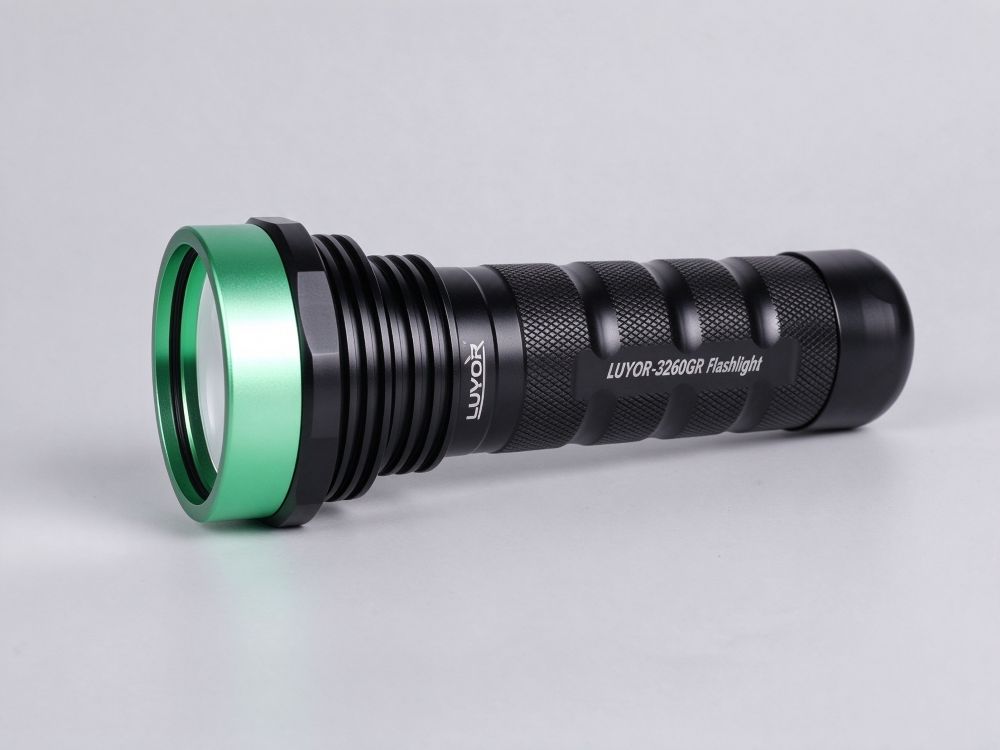
LUYOR-3260G is a yellow-green surface inspection light using nine high-power LEDs with lens focusing. A uniform 150mm spot at 38cm, IP67 housing and 50,000-hour LED life make it suited to workshop and field inspection.
Field inspection does not need a brighter lamp - it needs contrast. The LUYOR-3260G is a yellow-green surface inspection light built on nine high-power LEDs with secondary lens focusing, producing a uniform spot about 150mm across at 38cm. Its narrowband 585nm output cuts through substrate colour and ambient reflections, while an IP67 aluminium housing lets it work in dusty or wet environments. This page explains its optics, ratings, typical inspection targets and how it compares with handheld and parallel-beam alternatives.
On a real workpiece, the limiting factor is rarely total light output. It is whether the defect separates from the background. A broad white beam lights everything at once and flattens the difference between a particle and the surface beneath it. A narrowband yellow-green source at a controlled angle makes scattering defects - dust, fibres, fine scratches - read as bright points on a darker field.
The 3260G is designed around that principle. Its 585nm peak sits where the eye is sensitive, so contrast is high without the discomfort of a harsh blue-white source, and the monochromatic output avoids the colour cast that makes contamination hard to judge on painted or plated parts.
Nine high-power LEDs are combined with a secondary lens rather than a single emitter. The result is an even footprint: at roughly 38cm from the head the spot measures about 150mm across with no hot centre. Uniformity matters because a hotspot can make one part of a panel look defective while hiding an equivalent defect at the edge.
The fanless aluminium body dissipates heat passively. There is no fan to draw dust into the head and no moving part to fail, which is why the LED life is rated at 50,000 hours.
IP67 means dust-tight and tolerant of temporary immersion - useful in machining areas, wash-down zones and outdoor work where a handheld lamp may get wet. The aluminium housing is naturally cooled and sealed; the tail indicator shows remaining charge at power-on.
IP67 is not a licence to wash the lamp under a tap or submerge it for long periods. Rinse only as your site procedure allows, dry the lens and connector, and inspect the seal before each use.
Use grazing light for particles, dust and fibres; perpendicular light for fingerprints, water marks and oil films; and an offset of 10-30 degrees for scratches, pits and bubbles, where edge scattering is strongest away from the mirror direction. On coated glass, combine a grazing pass with a slow perpendicular read to separate surface contamination from coating defects.
The 3260G is a general-purpose handheld inspection lamp. For bench work where both hands are needed, mount it on a stand. For the highest grazing contrast on large glossy panels, a collimated parallel-beam light such as the LUYOR-3320 goes further. Choose by geometry and working distance, not by one headline lux number.
Keep the lens clean, charge with the supplied 100-240V charger, and store the lamp in its aluminium case. Because the body is sealed, do not open the head in the field; service should be handled by the supplier.
| Parameter | Specification |
|---|---|
| Model | LUYOR-3260G yellow-green surface inspection light |
| Light source | 9 high-power LEDs with lens focusing |
| Wavelength | Narrowband, peak 585nm (yellow-green) |
| Effective spot | Approx. 150mm diameter at about 38cm from the head |
| LED life | Rated 50,000 hours |
| Ingress protection | IP67 (dust-tight, temporary immersion) |
| Housing | Aluminium alloy, passive cooling, no fan |
| Dimensions | Length 21cm; head diameter 6.8cm; tail diameter 4.6cm |
| Power | Built-in rechargeable battery; 100-240V / 50-60Hz charger included |
| Battery indicator | Tail LED shows remaining charge at power-on |
| Packaging | Aluminium carrying case |
Its peak wavelength is about 585nm, which reads as yellow-green. This band gives strong contrast on many industrial surfaces while remaining comfortable to the eye, and it is distinct from the deeper green of some laser-based inspection lights.
Visibility depends on the surface, the coating and the viewing angle as much as on the light itself. Grazing illumination at 10-30 degrees off perpendicular gives the best chance on polished surfaces. Treat the lamp as a screening tool and confirm critical measurements with metrology equipment.
The narrowband output reduces background colour and specular glare, so scattering defects separate more clearly. White light is better when true colour judgement matters; the 3260G is better when contrast and defect detection matter.
No. IP67 covers dust and temporary immersion under defined conditions. It is not a warranty for high-pressure washing, solvents or long submersion. Follow site cleaning rules and dry the lens and connector after any contact with water.
The sealed, fanless housing produces no airflow and is easier to wipe than a cooled lamp, but confirm with your facility's contamination control team. For dedicated cleanroom particle detection by fluorescence, a UV tool such as the MNT-365A is the appropriate instrument.
Runtime depends on duty cycle. The lamp is intended for intermittent inspection; for continuous all-shift use, keep a spare charged lamp or plan a recharge break. The tail indicator lets you check charge before starting a pass.
Send inquiry

Email: info@xinysun.com

Tel: 131-2093-6518

Address: 1525 Minqiang Road, Bldg 26, Songjiang, Shanghai

Copyright 2026 Xinysun Instrument (Shanghai) Co., Ltd. All rights reserved.
ICP:ICP-2026046447




 Breadcrumb:
 Products
 Applications
 Previous:
 Back to list

 Industrial Test Instruments


