
Products
PRODUCTS Breadcrumb: Home > Products > Industrial Test Instruments > UV Flashlights
 Overview
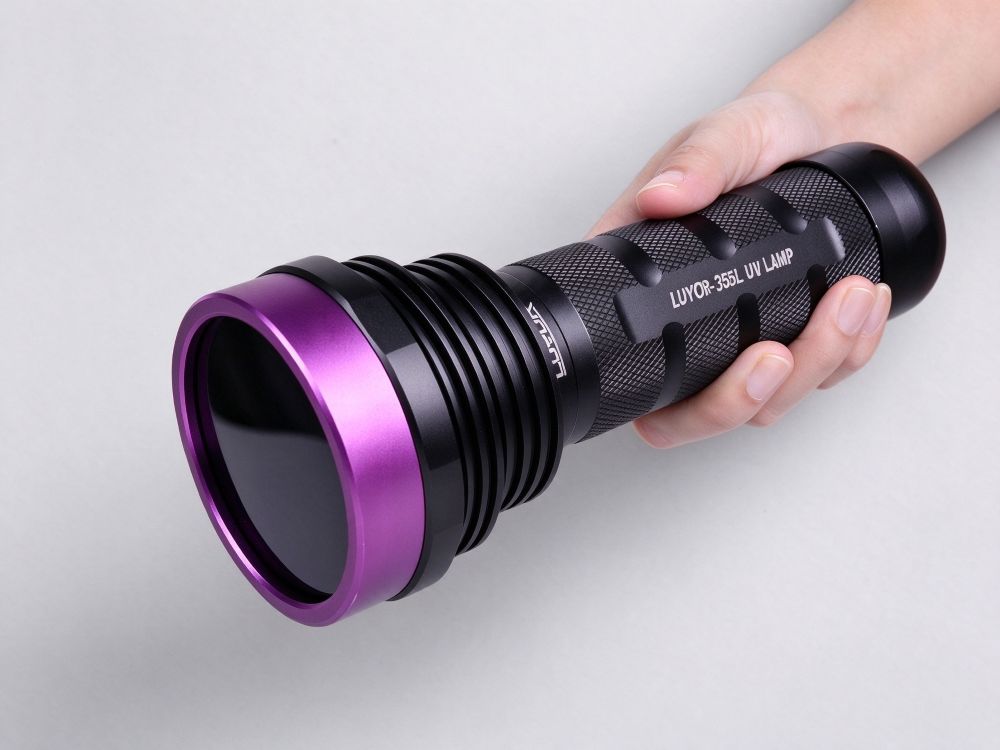
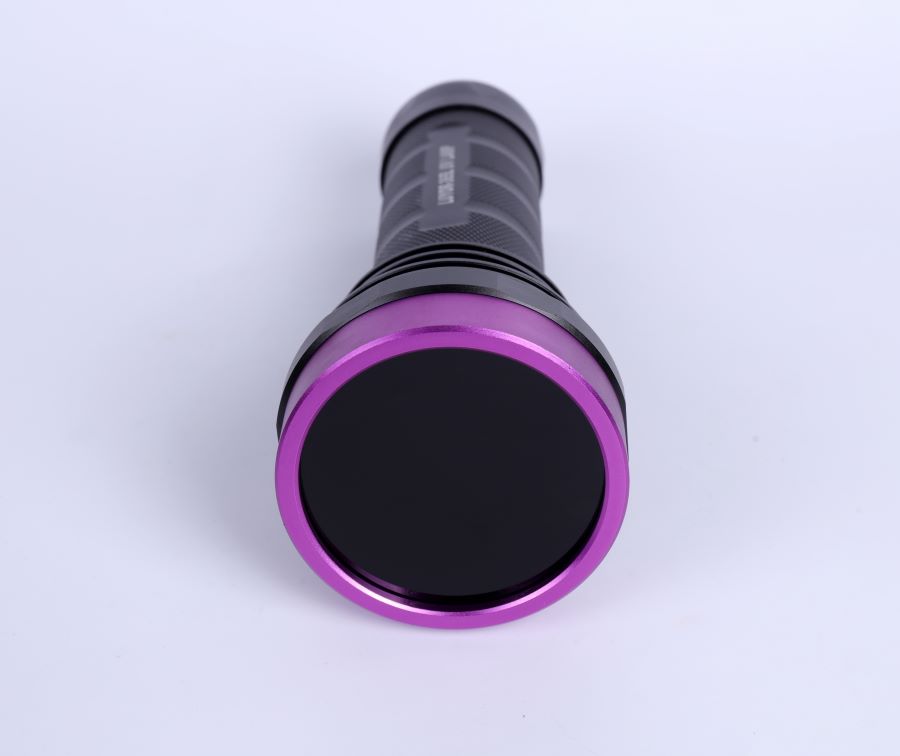
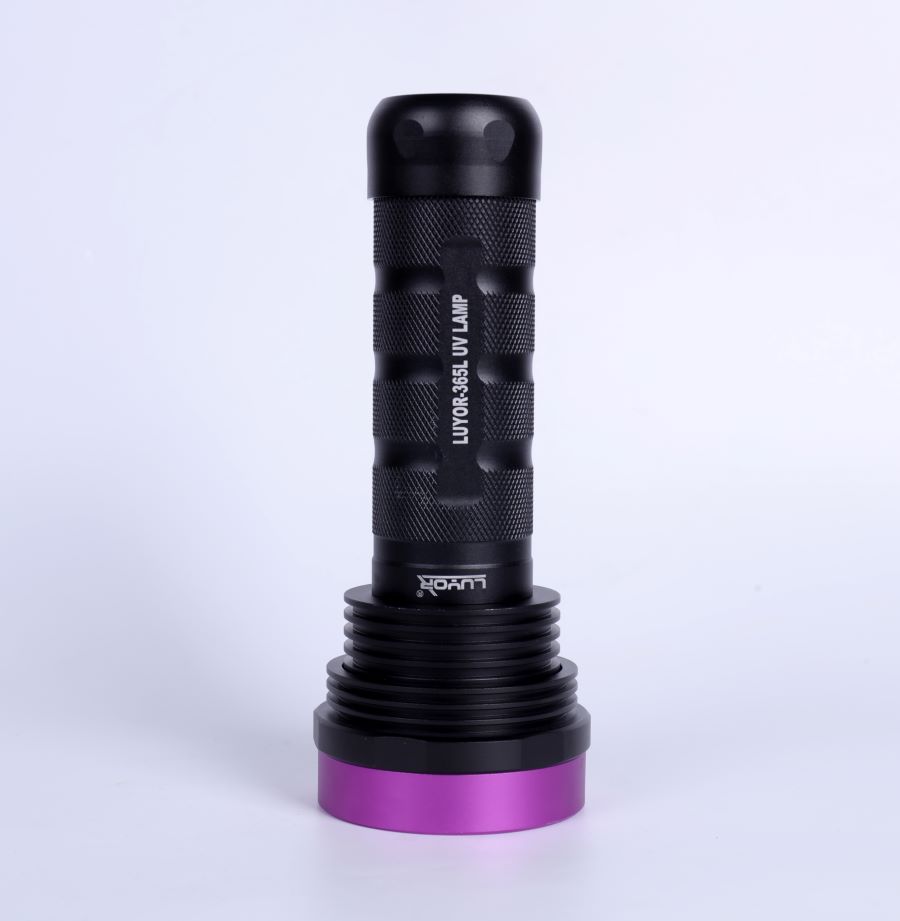
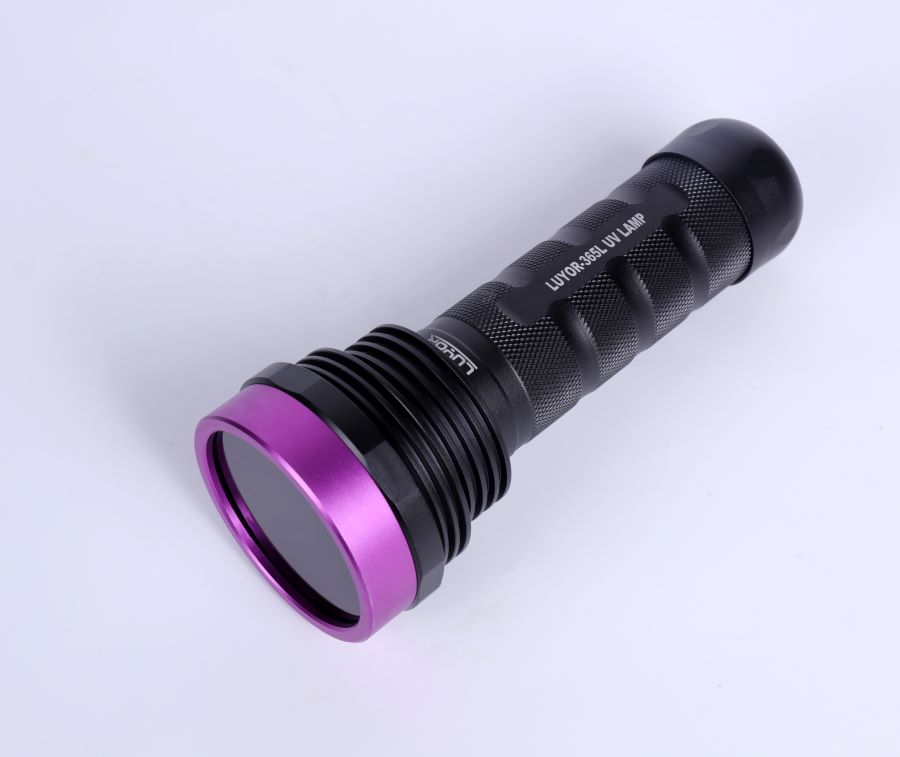
LUYOR-365L is a battery-powered 365 nm UV flashlight for fluorescent leak detection, with a 360-370 nm band, about 6500 uW/cm2 at 38 cm and 3-5 h runtime.
The trouble with a leak is that you know it is there but cannot find it. Pinholes in welds, aged seals, and weeping fittings are invisible, and stripping the machine costs hours. Fluorescent leak detection turns the question into something one pass of light answers:add tracer to the system, let it circulate with the medium, and wherever there is a leak the tracer seeps out and glows bright yellow-green under UV.
Why 365nm UV rather than violet, blue, or white light? Interference is the reason. The tracer emits weak light to begin with; if the excitation is visible, it mixes with the fluorescence, drowns the leak signal, and small leaks are easily missed even through yellow viewing glasses. 365nm UV is almost invisible to the eye, the background stays clean, and leak fluorescence stands out, which makes it the usual choice for fluorescent leak detection.
Not every UV flashlight is adequate. In the field you sweep a whole pipe run, an entire unit, or a flange face, and a small-spot flashlight has to be moved inch by inch, which costs time and raises the risk of a missed leak. The LUYOR-365L is a wide-area, high-intensity, battery-powered handheld black light: one pass covers a large area, it lights instantly, there is no power cord, and it goes to height, into tight spaces, and to moving workstations.
All UV flashlights in this category work at 365nm; the differences lie in coverage, intensity, form factor, and intended role. Choose by the size of the object and the site conditions, which is more practical than comparing figures alone.
| Model | Role | Beam characteristics | Better for |
|---|---|---|---|
| LUYOR-365L | Wide-area handheld leak detection / NDT | About 200mm coverage at 38cm, center intensity about 6500uw/cm2 | Leak checks on pipe runs, whole units, reactors, and large workpieces, and fluorescent magnetic particle and penetrant inspection |
| MNT-365A | Cleanroom particle inspection flashlight | Smooth one-piece body, particle-free, can enter clean zones | Semiconductor cleanrooms, tool PM acceptance, and organic contamination checks on carriers and cassettes |
| LUYOR-2130L | General-purpose handheld UV flashlight | Tight spot for close-range spot checks | Small-area spot checks and everyday carry rounds |
| LUYOR-3180 | High-power handheld UV flashlight | Stronger output, balancing area and distance | Sites needing stronger excitation at greater distance |
In short: wide-area leak detection and NDT, LUYOR-365L; surface contamination in a cleanroom, MNT-365A; small-area checks or everyday carry, 2130L or 3180; where a specified imported brand is required, LUYOR.
| Item | Specification | Notes |
|---|---|---|
| Model | LUYOR-365L | LUYOR wide-area fluorescence leak-detection flashlight |
| Light source | Multiple high-power 365nm UV LEDs | Cold-light design, low housing temperature over long runs |
| Center wavelength | 365nm, range 360-370nm | Narrow-band output, free of UVB and UVC short-wave UV |
| Intensity | Center intensity about 6500uw/cm2 at 38cm | High output, small leaks still fluoresce clearly |
| Effective coverage | About 200mm at 38cm | Early batch documents state 150mm; current documents state about 200mm |
| Start-up | Instant on, no warm-up | Avoids the several-minute start of a high-pressure mercury lamp |
| Battery | One 11.2V rechargeable lithium pack | Replaceable, with charger; no 220V connection needed |
| Runtime | About 3-5 hours | Charge time about 2-5 hours; carry a spare battery for long jobs |
| Dimensions | Head 70mm diameter, tail 54mm diameter, 220mm long | Handheld, fits a tool bag |
| Weight | Net 0.36kg (without battery) / 0.53kg (with battery) | Gross weight in case about 1.68kg |
| Switch | Momentary push button | Easy to press while wearing protective gloves |
| Protection and storage | LUV-10 UV protective glasses, carry case | The glasses also filter stray reflections and make fluorescence stand out |
The method is straightforward; sequence and waiting time matter. Done in this order, detection rates usually improve noticeably.
Add the LUYOR-6100 tracer grade that matches the medium type and charge, at a dose far below total system volume, without changing medium performance.
Run the system normally for a period so the tracer reaches every part with the medium; where a leak exists, tracer seeps out with the medium.
Wear the LUV-10 glasses and sweep pipes, joints, and seals with the 365L; yellow-green fluorescence marks the leak, which you tag and repair.
Tracer stays in the system, so later checks usually need no new dose - just light. This is why fluorescent leak detection is called a preventive, planned maintenance method: it finds a leak while it is still small and before it causes downtime.
| Model | Pack size | Typical use |
|---|---|---|
| LUYOR-6100-00030 | 1 bottle, 30ml | Single small unit, car air conditioning, trial checks |
| LUYOR-6100-00100 | 1 bottle, 100ml | Rotating checks across units, service shop stock |
| LUYOR-6100-00240 | 1 bottle, 240ml | Batch charging of units and production lines |
| LUYOR-6100-00500 | 1 bottle, 500ml | Large systems, shop-wide surveys |
| LUYOR-6100-04000 | 1 plastic pail, 4L | Periodic line charging, fleet maintenance |
| LUYOR-6100-18000 | 1 metal drum, 18L | Central fluid supply in large plants, long-term planned maintenance |
LUYOR-6100 works with refrigerants R12, R22, R134a, R407c, R600a, BrLi, CFC, HCFC, and HC, with oil-phase systems using PAG, POE, AB, MA, and DRA, and with water-phase, lubrication, and power systems and various alkane and alkene media. It does not change fluid performance or damage system components, and needs no disassembly or flushing after the check. Grades for industrial fluid and hydraulic systems are also available, along with a fuel-type tracer for petrol and diesel leaks in tanks, fuel lines, and injection lines.
Confirm the battery is full and the LUV-10 lenses are clean and unscratched before you leave. A low battery dims the spot and can be misread as "no leak".
Switch off strong lights above the workstation or close the blinds, and use a dark cloth for a local dark zone where needed. This step often lifts detection more than a brighter lamp does.
Hold the head about 38cm from the surface and keep it steady; sweep in zones along the pipe run so that sweeping back and forth over a large area does not leave gaps.
Tag each fluorescing point at once and note its position and approximate severity; for records, photograph it and note distance and exposure for later comparison.
After the repair, illuminate the point again to confirm no residual fluorescence and keep the record. Tracer remains in the system, so later scheduled checks need the light alone.
Safety:Do not look into the lamp head and do not aim the beam at anyone's face. Wear the supplied LUV-10 UV protective glasses on the job. Keep the unit out of reach of children.
Refrigerant seep checks on cold store units, commercial air conditioning, car air conditioning, and chillers, compatible with common refrigerants such as R134a, R407c, and R600a.
Leak tracing on hydraulic power packs, lubrication lines, oil joints, and valve blocks, compatible with oil-phase media such as PAG, POE, AB, MA, and DRA.
Leak checks on engine oil, fuel lines, transmissions, and sump seals, for preventive maintenance at OEMs and service shops.
Petrol and diesel leak checks in storage tanks, fuel lines, and injection lines, using the fuel-type tracer.
On-site NDT of pressure vessels, ships, in-service equipment, and special equipment; the cold source does not heat up, which suits tight and elevated work positions.
Riboflavin residue checks on reactors, pipes, and vessel surfaces; the unit is small, needs no 220V cord, and suits equipment interiors of varying size.
LUYOR-365L wide-area UV flashlight
LUV-10 UV protective glasses
11.2V rechargeable lithium pack
Charger (220V/50Hz)
Manual and warranty card
Carry case
LUYOR-6100 tracer (packs from 30ml to 18L)
Spare battery (multi-shift work)
Extra LUV-10 glasses (several inspectors)
Fuel-type tracer (petrol and diesel systems)
UV radiometer (irradiance checks and acceptance records)
Mounting bracket (hands free, steady light)
The difference is mainly coverage and intensity. An ordinary UV flashlight has a small spot and low center intensity, fine for a small point at close range; the LUYOR-365L is the wide-area model, with about 200mm coverage and about 6500uw/cm2 center intensity at 38cm, so one pass sweeps a long pipe run or a whole unit surface, with no need to creep inch by inch. With multiple high-power LEDs and battery power, it is built for inspecting a machine or a full pipe run rather than lighting a single point.
Fluorescent leak detection excites a tracer to emit yellow-green light. If the excitation itself is visible violet, blue, or white, it mixes with the leak fluorescence and interferes with reading, and small leaks are easily missed even with yellow glasses. 365nm UV is almost invisible, the background stays clean, and leak fluorescence stands out, which makes it the usual choice. The LUYOR-365L concentrates its narrow-band output at 360-370nm, free of UVB and UVC.
By the practice of fluorescent leak detection and NDT, several thousand uw/cm2 at 38cm is a high-intensity level, enough to excite common tracers, fluorescent magnetic particles, and penetrants to clear visible fluorescence. Whether you can see a tiny leak also depends on tracer concentration, background cleanliness, oil film on the surface, and ambient light. If a standard sets an irradiance threshold for your acceptance, send it to us and we will measure with a UV radiometer for comparison.
Figures differ slightly between documents of different periods and measurement methods; the common claims are 150mm, 200mm, and 220mm. Current official documents state about 200mm at 38cm, while early batch documents mostly state 150mm. For field use this does not change the selection: all are in the wide-area class, not comparable with a low-power UV flashlight whose spot is a few tens of millimetres. If you accept against a standard, use the test report supplied with the unit.
Tracer is required. The lamp is no more than the excitation source; a leak becomes visible because tracer is already in the system, seeps out with the medium, and glows under UV. Without tracer, the UV light shows nothing. A lamp plus the matching tracer grade are the two necessary parts of a complete method.
LUYOR-6100 comes in 30ml, 100ml, 240ml, and 500ml bottles, a 4L plastic pail, and an 18L metal drum. Small units and single air conditioners usually need 30ml or 100ml; units and production lines in batch use 240ml or larger. The dose follows the system charge and is usually far below total volume; after dosing, run the system for a period so the tracer circulates, then inspect. Ratios vary with system and medium - tell us the type and charge and we can suggest a dose.
Dedicated tracer is designed for compatibility with the media involved: refrigerants such as R12, R22, R134a, R407c, and R600a, and oil-phase media such as PAG, POE, AB, MA, and DRA. It does not change fluid performance or damage components. No disassembly or oil change is needed to remove it after the check; it stays in the system with the medium, and later checks often need the light alone.
The standard one 11.2V lithium pack runs about 3-5 hours on a full charge and charges in about 2-5 hours. A normal shift of inspection is covered; for several shifts or a shop-wide survey, add a spare battery or top up over a break. The pack is replaceable and does not interrupt the day.
Three differences matter. Start-up: LEDs light instantly, while a mercury lamp needs minutes of warm-up and suffers from frequent switching. Temperature: LEDs are a cold source, with housing temperature far below a mercury lamp over long runs, which greatly reduces burn risk on site. Power and size: the 365L runs on a battery and is handheld, with no 220V cord, so it reaches tight spaces and elevated positions.
A dark room is usually not needed, but the darker the surroundings the stronger the contrast and the easier the read. In a workshop, close the blinds, switch off strong lights above the workstation, or set up a local dark zone with cloth; in daylight the read is difficult, so schedule work in shade, at dusk, or at night. Field experience: dimming the ambient light often lifts detection more than a brighter lamp.
Yes, wear them. 365nm is long-wave UV; it involves no UVB or UVC, but looking at the source or its reflection for long periods still causes eye discomfort. The LUYOR-365L ships with LUV-10 UV protective glasses that protect the eyes and filter stray reflections so leak fluorescence stands out. Do not look into the lamp head and do not aim the beam at anyone's face.
Yes. Both methods use a 365nm UV black light to excite the indicating material, and the LUYOR-365L, as a wide-area handheld black light, serves on-site fluorescent magnetic particle and penetrant inspection of pressure vessels, ships, in-service equipment, and special equipment, including elevated, tight, and mobile positions where a 220V supply is awkward. If your acceptance standard sets thresholds for irradiance and surface illuminance, add a UV radiometer for on-site verification.
Yes, and it suits the task. Pharma cleaning validation commonly uses riboflavin as a tracer; it responds to 365nm UV and fluoresces clearly yellow-green under a high-intensity 365nm black light, which reveals residue on reactors, pipes, and vessel surfaces. Compared with a 100W mercury lamp that needs a 220V cord and is bulky, the 365L is small enough for a jacket pocket and much easier to use inside reactors of varying size. Let the surface dry before inspection, and set the tracer concentration at a level the black light can detect.
The LUYOR-365L uses multiple high-power UV LEDs in a cold-light design, so housing temperature over long runs is far below a mercury lamp; continuous site inspection does not burn the hand and reduces ignition and burn concerns. LEDs last long and need no frequent replacement in normal use. Even so, no handheld unit should be left on indefinitely; spacing continuous work with short cooling breaks helps hold output stable and extend service life.
Price depends on configuration (unit, spare battery, extra glasses, tracer grade and quantity). Send your leak medium, system type, and site conditions through the page form or by phone and we will quote the matching configuration. The product carries warranty and service support, ships from stock in Shanghai, and a demo can be arranged; tracer, spare batteries, and glasses can be quoted together.
LUYOR-365L product literature and official specifications
"LUYOR-365L Fluorescence Leak Detection Flashlight Guide"
"LUYOR-365L FAQ"
LUYOR-6100 tracer grade and dosing table
Field practice and reading guidance for fluorescent leak detection
365nm flashlight selection chart for this category
Lamp and tracer recommendation by system and medium
Accessory selection: glasses, spare batteries, and more
UV irradiance verification and acceptance record advice
Troubleshooting when no leak is found
Manuals and specification sheets on request
Volume and project quotes, lead time confirmation
Send inquiry

Email: info@xinysun.com

Tel: 131-2093-6518

Address: 1525 Minqiang Road, Bldg 26, Songjiang, Shanghai

Copyright 2026 Xinysun Instrument (Shanghai) Co., Ltd. All rights reserved.
ICP:ICP-2026046447




 Products
 Applications
 Previous:
 Back to list

 Industrial Test Instruments


