
Products
PRODUCTS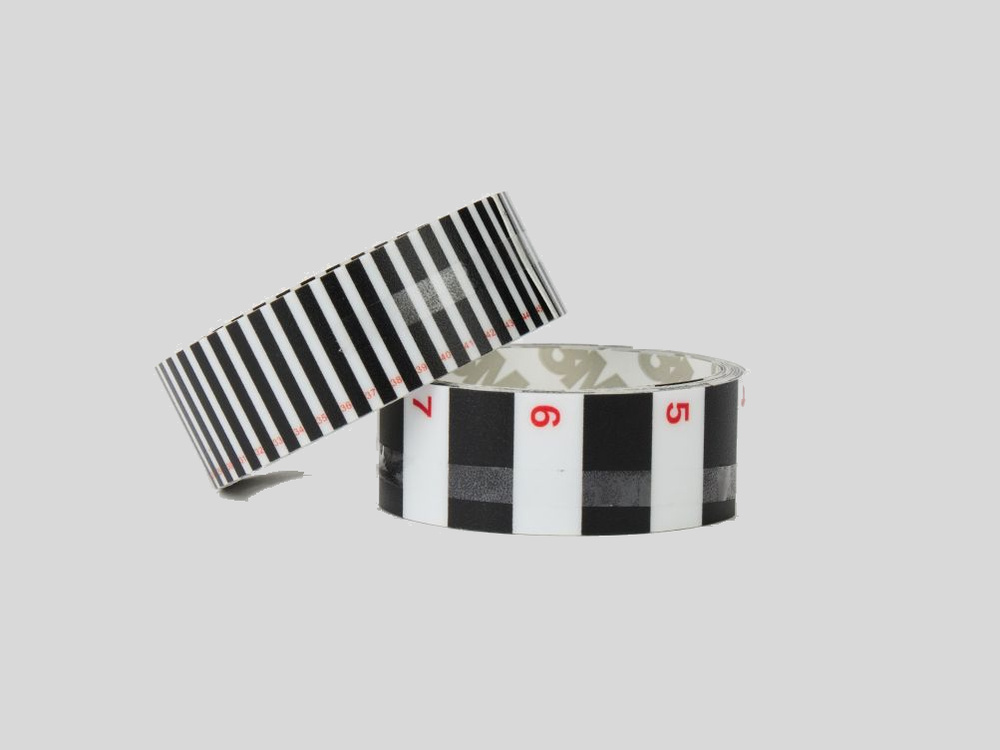
 Overview
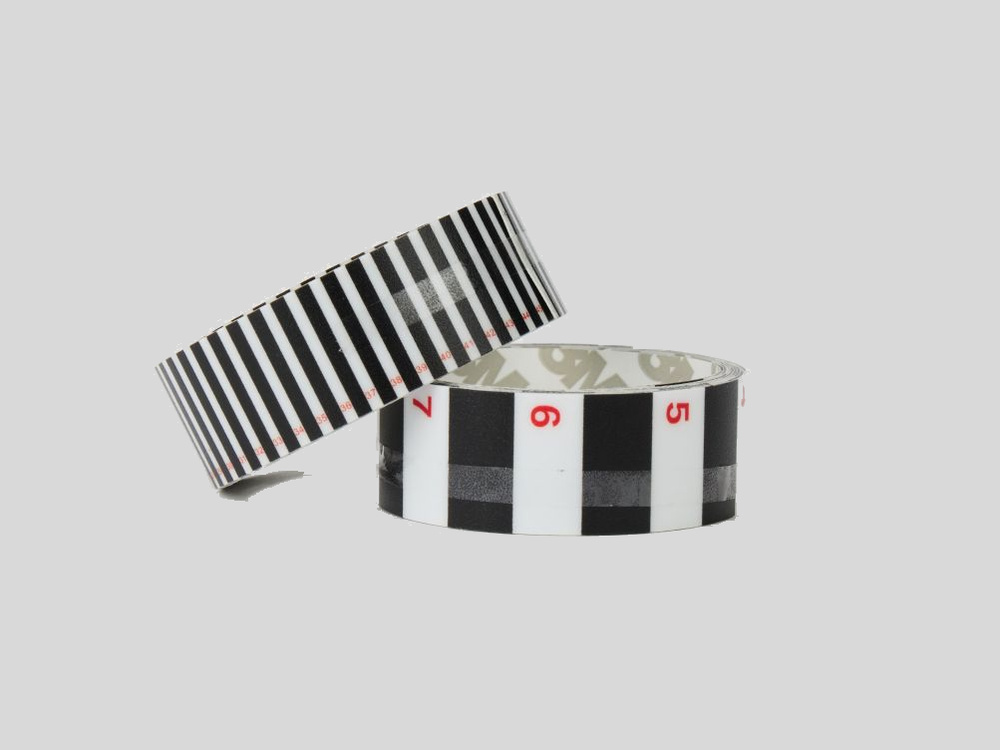
Zebra reflective tape covers RT-Steps 0.5/1/2/5/10 stripe strips and 15/36/60/120 division discs, 200 mm diameter with 3M backing. +1B black marks give a phase reference for stroboscopes and multi-pulse sensors.
Strip tape suits cylindrical or flat surfaces where a continuous light/dark pattern is needed. Closer stripes give more pulses per unit length; wider stripes stay clearer at higher speed. Choose with both the speed range and the optical resolution in mind.
| Order code | Stripe spacing | Length | Typical use |
|---|---|---|---|
| RT-Steps0.5 | 0.5 mm | 1.2 m | High pulse density, low-speed precision and phase subdivision |
| RT-Steps1 | 1 mm | 1.2 m | Fine stripe counting with a capable optical system |
| RT-Steps2 | 2 mm | 1.2 m | General stripe observation and medium pulse density |
| RT-Steps5 | 5 mm | 1.2 m | Medium and high-speed observation, clear visual stripes |
| RT-Steps10 | 10 mm | 1.2 m | High-speed rotation and long-distance viewing, strong contrast |
The discs are 200 mm in diameter with 3M adhesive and come in 15, 36, 60 and 120 division versions. The division count sets pulses per revolution. The +1B version adds one black mark per turn for direction, phase reference and unbalance angle measurement.
| Order code | Divisions | Pulses per turn | Typical use |
|---|---|---|---|
| RT-15BW | 15 | 15 | Medium and low speed, adequate pulses with clear stripes |
| RT-36BW | 36 | 36 | General balancing and speed measurement |
| RT-60BW | 60 | 60 | Denser pulses for quicker low-speed readings |
| RT-120BW | 120 | 120 | Low-speed precision and high-resolution phase work |
| RT-60BW+1B / RT-120BW+1B | 60 / 120 plus one black mark | 60 / 120 plus once-per-turn reference | Speed, direction and phase reference together |
Choose the disc or stripe spacing from the speed range and sensor resolution. Faster machines need coarser stripes; low-speed phase work can use finer ones.
Remove oil and dust, wipe with isopropyl alcohol and let it dry fully. 3M adhesive holds at speed on a clean surface.
Press discs from the centre outwards and strip tape along its length. Work the edges firmly so they cannot lift at speed.
Zebra tape gives several pulses per turn. The gear or pulse count in the instrument or acquisition software must match the division count, or the reading will be off by a factor.
With a +1B disc, use the black mark as a once-per-turn reference. Combine with a stroboscope to read phase and direction before recording the unbalance angle.
Not at the same measurement point. A single tab produces one pulse per turn, while a zebra disc produces several, and the meter calculates from the configured pulse count. Mixing them creates a large reading error. For a phase reference use a +1B disc.
It gives one reference point per revolution. With it you can determine direction, take a phase reference and locate the unbalance angle during balancing. Both 60 and 120 division discs are available with the +1B mark.
Trim the disc or switch to RT-Steps strip tape on the shaft face. After trimming, keep the divisions even; uneven spacing causes irregular pulses and poor interpretation.
Zebra discs use 3M adhesive and hold up under normal high-speed operation when the surface is cleaned and the tape is pressed firmly. Degrease, roll out air bubbles and pay attention to the edges. Replace immediately if an edge lifts.
No. Finer spacing means denser pulses and quicker low-speed readings, but at high speed the stripes blur and the optical system may not follow. Printing and textile lines usually start with a medium spacing and adjust after seeing the signal.
Send inquiry

Email: info@xinysun.com

Tel: +86-131-2093-6518

Address: 1525 Minqiang Road, Bldg 26, Songjiang, Shanghai

Copyright 2026 Xinysun Instrument (Shanghai) Co., Ltd. All rights reserved.
ICP:ICP-2026046447




 Products
 Applications
 Previous:
 Back to list

 Industrial Test Instruments


