
Products
PRODUCTS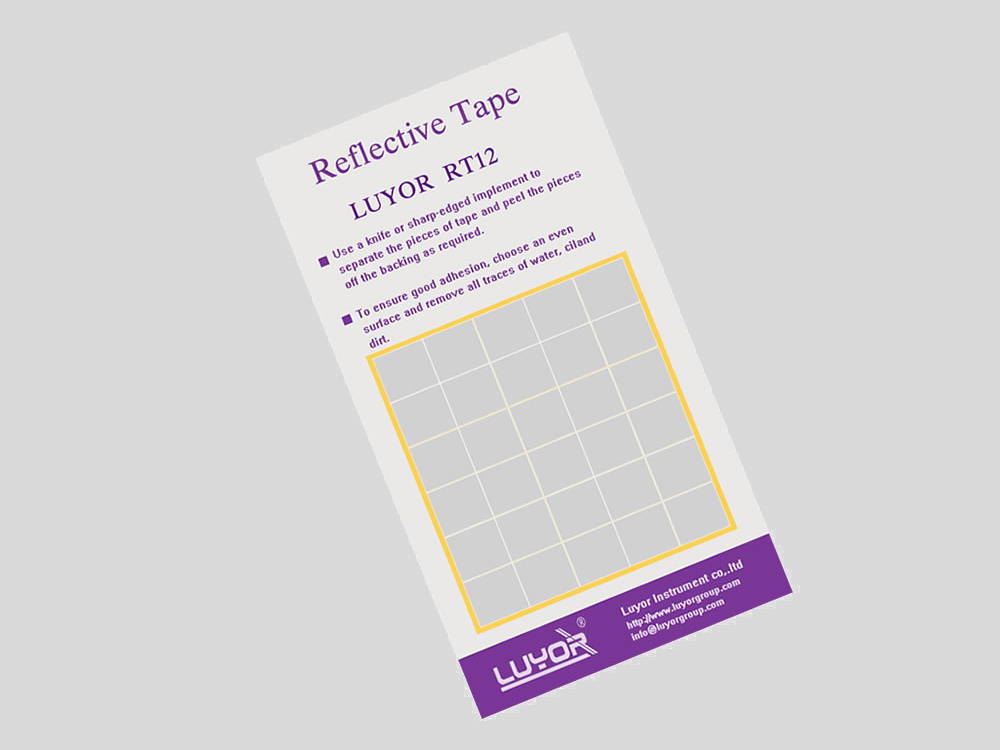
 Overview
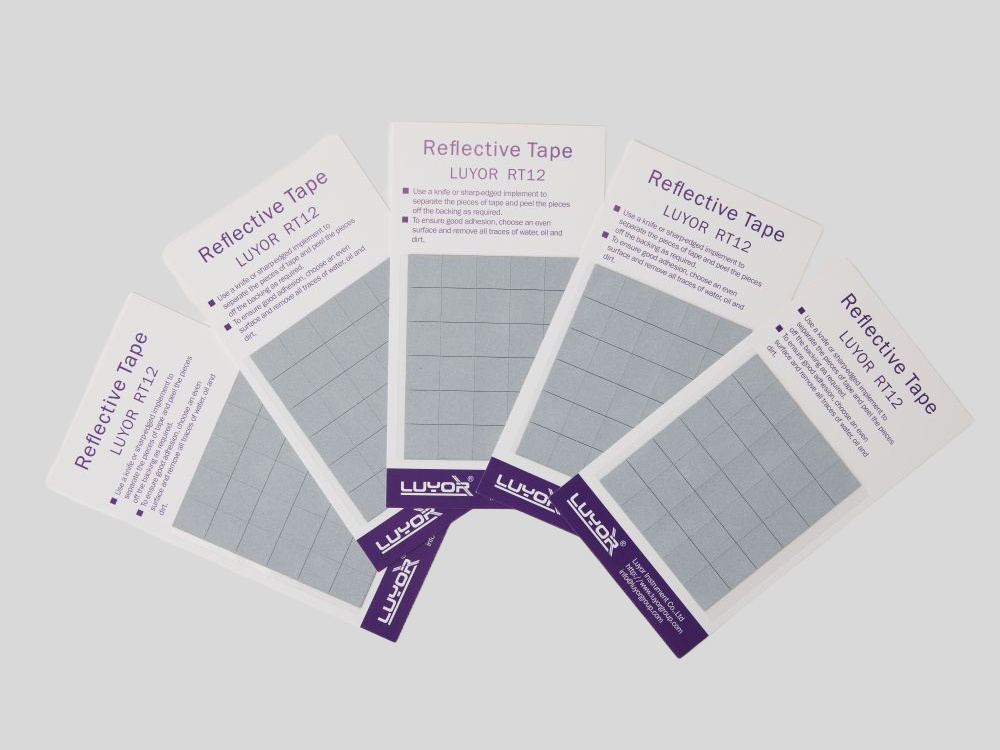
LUYOR RT12 reflective tape supplies 12 x 12 mm pre-cut tabs, 10 sheets of 30 pieces. Glass-bead return, high-tack waterproof backing and ultra-thin profile suit laser and photo tachometers, stroboscopes and vibration meters.
White paper, ordinary white tape and bright paint do reflect light, but they scatter it in many directions. Very little returns to the receiver window. A tachometer needs a clear change between a weak background and a strong mark. When the return signal drifts, one revolution can be counted twice or the pulse can be lost altogether.
| Marking method | Common field problem | How RT12 addresses it |
|---|---|---|
| White paper or cloth tape | Diffuse reflection; weak return at distance; surface greys over after oil or water exposure | Glass-bead retroreflection; waterproof, wipeable surface |
| Cut-down wide reflective strip | Inconsistent piece size; uneven pulse amplitude; oversized mark affects balance | Uniform 12 x 12 mm tabs; ultra-thin backing leaves balance data unchanged |
| Bare polished shaft | Chrome, nameplates and bright edges create extra reflection points | Clear contrast with the background; use matte masking around the target |
| Peel-and-restick tape | Adhesive picks up dirt, loses tack and lifts at speed | Single-use consumable; replace when the edge starts to curl |
Placement and preparation cause more problems than the tape itself. Follow this sequence to avoid most reading faults.
Remove oil, dust and moisture. On polished or chrome parts, mask the surrounding area with matte tape so the reflective tab is the single effective target.
Put the tab on a surface that rotates with the shaft and stays inside the optical spot. Keep the same radius on every repeat measurement so readings stay comparable.
Use a single tab for routine speed checks. Two tabs of similar reflectivity produce two pulses per turn and the reading approaches twice the true speed.
Press from the centre towards the edges, especially the four corners. If time is short, at least press firmly before running the machine.
Turn slowly by hand and confirm one pulse per pass before running at full speed. If the reading doubles, look for extra marks or background reflections.
Use as a reference mark for laser tachometers, photo sensors and panel meters. See the LUYOR-910 tachometer and ROLS-5PW laser sensor.
Combine a single tab with a stroboscope to judge phase and surface condition. See the stroboscope range.
Use as a phase reference on rotors, fans and spindles. The thin backing adds negligible mass to the balance calculation.
Acts as a temporary return target for distance meters. For large diameters or long distances choose a wider strip such as RT10/RT20 roll tape.
Each pack contains 10 sheets of 30 tabs. Service life depends on the environment. Indoor clean areas allow long retention; oil, dust, heat and UV accelerate ageing. Replace a tab as soon as readings drift, an edge lifts or the surface becomes scratched and dull. Do not peel and reuse it.
For routine handheld speed checks, yes. If the sensor spot is large or the working distance is long and the return signal is weak, use a larger tab or a 20 mm roll strip. Keep one effective mark per measurement point.
RT12 is pre-cut for quick placement and consistent size. RT10/RT20 comes in rolls that you cut to length for long marks, large rotors or custom runs. Both are designed for laser and photo speed measurement.
Yes. The meter assumes one tab per revolution. Two similarly reflective tabs generate two pulses per turn, so the display approaches twice the actual speed. For multi-pulse work use zebra reflective tape and set the pulse count on the instrument.
Yes. RT12 works with laser and photo tachometers, speed sensors, stroboscopes, laser distance meters and laser vibrometers. For phase work one clear tab is easier to interpret than several.
Send inquiry

Email: info@xinysun.com

Tel: +86-131-2093-6518

Address: 1525 Minqiang Road, Bldg 26, Songjiang, Shanghai

Copyright 2026 Xinysun Instrument (Shanghai) Co., Ltd. All rights reserved.
ICP:ICP-2026046447




 Products
 Applications
 Previous:
 Back to list

 Industrial Test Instruments


